
A Practical Audience-Planning Guide for Behavioral Health Recruitment Mailings
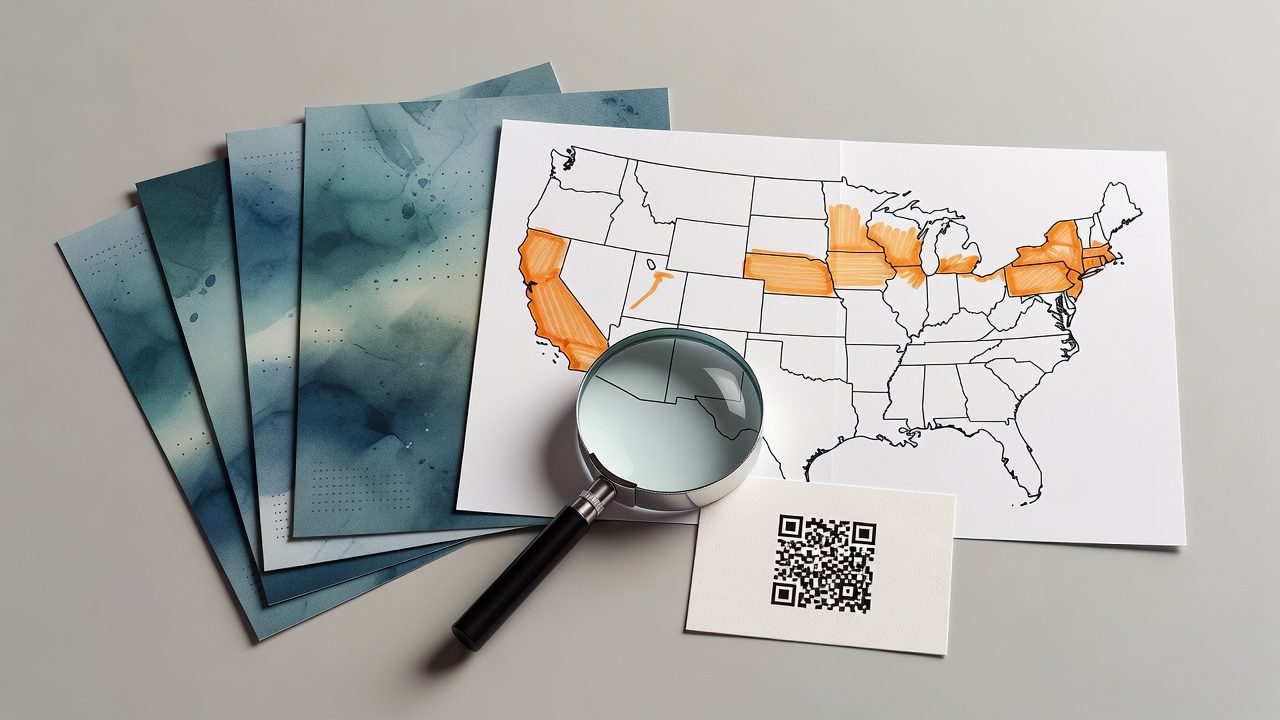
For behavioral health recruitment mailings, start with the role, credential or specialty, geography, and hiring objective—not a broad demographic list. This guide is for behavioral health employers, health-system talent teams, and recruitment marketing agencies planning campaigns for counselors, social workers, psychiatric nurses, and related roles.
Who This Guide Is For
This planning approach is intended for organizations hiring behavioral health professionals, including counselors, social workers, psychiatric nurses, and related roles.
- Hospitals and health systems with difficult behavioral health openings.
- Outpatient practices, behavioral health organizations, and community-based employers.
- Employers hiring for a specific care setting, shift, patient population, or location.
- Recruitment marketing agencies that want to offer a managed direct mail channel under their own brand.
It is especially useful when a role is not closing through normal recruiting channels and the qualified local pool may be small or already employed.
Start With the Hiring Objective
Before defining an audience, decide what the mailing needs to accomplish. A clear objective determines the audience, card message, landing page, and measurement plan.
Your campaign may support:
- One difficult requisition.
- Similar openings across several locations.
- A behavioral health hiring event or open house.
- An awareness initiative for a new facility, program, apprenticeship, or training opportunity.
- A longer-term candidate pipeline for recurring needs.
For a specific opening, document the role, shift, care setting, location, and requirements a candidate needs to consider. For example, a psychiatric nursing role may need to communicate its unit, shift, patient population, and site—not simply that an employer is hiring nurses.
For ongoing hiring, separate immediate openings from future pipeline needs. The candidate should be able to tell whether the card asks them to explore a current role, register for an event, or express interest in future opportunities.
The same direct mail model can support individual-role recruiting, events, awareness campaigns, and pipeline building. The message and response path should change to fit the objective.
Build the Audience Around Role-Relevant Criteria
Audience planning should begin with license type, specialty or trade, and geographic location. This is precision matching by role-relevant criteria, not a generic demographic segment or a broad purchased list.
Behavioral health is not one interchangeable audience. Psychiatric nursing, clinical social work, counseling, and other related specialties can have different credentials, work settings, and candidate motivations. When those differences matter to the role, create distinct segments.
Match the audience to the actual opening. A message for psychiatric nursing should not read like a general counselor or social-work message. The more closely the audience, message, and response destination reflect the opportunity, the easier it is for a recipient to understand why the card is relevant.
Define the Behavioral Health Segments
Psychiatric nursing
For psychiatric nursing, consider the elements that shape the work itself: care setting, shift, patient population, experience expectations, and location. A card for a night-shift behavioral health nursing role can acknowledge the role directly instead of presenting a broad nursing message.
Counselors
Clarify the counseling specialty, setting, population served, and any credential or experience requirement you want to communicate. An employer recruiting for one counseling context should give recipients enough information to recognize whether the opportunity fits their work.
Social workers
Distinguish among hospital, community, case-management, crisis, and other practice contexts when those differences affect candidate fit. A social-work audience may need a different message depending on the setting and day-to-day responsibilities.
Related behavioral health roles
Create separate segments when the credential, specialty, or daily work differs materially. Combining every behavioral health professional into one mailing may make the message less relevant and the response path less clear.
Use a specialty-specific message for each segment rather than sending one generic card to every behavioral health professional in an area.
Plan Geography With the Role in Mind
Define the geographic area you can realistically recruit from, including the location of the role or hiring event. The right geographic plan depends on the opportunity, the commute expectations, and the size of the qualified pool.
- For local hiring, align the audience area with the facility and likely commute area.
- For several locations, determine whether one shared message still applies or whether each site needs its own audience and landing page.
- For difficult roles, decide explicitly whether to address candidates outside the immediate market who may consider relocating for the right opportunity.
Do not assume relocation interest. If relocation is part of the plan, it should be reflected clearly in the message and landing-page experience.
RecruitCard supports single-market and nationwide rollouts, so the geographic plan can match your hiring footprint.
Account for Passive Candidates
Many behavioral health professionals are already employed and may not be searching job boards when an opening becomes available. Job boards and paid search primarily reach people who are actively looking or searching at that moment.
A targeted mailing creates a separate contact point at home for people who may not be responding to job postings. It does not promise to reach every qualified professional or guarantee a hiring outcome. It gives you another way to put a relevant opportunity in front of an audience that may otherwise be difficult to engage.
Use the card to explain why the opportunity deserves attention. Depending on the role, that may mean the specialty, care setting, schedule, employer brand, mission, location, or a specific professional opportunity.
Create a Clear Message for Each Audience
Lead with the role and specialty. A statement such as “we are hiring healthcare professionals” gives a behavioral health recipient little reason to respond. A message that names the relevant role and setting is more useful.
- State the opportunity in role-specific terms.
- Present employer branding that is credible and relevant to the intended audience.
- Use the recipient’s actual first name as part of the personalization.
- Give the recipient one clear action.
- Support that action with a QR code and short URL.
Keep the card focused. When multiple unrelated openings compete on one card, recipients may not know which path applies to them.
Use the Four-Part Anatomy of the Card
A focused recruitment card has four working parts.
Personalized name
Address the recipient by their actual first name. This makes the communication feel directed to a person rather than dropped into a general advertising stream.
Specialty-specific message
Refer to the relevant behavioral health role, setting, shift, or practice area. The message should make clear why the recipient is receiving the card.
Employer branding
Show who is hiring and why the organization is a credible destination for the intended audience. Employer brand should support the role-specific message, not replace it.
One clear action
Send the recipient to a focused landing page through a QR code and short URL. The action might be to review a role, register for an event, or express interest in a future opportunity. Choose one primary action for each card.
Match the Landing Page to the Mailing
The landing page should continue the conversation started by the card. Each segment should land on a page that reflects the role, specialty, location, and call to action shown in the mailing.
- For a role-specific campaign, explain the opportunity before asking a candidate to respond.
- For a hiring event, direct recipients to event details and registration rather than a general careers page.
- For a pipeline campaign, explain the types of opportunities you expect to hire for and how candidates can express interest.
Plan the response experience before finalizing the card. The QR code should lead to a useful next step, and the employer’s normal recruiting workflow should be ready to receive interested candidates.
Measure the Campaign Without Guesswork
RecruitCard campaigns use QR scans and landing-page traffic as primary campaign signals. These indicators show engagement with the card and response destination.
When the campaign setup supports it, review activity by audience segment, role, geography, or campaign purpose. For example, separate landing pages can help distinguish engagement with a psychiatric nursing message from engagement with a social-work message.
Scans and visits are engagement indicators, not guaranteed hiring results. Connect the landing-page response process to your recruiting workflow so an interested candidate has a clear next step after engaging.
Decide Whether One Mailing or Multiple Segments Make Sense
Use separate cards or landing pages when the roles differ in credential, specialty, location, shift, or candidate motivation. Separate segments are often appropriate when a psychiatric nursing opening, a counseling role, and a social-work role require different explanations.
A single broader campaign may be appropriate when the same audience, message, and response path apply across locations. For multiple facilities or a nationwide rollout, define what remains consistent and what needs local adaptation.
Before production, document the following for every segment:
- Audience definition.
- Role and hiring objective.
- Geographic scope.
- Specialty-specific message.
- Landing-page destination and action.
- Measurement approach.
What RecruitCard Handles
RecruitCard provides a managed, end-to-end direct mail recruiting campaign rather than only a mailing-list handoff. The service includes:
- Audience targeting by license type, specialty or trade, and geography.
- Card design with employer branding and recipient first-name personalization.
- Printing, postage, and delivery.
- QR-code and landing-page response tracking.
RecruitCard’s deepest stated expertise is licensed healthcare hiring, including hard-to-fill specialties and settings. Recruitment marketing agencies can also use the white-label option to offer this channel without building their own print, postage, and tracking operation.
Audience-Planning Checklist
- Hiring objective identified: requisition, event, awareness initiative, or pipeline.
- Behavioral health role and specialty defined.
- Relevant credential or license type identified as part of the audience plan.
- Geography and any relocation consideration defined.
- Audience segments separated where roles or messages differ.
- Employer brand and specialty-specific value proposition approved.
- Personalized first-name field included in the creative plan.
- One call to action selected.
- QR code and short URL connected to a role-appropriate landing page.
- Measurement plan includes QR scans and landing-page traffic.
- Delivery scope defined for a single market or nationwide rollout.
When a Behavioral Health Mailing Is a Good Fit
A targeted behavioral health mailing may be a good fit when:
- A specific behavioral health requisition has remained open and normal channels are not closing it.
- The qualified local pool is limited and many potential candidates are already employed.
- You need to recruit continuously for high-volume behavioral health roles.
- You are promoting a hiring event, new facility, training opportunity, or another initiative candidates may not be actively searching for.
- You are a recruitment marketing agency that wants to add targeted direct mail without managing the operational details in-house.
Next Step
A short planning conversation can help you define the role, audience, geography, message, and response path before a campaign is produced.
Enjoyed this? There's more from RecruitCard.
Book a 15-minute call →