Can Direct Mail Reach Licensed Professionals Who Ignore Recruiting Ads?
Yes. Direct mail can give employers another way to reach licensed professionals who are already employed and unlikely to respond to job boards or paid search. It is most useful when the audience is defined by license type, specialty, and geography, then contacted with a personalized, employer-branded card and a measurable next step.
Who This Article Is For
This approach is designed for hospital and health-system HR and talent-acquisition teams hiring licensed professionals, particularly RNs and LPNs for roles that remain difficult to fill through normal recruiting activity.
It can be relevant when you are hiring for ICU, ED, OR, labor and delivery, oncology, case management, night shift, rural facilities, or another role with a limited qualified candidate pool. It can also support specialized hiring needs in long-term care, home care, outpatient care, rehabilitation, allied health, physician practices, dental, pharmacy, and behavioral health.
Recruitment marketing agencies can also use this model when they want to add a direct-mail channel without operating targeting, creative, printing, postage, delivery, and response tracking internally.
Why Recruiting Ads Miss Passive Licensed Professionals
Job boards and paid search are useful when a candidate is actively looking. They generally depend on someone searching, clicking, or otherwise signaling interest in changing jobs.
That leaves a meaningful part of the potential audience outside the usual flow: licensed professionals who are already employed, busy, and not browsing postings. A nurse working nights may not be checking job boards. A physical therapist in a rural market may not be searching until they learn about an opportunity worth considering. A dental hygienist may not see your opening if they are not using job-search channels at all.
For a hard-to-fill role, waiting for the right person to search for the right words at the right time can narrow your reach. Direct mail creates awareness with a defined audience instead of relying only on active search behavior.
It is not a replacement for every recruiting channel. It is an additional channel for reaching a structurally different audience: people who may be qualified but are not currently raising their hand online.
Can Direct Mail Reach People Who Ignore Recruiting Ads?
Yes, when the campaign is built around a specific licensed or certified audience rather than a broad demographic mailing. The goal is not to send the same generic card to an undifferentiated audience. The goal is to focus outreach around the license type, specialty or trade, and geography connected to the hiring need.
That distinction matters. A generic mailing list may group people by broad consumer or demographic characteristics. A precision-targeted recruiting campaign is planned around the role you need to fill and the professionals you need to reach.
This can be particularly useful when the qualified local pool is small, much of that pool is already employed, or conventional recruiting channels have not produced enough relevant interest. It does not guarantee applications, interviews, hires, or a particular return. It gives your opportunity another way to get in front of people who may not encounter it through digital recruiting.
How Precision Targeting Works
The campaign starts with the hiring need. You define the role and the audience that would be relevant to it: license type, specialty, geographic area, and the details that make the opportunity distinct, such as unit, facility, shift, or discipline.
RecruitCard builds the intended audience through license, specialty, and geography matching. This is a more focused approach than broad demographic assumptions or a mass mailing.
Examples of a focused audience
- An ICU night-shift nursing need in a defined market.
- A rural physical therapy opening where the potential audience may need to extend beyond one immediate area.
- A dental hygienist search tied to a particular practice or group of locations.
- An ongoing caregiver, CNA, or HHA hiring need in a local service area.
- A specialty-specific campaign for OR, ED, oncology, case management, respiratory therapy, imaging, laboratory, or surgical technology roles.
The same planning model can support a single market, multiple locations, or a nationwide rollout. The appropriate scope depends on your hiring objective and where the relevant audience should be reached.
The Anatomy of an Effective Recruiting Mailer
A recruiting card should make its purpose clear quickly. Rather than trying to include every job detail, benefit, and employer message, it should give the recipient a relevant reason to take one next step.
Personalized recipient name
Where available through the campaign process, the card uses the recipient’s actual first name. Personalization helps make the piece feel addressed to a person rather than sent to a generic household.
Specialty-specific message
The message should connect directly to the opportunity. That may mean naming the unit, discipline, trade, location, shift, event, or program. A card about an ICU night role should not read like a broad “we are hiring” message for every nurse.
Credible employer branding
Your logo, identity, and employment message belong on the card. The objective is a credible, recognizable presentation that gives the recipient enough context to decide whether to learn more, without overcrowding the piece.
One clear action
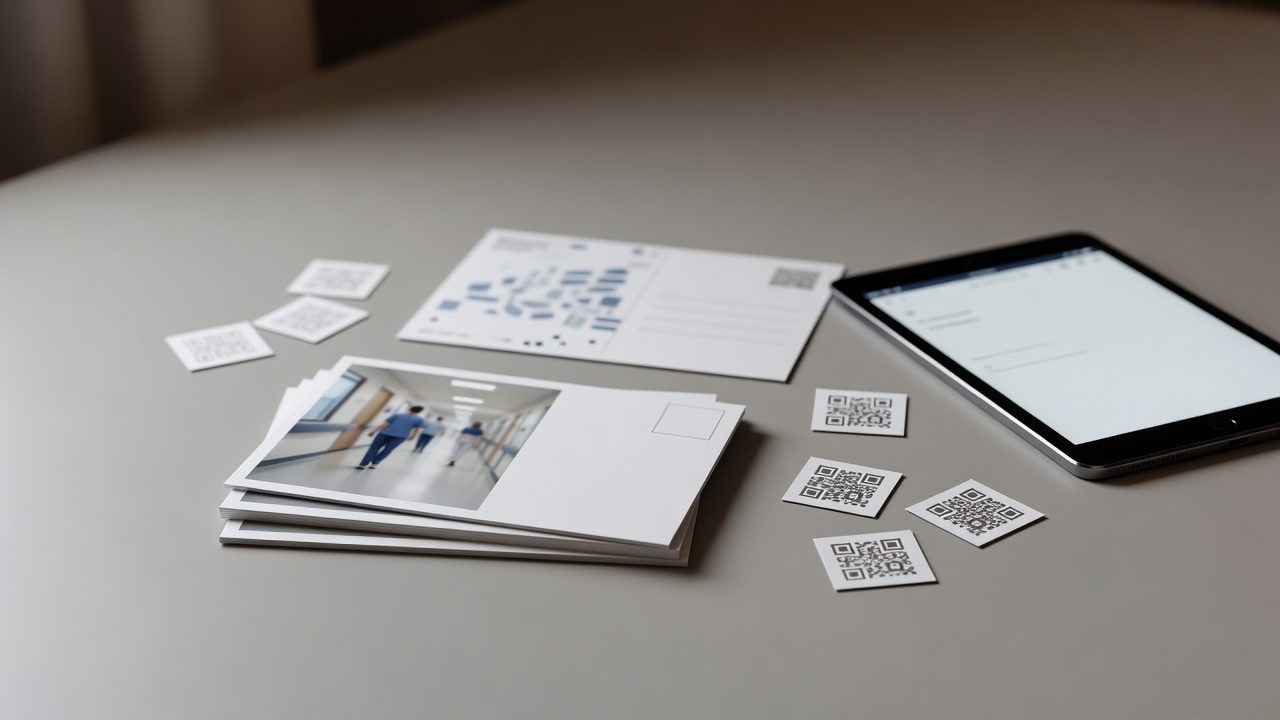
A focused card points to one next step through a QR code and short URL. That action might lead to an application page, role overview, event registration, talent-community form, or inquiry page.
A specific message and a single action are generally more useful than a postcard that simply announces that an organization is hiring. The recipient should be able to see what is relevant and what to do next.
What Direct Mail Can Promote Beyond One Open Requisition
Direct mail can support an individual role that has remained open despite normal activity. It can also support broader recruiting objectives where awareness matters before a candidate begins a job search.
- Difficult requisitions: A specialty, unit, shift, or location that is not closing through existing channels.
- Continuous local hiring: Ongoing needs for CNAs, HHAs, caregivers, and other high-volume or high-turnover roles.
- Hiring events: Open houses, facility-specific events, and other opportunities that require local awareness.
- Apprenticeship and training programs: Programs candidates may not know exist or would not think to search for.
- Pipeline building: Employer awareness and candidate interest before the next vacancy opens.
In other words, the card can support immediate hiring and longer-term awareness. The message and landing page should match the objective.
How Direct Mail Compares With Job Boards and Paid Search
Job boards and paid search can capture active intent. When someone is already looking for a role, an employer, or a location, digital recruiting makes it possible to present a relevant opening in that moment.
Direct mail works differently. It introduces an opportunity to a targeted recipient who may not be searching at that time. A physical card also creates a point of contact outside a crowded digital feed, search-results page, or job-board listing.
Neither channel is universally better. They can work together:
- Digital recruiting can help capture active candidates.
- Direct mail can expand awareness among passive, already-employed professionals.
- A campaign landing page can give mail recipients a straightforward digital path to learn more or act.
For roles that will not close through normal channels alone, adding a targeted mail channel may be worth evaluating.
How Campaign Results Are Measured
Direct mail recruiting does not have to be unmeasurable. A campaign-specific QR code and landing page provide observable engagement signals.
- QR scans indicate scans of the campaign QR code.
- Landing-page traffic indicates visits to the campaign destination.
These measures can show campaign interaction. They do not, on their own, prove a hire or establish return on investment. Downstream outcomes such as inquiries, applications, interviews, and hires should be tracked within your own recruiting process.
Make the landing page consistent with the card’s message and single call to action. If the card promotes an OR role, the landing page should make that opportunity clear. If the card promotes an open house, the landing page should make registration or event details easy to find. Timely follow-up also remains important after a candidate takes action.
What RecruitCard Handles
RecruitCard provides a managed, end-to-end direct mail recruiting campaign rather than only handing over a mailing list. The service includes:
- Audience targeting by license type, specialty, trade, and geography.
- Card design using your employer brand, personalized recipient name, specialty-specific copy, and one clear call to action.
- Printing, postage, and delivery.
- QR-code and landing-page response tracking.
- Campaign support for single-market efforts and nationwide rollouts.
- White-label support for recruitment marketing agencies.
RecruitCard’s deepest stated expertise is licensed healthcare hiring. The same campaign model can also be used for licensed or certified engineering and skilled-trade audiences.
When This Approach Is a Good Fit
Precision-targeted direct mail may be a good fit when one or more of these conditions apply:
- You have a specific requisition that is not closing through normal channels.
- The qualified local pool is small, and many potential candidates are already employed.
- You need ongoing hiring for a high-volume role.
- You are promoting a hiring event, open house, apprenticeship, training opportunity, or new facility that candidates may not actively search for.
- You want to build awareness before the next vacancy opens.
- Your agency wants to add a direct-mail offering without managing the print-and-mail operation in-house.
When to Set Expectations Carefully
Direct mail is a channel, not a guarantee. A campaign does not guarantee applications, interviews, hires, or a particular return on investment.
Its effectiveness depends in part on a clear opportunity, a credible employer message, a relevant audience definition, a simple response path, and timely follow-up. A broad audience or vague message can reduce relevance.
Review engagement through QR scans and landing-page traffic, then review recruiting outcomes through your own records. Details such as campaign scope, pricing, minimum quantities, contract terms, and delivery timing should be discussed directly for your particular hiring need.
A Practical Next Step
If you have a role, specialty, geographic need, event, or pipeline objective that is not getting enough attention through normal recruiting channels, bring that specific need to an initial discussion. The purpose is simply to determine whether precision-targeted direct mail fits the situation.
Frequently Asked Questions
How is this different from a generic mailing list?
The campaign is planned around license type, specialty or trade, and geography rather than a broad demographic audience or an undifferentiated purchased list. The card is also built around a specific recruiting objective and a measurable next step.
Can you target a specialty such as ICU or OR instead of mailing to all RNs?
Yes. The model supports specialty-specific targeting, including campaigns built around particular units, disciplines, and hard-to-fill roles. The campaign should begin with a clear definition of the hiring need.
Can direct mail reach candidates who might relocate?
A campaign can be planned around the geographic audience and hiring need, including broader or nationwide rollouts where appropriate. Whether a recipient considers relocation depends on the opportunity and the individual; a campaign does not promise that outcome.
What happens after someone scans the QR code?
The QR code can send the recipient to a campaign landing page with the relevant opportunity and next action, such as learning more, applying, registering, or making an inquiry. QR scans and landing-page traffic provide measurable engagement signals.
Does RecruitCard handle design and printing?
Yes. RecruitCard’s managed service includes audience targeting, card design, printing, postage, delivery, and response tracking, rather than only providing a mailing list.
Enjoyed this? There's more from RecruitCard.
Book a 15-minute call →