Can You Target a Specific Nursing Unit Without Mailing Every RN
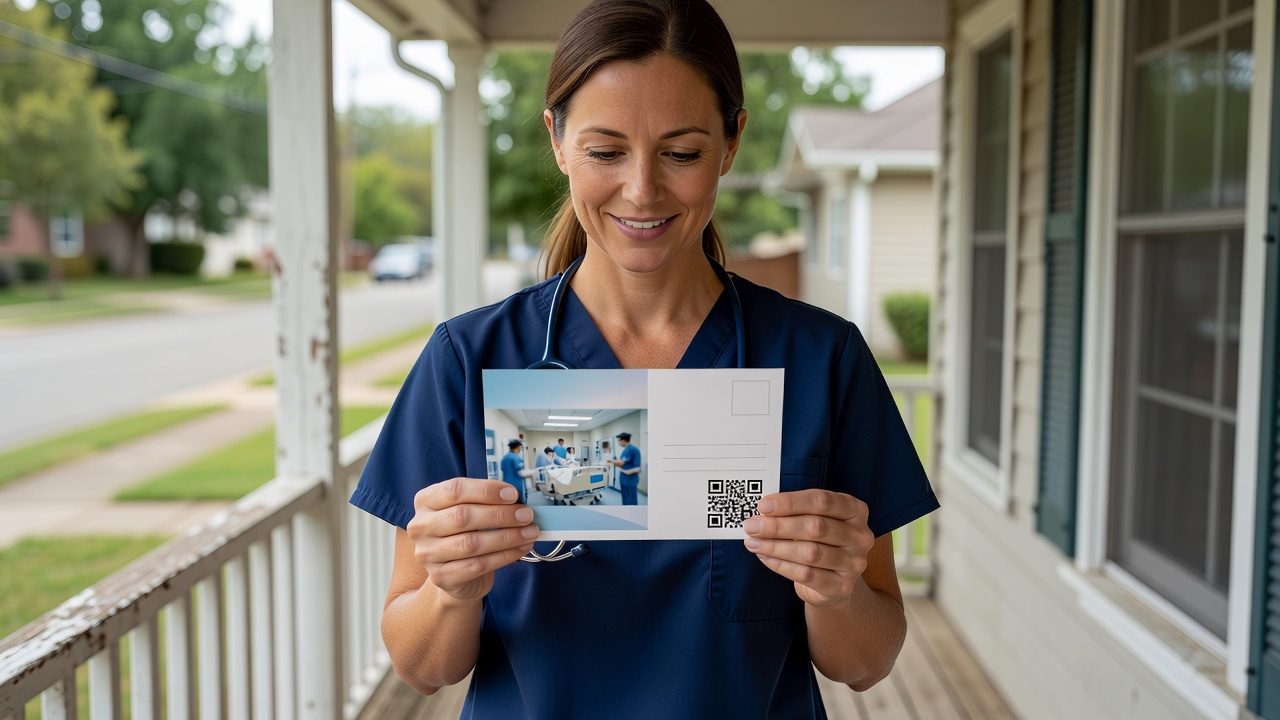
Yes. A nursing recruitment campaign can be planned around a specific unit, specialty, shift, and location instead of mailing every RN in a broad area. The strongest approach pairs audience precision with a card message that speaks directly to the work setting, such as ICU nights, an emergency department, an operating room, or labor and delivery. This is designed for hospital and health system HR and talent acquisition teams working on nursing roles that are not closing through normal channels.
Why a Broad RN Mailing Can Miss the Right Candidates
An RN license is an important starting point, but it does not by itself describe a nurse's specialty, preferred work setting, shift interest, or willingness to consider a particular location. A nurse with emergency care experience may not respond to a general message about hospital nursing. The same is true for an operating room nurse who receives a broad message about inpatient roles.
Broad outreach can have a place when your goal is general awareness. It is less suited to a defined hiring need, such as an ICU night shift opening or a labor and delivery opportunity at a particular facility.
The goal is not to mail the largest possible audience. The goal is to reach an audience that is more relevant to the requisition and give that audience a reason to consider one clear opportunity. This can be especially useful when a unit has remained difficult to staff despite job boards, paid search, referrals, and other normal recruiting channels.
What Unit Specific Targeting Can Include
Unit specific planning begins with three audience criteria: license type, specialty, and geography. Together, these criteria help define an audience matched to the hiring objective rather than a generic demographic mailing.
Your campaign brief can identify the nursing unit or work setting that the card should address. Examples include:
- ICU or critical care
- Emergency department
- Operating room or perioperative care
- Labor and delivery
- Oncology
- Case management
- Night shift roles
The brief can also include relevant facility or market context. For example, an employer may need to fill a role at one hospital, promote a specific work setting, or direct candidates toward opportunities across several locations.
A campaign may support a single market or a nationwide rollout, depending on the objective. In either case, the audience is matched to approved license, specialty, and geography criteria. It should not be assumed that every recipient currently works in one named unit.
How the Card Message Should Match the Unit
Audience precision and message precision should work together. A card for a defined unit should describe the actual opportunity rather than repeat a generic RN job description.
ICU and critical care
An ICU message can speak to critical care practice, the clinical environment, team structure, or the type of patient care involved. The point is to make the recipient quickly understand that the opportunity is relevant to critical care nursing.
Emergency department
An emergency department message can acknowledge pace, acuity, collaboration, and the specific action the employer wants the recipient to take. It should not read like a message intended for every nursing specialty.
Operating room
An operating room message can focus on the perioperative setting, schedule context, or the employer's operating environment. This gives the reader a clearer reason to engage than a general statement that a hospital is hiring nurses.
Night shift
A night shift campaign should name the shift directly. Candidates should not need to scan a code and search through a job page to learn the central fact of the opportunity.
These are messaging directions, not claims about a particular employer, unit, schedule, or role. The final message should reflect the employer's approved information.
The Four Parts of a Unit Specific Recruitment Card
A targeted audience still needs clear communication. RecruitCard plans each card around four essential elements.
- Personalized name: The card uses the recipient's actual first name.
- Specialty specific message: The copy connects to the target unit, specialty, shift, or work setting.
- Credible employer branding: The employer's logo, voice, and relevant facts help the opportunity feel recognizable and specific without overcrowding the card.
- One clear action: A QR code and short URL give the recipient one primary next step.
These elements reinforce each other. The audience may be well matched, but a generic looking card or a card with too many choices can make the message less clear. A focused card makes it easier for the recipient to recognize the role, understand who is hiring, and decide whether to learn more.
How This Differs From Mailing Every RN Nearby
| Broad RN mailing | Unit specific campaign |
|---|---|
| Uses a broad nursing audience in an area. | Is planned around license type, specialty, and geography. |
| Often supports general awareness. | Is aligned with a defined unit, shift, work setting, or requisition. |
| May use general nursing language. | Uses a message that reflects the specific opportunity. |
| Can direct readers to a broad careers page. | Can direct readers to a campaign landing page built around one action. |
A broad mailing may be appropriate when an organization wants to introduce itself to a wider nursing audience. A unit specific campaign is often more appropriate when the need is a hard to fill requisition, a difficult shift, or a role in a specialized care environment.
RecruitCard is not positioned as a generic mailing list handoff. The managed service includes audience targeting, card creative, printing, postage, delivery, and response tracking. The same model can support an individual requisition, a hiring event, or longer term candidate pipeline building.
Examples of Unit Specific Campaign Briefs
These planning examples show how audience and message can align. They do not represent named employers, campaign results, or outcome claims.
ICU nights
Match the relevant nursing audience to the selected geography, then make the night shift opportunity and critical care setting the central message on the card and landing page.
Emergency department
Lead with the emergency care environment. Give recipients a clear action to learn about the role or begin the employer's chosen next step.
Operating room
Build the message around the perioperative setting and the specific role being promoted. Keep the call to action focused on that opportunity.
Labor and delivery
Speak to the specialty and the facility opportunity rather than using a general hospital hiring message. The recipient should be able to see the clinical context at a glance.
Multiple locations
Keep the specialty message consistent while directing candidates to the location or landing page experience that fits the campaign plan. This can help an organization communicate a unified opportunity across more than one market.
How Responses Are Measured
A unit specific card can include a QR code and short URL that lead to a campaign landing page. QR scans and landing page traffic can then be tracked as indicators of response and interest.
The landing page is where the recipient can learn more about the unit, review the opportunity, and take the next step defined by the employer. That step may be to explore the role, express interest, register for an event, or follow another employer approved path.
Tracking provides campaign activity data. It does not automatically prove a hire or establish a return on investment figure. To make the measurement more useful, the landing page should carry the same unit specific message as the card. A nurse who scans an ICU night shift card should arrive at information that clearly continues that conversation.
When Unit Specific Direct Mail Is a Good Fit
This approach may be a good fit when:
- A specific ICU, emergency department, operating room, labor and delivery, oncology, or case management requisition remains open despite normal recruiting channels.
- The qualified local pool is limited and many potential candidates may already be employed.
- You need to promote a difficult shift, location, or work setting directly.
- You want to reach passive candidates who are not actively searching job boards or responding to paid search.
- You want to build awareness before a future vacancy, hiring event, expansion, or other staffing need.
- You are a recruitment marketing agency seeking to offer targeted direct mail under your own brand through a white label service.
Direct mail does not replace every recruiting channel. It adds a way to reach potential candidates at home, including people who may not be actively looking at job postings.
Questions to Resolve Before Launch
A clear campaign brief helps keep the audience, card, and landing page aligned. Before launch, decide:
- Which license type and specialty should define the audience?
- Which unit, shift, facility, or work setting should the card reference?
- What geography should the campaign cover?
- What single action should the recipient take after scanning the QR code or visiting the short URL?
- What employer information will make the opportunity credible and specific?
- Should the campaign support one requisition, multiple locations, a hiring event, or an ongoing pipeline?
RecruitCard handles the campaign process, including targeting, card design, personalization, printing, postage, delivery, and response tracking. The employer's role is to provide the hiring context that makes the message accurate and useful to the intended audience.
Discuss a Specific Unit Hiring Challenge
If you are working to fill a nursing role in a specific unit, shift, or care setting, a focused direct mail campaign may be worth discussing. Book a 15-minute call to review your unit, audience criteria, geography, and intended next step.
Frequently Asked Questions
Can you target ICU or operating room nurses instead of every RN?
Yes. The campaign audience can be matched by license type, specialty, and geography, while the card message is built around the specific unit or work setting.
Can the campaign focus on a night shift or rural location?
Yes. A difficult shift or location can be part of the campaign brief and message, subject to the selected audience and geography criteria.
Does unit specific targeting mean every recipient currently works in that unit?
No. The audience is built around approved license, specialty, and geography matching criteria. It should not be assumed that every recipient currently works in one particular unit.
Can the same approach support a hiring event or future pipeline?
Yes. The model can promote a hiring event, build awareness for an opportunity, or support longer term candidate pipeline building.
How will we know whether people responded?
QR scans and landing page traffic can be tracked, giving you measurable campaign activity data.
Enjoyed this? There's more from RecruitCard.
Book a 15-minute call →