How to Recruit Certified Nurse Midwives

To recruit certified nurse midwives, focus on precise outreach to qualified professionals by specialty and geography, then present a clear, credible reason to consider your role. A CNM recruiting strategy can combine defined audience targeting, specialty-specific messaging, employer branding, and measurable response tracking.
This guide is for hospital and health-system talent-acquisition teams, maternity-care leaders, medical groups, and agencies supporting healthcare recruitment. It is particularly relevant when a CNM opening is not closing through ordinary job postings and digital recruiting, and you are evaluating whether targeted direct mail can supplement those channels.
Recruiting Certified Nurse Midwives Requires More Than Another Job Posting
A job posting remains useful for people who are actively looking. It may not, however, put a specific opportunity in front of qualified professionals who are already employed and not currently searching recruiting sites or engaging with online recruiting content.
For a specialized CNM role, broad healthcare outreach can also create noise rather than relevance. The recruiting plan should start with the professional audience you need to reach and the market where the opportunity exists. From there, your message needs to explain the role in terms a midwife can quickly assess.
Targeted direct mail is one additional recruiting channel for this situation. It is not a replacement for referrals, recruiter outreach, interviews, credentialing, or a well-maintained career site. It can create a direct, trackable path for a qualified recipient to learn more about the opportunity.
Why Certified Nurse Midwife Recruiting Can Be Difficult
CNM recruiting calls for specificity. A certified nurse midwife opening is not interchangeable with a general nursing or broad healthcare role. The audience and the message should reflect the type of professional you are trying to reach.
Many qualified professionals may already be working. If they are not actively reviewing job boards or clicking recruiting ads, your posting may not be part of their day-to-day attention. That is the passive-candidate gap: the people you most want to reach may not be participating in the channels designed around active job searching.
It is also important not to assume that every candidate evaluates a role in the same way. Depending on the opening, the details worth communicating may include:
- The practice setting and care environment
- The geographic area and any location-specific context
- Schedule, call expectations, or shift structure
- The care model and team structure
- Leadership access and clinical support
- The role’s scope and the next step for learning more
These are messaging considerations, not universal priorities. Your recruiting team and maternity-care leadership should identify the details that accurately distinguish the opportunity.
Licensure and credentialing requirements can vary by state and employer. Confirm the requirements relevant to your opening with the appropriate licensing, credentialing, and internal stakeholders before describing them in recruiting materials.
Define the CNM Audience Before You Start Recruiting
Before creative work begins, define who the campaign is intended to reach. A useful audience definition connects three elements: the relevant license or credential category, the specialty context, and the geographic market.
Decide whether the search is local, broader, or nationwide
A local-market campaign may fit an employer seeking candidates within a practical commuting area. A broader campaign may make sense when your organization is open to conversations with professionals outside the immediate market, including people who may consider relocation. RecruitCard supports single-market and nationwide rollouts; the appropriate footprint depends on the role and your recruiting strategy.
Set the campaign objective
The objective should be clear before the audience and card are finalized. For example, you may be promoting:
- One hard-to-fill CNM requisition
- CNM openings across several locations
- A maternity-care hiring event or open house
- A new service, facility, or practice location
- An ongoing midwifery candidate pipeline
This approach differs from buying a generic mailing list. RecruitCard’s campaign audiences are matched by license type, specialty, and geography rather than broad demographics. That precision helps keep the outreach tied to the recruiting need you have defined.
Build a CNM Recruiting Message Candidates Can Understand Quickly
A mail piece has limited space. It should help the recipient understand, at a glance, why the opportunity may be worth exploring and what to do next.
RecruitCard structures each card around four core elements:
- Personalized name: The recipient’s actual first name.
- Specialty-specific message: Language written for the CNM opportunity rather than generic healthcare hiring copy.
- Credible employer branding: Your organization’s logo, visual identity, and role context.
- One clear action: A QR code and short campaign URL that lead to the next step.
Make the role concrete
Generic language such as “great opportunity” gives a recipient little basis for deciding whether to engage. Use details that describe the actual opening. Depending on what is accurate for your organization, that might include the care setting, practice location, schedule or call expectations, team structure, patient-care model, leadership support, or the type of conversation you want the candidate to begin.
The goal is not to predict what every CNM will value. It is to present a truthful, relevant reason for the intended audience to scan, visit, or inquire.
Keep the action simple
Choose one primary next step. A recipient might scan a QR code to view the role on a campaign landing page, review event details, or submit an expression of interest. Multiple competing actions can make a brief message harder to act on.
Why Direct Mail Can Complement Job Boards and Paid Search
Job boards and paid search are useful parts of many recruiting plans. They primarily depend on candidates actively searching or engaging with recruiting content online. That structure can leave already-employed professionals outside the immediate reach of a posting or ad.
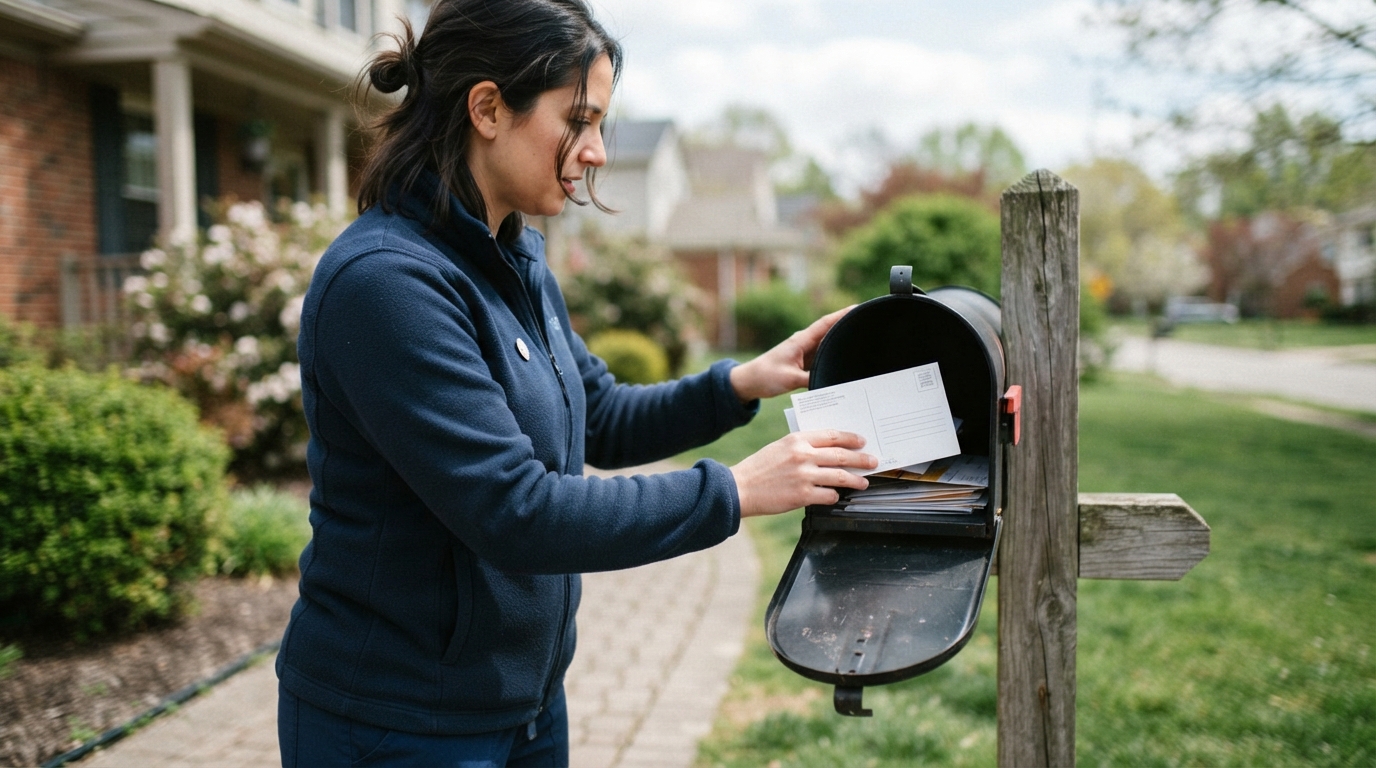
Targeted direct mail adds an offline channel. A personalized card is delivered to the recipient at home, where it can put a specific employer opportunity in front of a professional who may not have encountered your online recruiting efforts.
Direct mail should support, not replace, a complete recruiting process. You still need a clear landing destination, a responsive recruiter or hiring contact, an interview process, and an employer career experience that supports the interest generated by the campaign.
What a Managed CNM Direct Mail Campaign Includes
RecruitCard manages the campaign rather than handing you a list and leaving production to your team. The service includes:
- Audience targeting by license type, specialty, and geography
- Card design with your employer brand and a specialty-specific message
- Personalization using the recipient’s actual first name
- Printing, postage, and delivery coordination
- QR-code and landing-page response tracking
A campaign can be built around a single CNM requisition that has not closed through normal channels. It can also support a broader maternal-care hiring initiative, such as multiple locations, a hiring event, or an ongoing pipeline objective.
RecruitCard can support both single-market and nationwide campaign rollouts. Recruitment marketing agencies can also use the service on a white-label basis when they want to offer a direct-mail channel without operating the targeting, print, postage, and response-tracking workflow in-house.
How to Measure Interest in a CNM Recruitment Campaign
Direct mail recruiting does not have to mean guessing whether recipients engaged. QR scans and landing-page traffic provide observable campaign activity.
The landing page is the destination a recipient reaches after scanning the QR code or entering the short campaign URL. It can provide role details and a defined next action, such as reviewing an opening, registering for an event, or contacting the recruiting team.
Where appropriate for your implementation, use a campaign-specific landing page or tracking setup. This helps your team evaluate campaign activity separately from general traffic to the employer career site.
Measure engagement without treating it as a hiring guarantee
Scans, landing-page visits, and completed actions are engagement signals. They are not the same as applications, interviews, hires, cost per hire, or return on investment. Review the observable activity with the recruiting team after the campaign, along with the quality and follow-up status of any interested candidates.
CNM Recruiting Use Cases Beyond One Open Position
A targeted CNM campaign can serve more than a single vacancy. Clear audience definitions and distinct messages are especially important when the objective expands.
- Hard-to-fill requisitions: Put a specific CNM role in front of an audience that may not be actively searching.
- New maternity-care awareness: Introduce a new service, facility, or practice location to the intended professional audience.
- Hiring events: Invite qualified professionals to an open house, information session, or recruiting event.
- Candidate pipelines: Build awareness and interest before the next vacancy is open.
- Recurring, multi-location needs: Support defined markets with an audience and message appropriate to each location.
Questions to Answer Before Launching
A stronger campaign begins with decisions your recruiting and clinical leaders can answer clearly.
- Which license or specialty category should define the audience?
- Which geographic areas should be included?
- Is relocation part of the recruiting strategy?
- What makes this specific CNM opportunity worth considering for someone who is not actively job searching?
- What should a recipient see after scanning the QR code?
- Who will respond to inquiries and follow up with interested candidates?
- Is the campaign for one opening, an event, a new program, or an ongoing pipeline?
- Do you need a single-market campaign, a nationwide rollout, or a white-label solution for an agency?
Answering these questions early keeps the audience, card, landing page, and follow-up process aligned around one recruiting objective.
How RecruitCard Supports Certified Nurse Midwife Recruiting
RecruitCard runs managed direct mail recruitment campaigns built around precision targeting by license type, specialty, and geography. Each campaign combines personalized first-name outreach, specialty-specific creative, employer-brand integration, printing and postage coordination, delivery, and QR-code and landing-page tracking.
Licensed healthcare hiring is RecruitCard’s deepest area of expertise. For CNM recruiting, that means the campaign is designed around a defined clinical audience and an opportunity-specific message rather than a broad healthcare mailing.
The same model can support a local recruiting need or a nationwide rollout, depending on the role, the audience definition, and your organization’s recruiting plan.
Use a More Precise Outreach Plan for Hard-to-Fill CNM Roles
Successful CNM recruiting starts with a clearly defined audience and a message that gives qualified professionals a specific reason to explore the role. When a posting alone is not reaching the people you need, targeted direct mail can add an offline channel for passive candidates who may not encounter a job board listing or paid search ad.
A consultation can help you discuss the CNM role, target specialty and geography, campaign objective, creative requirements, and tracking approach. Schedule a consultation.
Enjoyed this? There's more from RecruitCard.
Book a 15-minute call →