How to Recruit School Nurses Using License-Based Targeting

School districts, charter school networks, education organizations, healthcare systems supporting schools, and staffing teams can recruit school nurses more deliberately by first defining the required license, relevant nursing background, and service area. License-based direct mail is one channel for introducing a school-based opportunity to qualified nurses who may not be actively searching job boards.
School nurse openings can compete with hospitals, clinics, home care providers, and other nursing employers for the same licensed professionals. A clear posting still matters, but a posting alone depends heavily on candidates who are already looking. A targeted, personalized mail campaign can put a relevant opportunity in front of a defined audience at home.
What License-Based Targeting Means for School Nurse Recruitment
License-based targeting means building an audience around three practical criteria:
- License type: the nursing credential relevant to your role.
- Specialty or related professional category: the nursing background that fits the assignment.
- Geography: the district, commuting area, surrounding communities, or broader market you need to cover.
This is different from mailing a generic demographic audience or accepting a broad purchased-list handoff. The purpose is to align the campaign audience with the role you are trying to fill.
Requirements for school nurse roles vary. A district should begin with its own role requirements and determine which related nursing backgrounds are acceptable. Available targeting fields can also differ by selected market, so a campaign should be planned around the criteria available for that audience.
For example, a district seeking nurses for elementary, middle, or high school assignments may define an audience of licensed nurses within a practical commuting area. The message can then explain why the particular school-based role is worth considering.
Can you target school nurses specifically?
A campaign can be built around the role’s license, specialty, and geography rather than a broad “healthcare worker” audience. That approach gives your team a more relevant starting point than messaging a general local population. The final audience should reflect the position’s requirements and the fields available for the selected market.
Why Job Boards Alone May Miss School Nurse Candidates
Job boards and paid search are useful for reaching people who are actively looking for work or engaging with job-related content. That is their basic strength. It is also a limitation when the nurses you want are already employed and not reviewing postings.
An experienced nurse may be open to a school-based role because of its setting, school-year rhythm, student-facing work, or connection to the community. But that nurse may not be searching for “school nurse” when your posting goes live. They may never encounter it amid the volume of nursing jobs competing for attention.
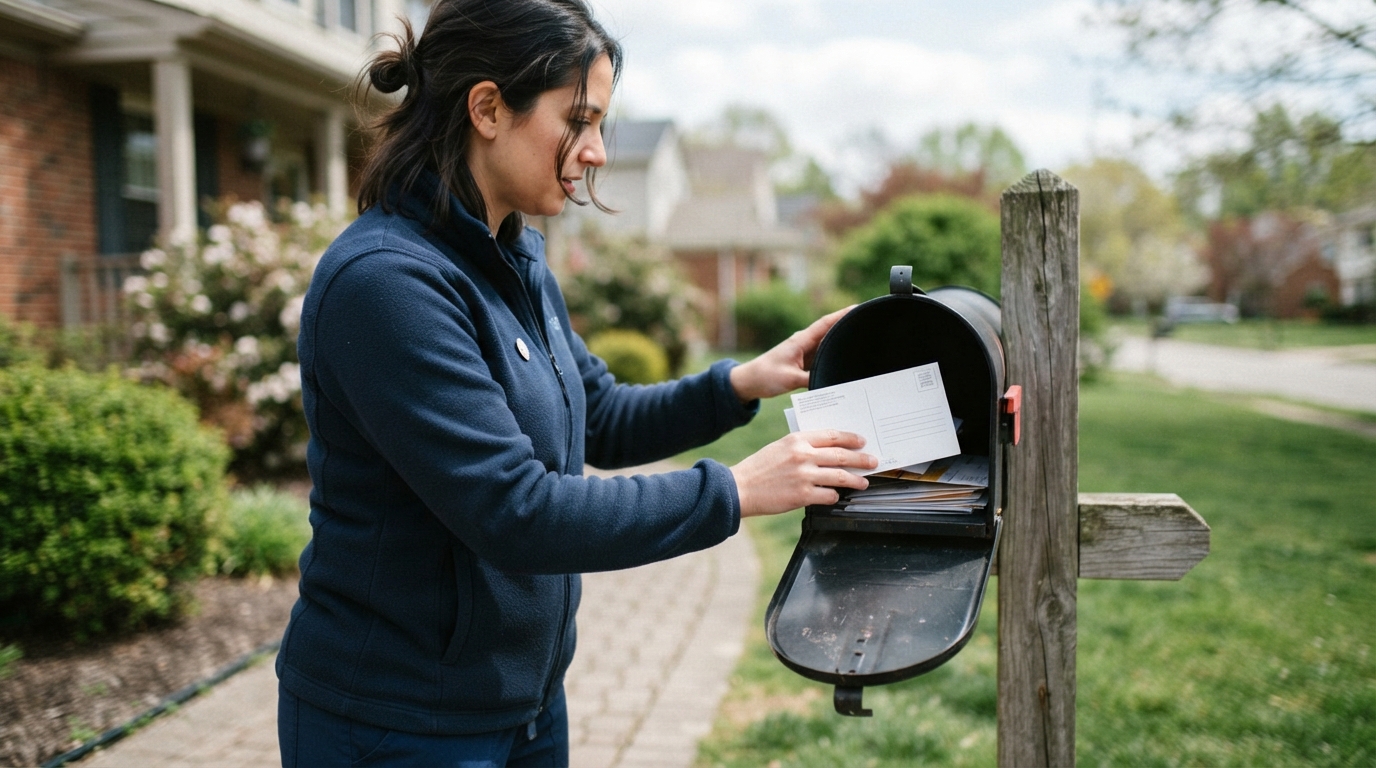
Personalized mail serves a different purpose. Instead of waiting for an active search, it introduces a relevant opportunity directly to a defined audience at home. It does not guarantee that every recipient will read, scan, apply, interview, or accept a role. It gives your organization a way to make the opportunity visible beyond the active-job-seeker audience.
When License-Based Direct Mail Is a Good Fit
A targeted direct mail campaign is often worth considering when ordinary recruiting channels are not closing a defined need. Common use cases include:
- A specific school nurse vacancy has remained open despite normal posting activity.
- The qualified local pool is limited, and many potential candidates are already employed.
- You need to recruit for several schools or locations within a defined service area.
- You are promoting a school health hiring event, open house, or information session.
- You want to build a nurse pipeline before the next school-year hiring cycle.
- You are a recruitment marketing agency that wants to add targeted mail without building an in-house design, print, postage, delivery, and tracking operation.
The model is most useful when the role, audience, geography, and follow-up path are clear. It is not a substitute for defining the position well or responding promptly when someone expresses interest.
How to Define the School Nurse Audience Before Mailing
Audience definition should happen before card design. Start with the recruiting decision you need the campaign to support.
- Define the role. Identify the required license type, acceptable related nursing backgrounds, school setting or grade levels, and any employment requirements that matter to the assignment.
- Define the geography. Choose the district, surrounding communities, practical commuting area, or broader rollout area.
- Define the campaign purpose. Decide whether you are recruiting for one vacancy, several schools, an event, or a longer-term candidate pipeline.
- Separate audience criteria from message criteria. Your audience might be licensed nurses within a geography. Your message might focus on student care, a school-based setting, or schedule framing.
- Plan the next step. Determine whether the recipient should apply, request information, register for an event, or begin a conversation.
RecruitCard matches audiences by license type, specialty, and geography. It does not treat school nurse recruitment as a generic mass mailing exercise. For organizations recruiting across several markets or nationwide, the same campaign model can support multiple locations while allowing audience and message choices to reflect each market.
The Anatomy of a School Nurse Recruitment Card
A school nurse card should make the opportunity understandable quickly. RecruitCard’s card approach centers on four components.
Personalized recipient name
The recipient’s actual first name can appear in the greeting or primary message. Personalization helps make the piece feel intended for a specific professional rather than sent as a generic local advertisement.
Specialty-specific message
The message should clearly describe a school-based nursing opportunity. It should not read like a general nursing vacancy. A message direction might be: “Bring your nursing experience to a school-based role serving students in your community.”
Credible employer branding
The card should identify the district, education organization, or hiring partner and present the work environment clearly. Your branding helps the recipient understand who is inviting them to learn more.
One clear action
A QR code and short URL should direct the recipient to one next step. That might be an application page, event registration, information page, or inquiry form.
Keep the card focused. It should answer the first practical questions: What is the role? Where is it? Why might it be relevant? What should the recipient do next? Trying to fit every job detail on the card can make the main message harder to understand.
What a Managed RecruitCard Campaign Includes
RecruitCard manages the direct mail campaign from audience planning through response tracking. A campaign includes:
- Audience targeting by license type, specialty, and geography.
- Card strategy and design aligned with your employer brand and school nurse role.
- Personalized recipient first name and one primary call to action.
- Printing, postage, and delivery.
- QR-code and landing-page response tracking.
- Support for a single-market campaign, broader rollout, or ongoing pipeline approach.
For recruitment marketing agencies, RecruitCard also offers white-label support. This allows an agency to offer a targeted direct mail channel under its own brand without taking on the print and mail operation itself.
How to Measure Interest in a School Nurse Campaign
Direct mail recruiting does not have to be unmeasured. Start with a campaign-specific QR code and landing page. RecruitCard can track QR scans and landing-page traffic, giving your team visibility into the digital engagement generated by the mailed card.
These signals can help you evaluate whether the message generated interest and whether a particular market or message direction warrants follow-up. They do not, by themselves, equal applications, interviews, hires, or return on investment.
The landing page should connect to a clear employer process. Depending on the campaign goal, that may be an application flow, an event registration page, or an inquiry form. Assign ownership for reviewing interest and following up before the campaign is delivered.
School Nurse Campaign Use Cases Beyond One Open Role
Hard-to-fill school nurse vacancy
Focus the card on the district, school setting, relevant role details, and a clear next step for learning more or applying.
District-wide hiring
Promote several openings across schools while keeping the intended nursing audience and geography defined.
Hiring event or open house
Use the card to invite qualified nurses to a scheduled conversation, open house, or school health information session.
School-year pipeline building
Introduce your organization to potential candidates before an urgent vacancy appears. This is useful when you expect recurring needs but do not want to begin awareness-building only after a role becomes difficult to fill.
New or expanded student services
Build awareness for a program or role that nurses may not discover through an ordinary job search.
Agency-led recruitment marketing
Add a direct-mail channel to a broader candidate-attraction program, with white-label support when appropriate.
Questions to Ask Before Choosing a Campaign
- Which license type or nursing background is required for the role?
- Which schools, communities, or locations should the audience cover?
- Is the goal an immediate application, a conversation, an event registration, or long-term pipeline awareness?
- What employer information will make the opportunity credible to an already-employed nurse?
- What one action should the recipient take after receiving the card?
- Where will QR scans and landing-page visits be reviewed, and who will follow up?
- Does the campaign need to support one market, multiple locations, or a nationwide rollout?
- If an agency is involved, should the campaign be delivered white-label?
Why RecruitCard Fits This Use Case
RecruitCard combines audience targeting, personalization, creative, print, postage, delivery, and response tracking in one managed campaign. It is built around licensed healthcare hiring and is particularly relevant when a defined role is not closing through ordinary posting channels.
This is not simply a mailing-list handoff. RecruitCard works with you to define the audience, develop the card, manage production and delivery, and track QR scans and landing-page traffic. The strongest fit is an employer or agency with a specific role or recruiting objective, a defined geography, and a workable follow-up process.
Plan a School Nurse Recruiting Campaign
License-based targeting begins with clarity: define the school nurse audience, create a personalized and relevant message, mail to the selected geography, and measure engagement through QR scans and landing-page traffic.
It is not a replacement for a clear role description, credible employer message, or responsive recruiting team. It is a way to bring a school nursing opportunity to the attention of qualified professionals who may not be actively searching for it.
Schedule a consultation to discuss your school nurse recruiting objective.
Enjoyed this? There's more from RecruitCard.
Book a 15-minute call →