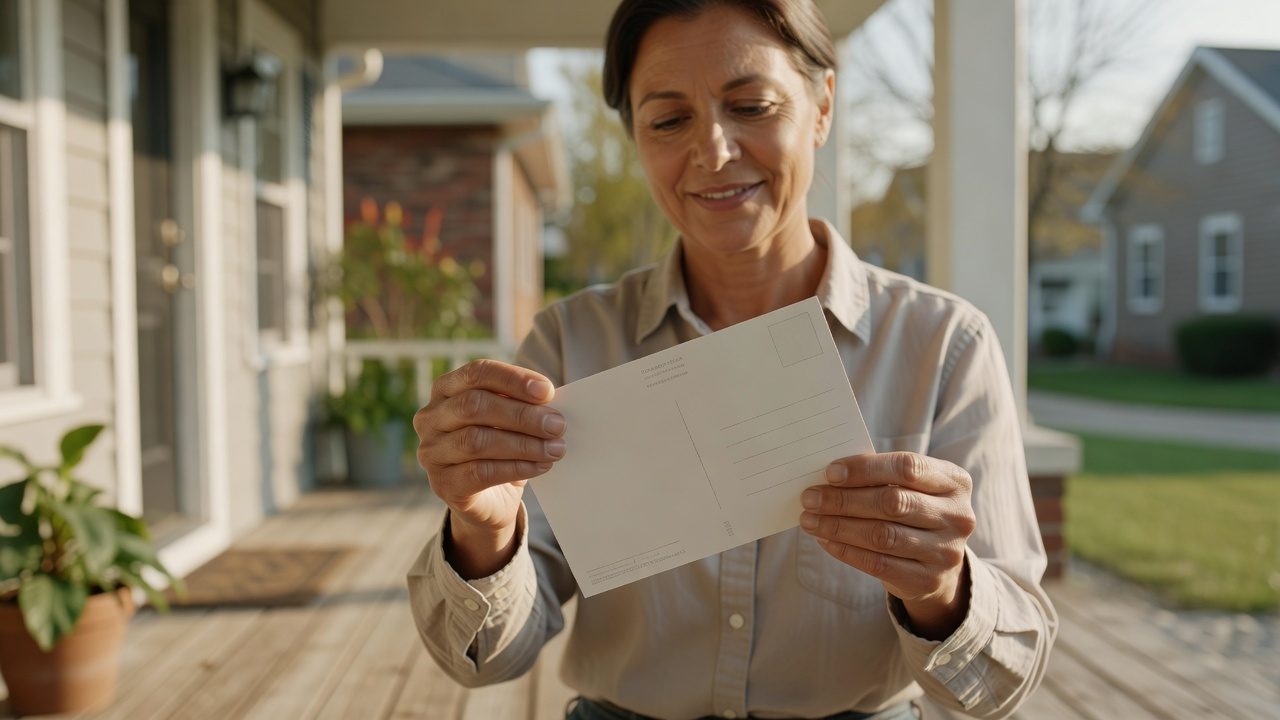
What a Licensed Professional Sees Before You See an Application

For a licensed professional, the first step is not an application. It is deciding whether a mailed opportunity deserves attention. This article is for healthcare employers and recruitment marketing agencies that want to understand how a personalized direct mail card can move a passive candidate from seeing a message to scanning a QR code, visiting a landing page, and considering a next step.
The Moment Before an Application
Many qualified licensed professionals are already employed. They may not be searching job boards, entering job titles into search engines, or clicking recruiting ads. An ICU nurse working a demanding schedule, a night shift RN, a rural physical therapist, or a specialty clinician may be open to the right opportunity without actively looking for one.
That creates a different first challenge. Before a candidate can consider an application, the message has to earn attention.
The purpose of a direct mail card is not to force an immediate application. Its purpose is to present a relevant opportunity and make the next step simple. For one person, that next step may be learning about a role. For another, it may be reviewing a hiring event, exploring an apprenticeship, or saving a page to revisit later.
What the Licensed Professional Sees First
A focused recruiting card should quickly answer a basic question: why should this opportunity matter to me? RecruitCard campaigns are built around four core card elements.
- The recipient's actual first name: A direct greeting that signals the message is meant for an individual recipient.
- A specialty specific message: Copy that speaks to the relevant license type, specialty, trade, or professional context.
- Credible employer branding: Clear presentation of the employer and its brand.
- One clear action: A QR code and short URL that lead to a defined digital destination.
License type, specialty, and geography matter before a card is designed. They shape both the intended audience and the message. A message for an OR RN in a defined area should not read like a broad message for any healthcare worker. The same is true for a respiratory therapist, dental hygienist, pharmacist, imaging professional, or case manager.
This is precision targeting, not a generic demographic mailing or a simple list handoff. The card, audience, and response path work together as one managed campaign.
Why Personalization Changes the First Impression
Using the recipient's actual first name makes the message more direct. It does not replace the need for a credible opportunity. A card still needs to explain what is being promoted and why it could be relevant.
In a brief first look, a recipient should be able to identify:
- The role, program, event, or opportunity being promoted.
- The location or geographic relevance.
- The license type or specialty connection.
- The employer behind the message.
- The next action to take.
Personalization supports relevance. It does not guarantee a scan, response, interview, or hire. The value is in making a well matched opportunity easier to notice and understand.
From Printed Card to QR Code Scan
A QR code creates a direct bridge from a printed card to a digital destination. The recipient can scan the code with a phone and arrive at a landing page built for the campaign. A short URL gives another option for someone who prefers to type the address into a browser.
The call to action should be singular and clear. Depending on the campaign, it might invite the recipient to learn about a role, view a hiring event, explore an apprenticeship, or review an employer's opportunity.
The candidate path
- The recipient notices the card.
- The recipient understands the opportunity and why it may be relevant.
- The recipient scans the QR code or visits the short URL.
- The recipient reviews the landing page.
- The recipient decides whether to continue, save the information, or take another available next step.
A simple path matters because the card has one job: make it easy for an interested professional to move from offline attention to useful information.
What the Landing Page Needs to Answer
The landing page should continue the message on the card. It should use consistent employer branding and give the recipient enough context to make an informed decision about what to do next.
A useful landing page can explain:
- The role, program, or event.
- The relevant license type, specialty, or professional background.
- The location or locations involved.
- The employer and the opportunity being presented.
- Key reasons a candidate may want to consider it.
- A clear next step, such as learning more, registering, expressing interest, or applying where appropriate.
The required content changes with the campaign objective. An individual requisition may focus on the role and application path. A hiring event can focus on event details and registration. An apprenticeship awareness campaign can explain the program before asking for any information. A long term pipeline campaign can introduce the employer and give qualified professionals a way to stay connected.
By providing context before asking for application information, the landing page can reduce friction for someone who was not actively job hunting when the card arrived.
How the Response Becomes Measurable
Direct mail recruiting does not have to end at the mailbox. QR scans and landing page traffic provide observable indicators of digital engagement with the mailed campaign.
Those signals should be interpreted accurately. A QR scan or landing page visit shows that someone interacted with the campaign. It does not, by itself, prove that person applied, interviewed, accepted an offer, or created a particular return on investment.
The landing page should connect clearly to your recruiting process so an interested visitor knows what to do next. That may mean proceeding to an application path, submitting an interest form, registering for an event, or reviewing program details. Response tracking helps you understand whether the offline message generated digital activity, without treating engagement as a guaranteed hiring outcome.
Why This Path Reaches People Job Boards May Miss
Job boards and paid search are active search channels. They generally depend on a person looking for a role, searching for a title, or engaging with recruiting content online. A targeted mailed message arrives differently. It introduces an opportunity to a professional at home without requiring that person to begin with a job search.
That does not mean every recipient will engage. It means direct mail can complement digital recruiting when the qualified local pool is small, already employed, or difficult to reach through active search behavior alone.
This approach can be particularly relevant for hard to fill units and specialized needs, including night shift roles, rural locations, niche clinical specialties, and ongoing local hiring. It can also support high volume roles where employers need to maintain awareness beyond a single posting.
What Happens After the Scan
After scanning, the recipient reviews the landing page and chooses what to do with the information. A candidate may continue to an application, submit an interest form, register for an event, explore an apprenticeship, or save the opportunity for later consideration.
The preferred action depends on the objective. A campaign for a specific requisition may direct interested visitors toward an application process. A hiring event may use registration. An apprenticeship campaign may prioritize program information. The path should stay simple and consistent with what the card promised.
RecruitCard manages the campaign as an end to end service, including audience targeting, creative, printing, postage, delivery, QR code and landing page experience, and response tracking.
When This Approach Fits Your Hiring Need
A direct mail recruiting campaign can fit when a particular need is not closing through normal channels, when the qualified local pool is small, or when you need a steady way to reach relevant professionals. It can also fit opportunities that candidates may not know to search for.
In licensed healthcare, that can include hiring needs involving ICU, ED, OR, L&D, oncology, case management, rehab, imaging, laboratory, respiratory therapy, dental hygiene, pharmacy, and behavioral health. The same model can support hiring events, open houses, apprenticeship awareness, and long term candidate pipeline building.
Campaigns can be planned for a single market or a nationwide rollout. Audience matching is based on the relevant license type, specialty, trade, and geography for the campaign objective.
A Practical Campaign Brief
A clear brief helps establish a useful audience, message, and landing page path. Before planning a campaign, define the following:
- The license type, specialty, or trade to reach.
- The relevant geography.
- The role, shift, location, or locations involved.
- The campaign objective, such as a single opening, several locations, an event, an apprenticeship, or an ongoing pipeline.
- Your employer brand requirements.
- The action you want visitors to take after reaching the landing page.
Recruitment marketing agencies can also offer this channel under their own brand through RecruitCard's white label option. That gives agencies an end to end direct mail operation without taking on the targeting, creative, print, postage, delivery, and response tracking work internally.
If you are evaluating whether this path fits a hard to fill role or awareness campaign, Book a 15-minute call.
Frequently Asked Questions
What does a licensed professional see before an application?
They see a personalized, specialty relevant message that explains the opportunity and provides one clear next step through a QR code or short URL.
Can a QR scan be tracked?
Yes. QR scans and landing page traffic can be used to measure digital engagement from the mailed campaign. Those signals should remain distinct from applications, hires, and other downstream outcomes.
Is this the same as buying a generic mailing list?
No. The campaign is built around matching an audience by license type, specialty or trade, and geography rather than sending a broad demographic mailing.
Can the campaign promote something besides a job opening?
Yes. The same approach can support hiring events, open houses, apprenticeship awareness, and long term candidate pipeline efforts.
Can an agency offer this service under its own brand?
Yes. RecruitCard offers a white label option for recruitment marketing agencies that need an end to end direct mail operation.
Enjoyed this? There's more from RecruitCard.
Book a 15-minute call →