What a Nationwide Licensed Healthcare Recruitment Campaign Is Designed to Do

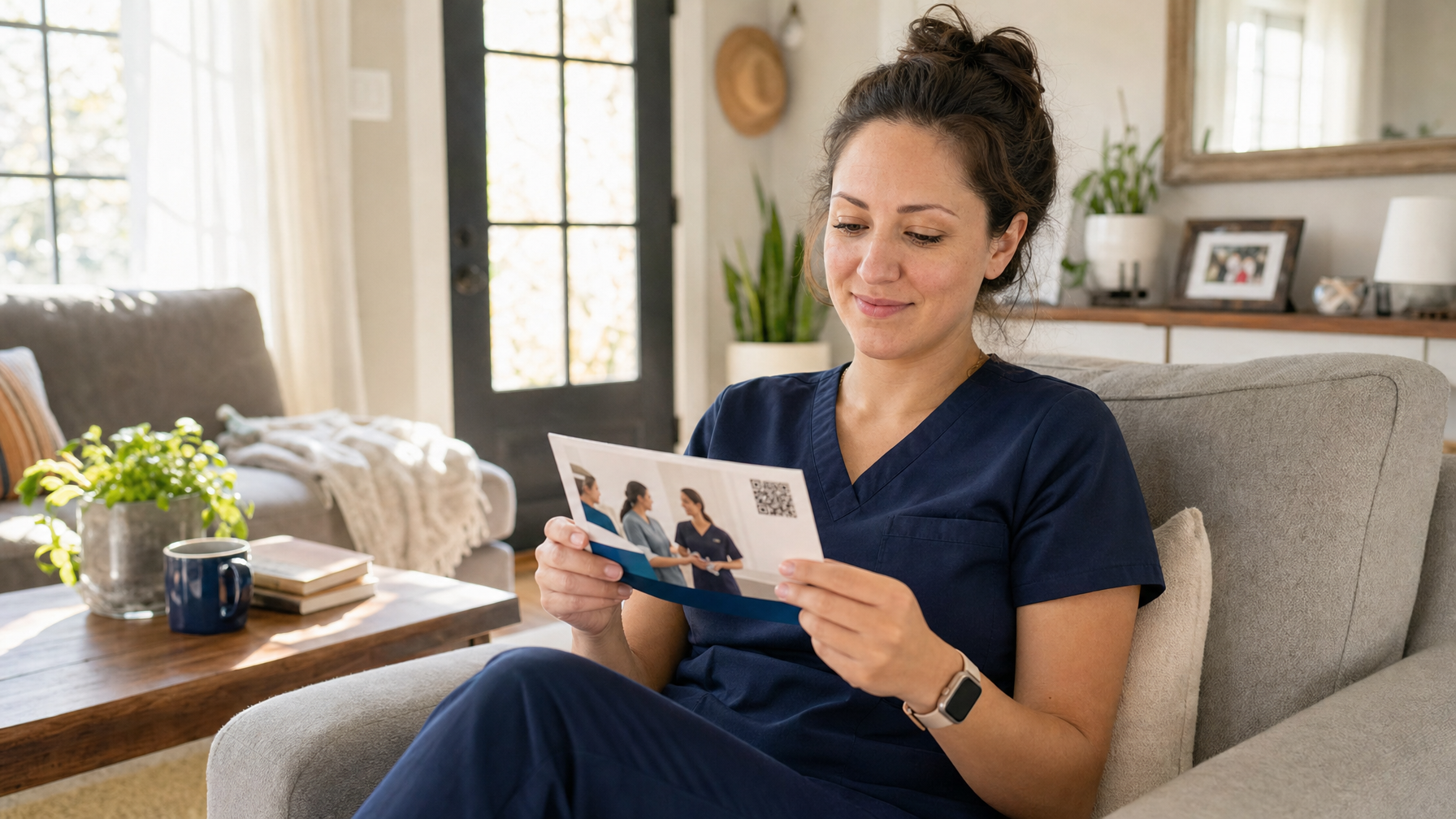
A nationwide licensed healthcare recruitment campaign is designed to connect a specific employer message with qualified professionals across selected United States locations. It uses matching by license type, specialty, and geography, then sends a personalized card that directs candidates to one clear next step.
- It supports national hiring without treating every healthcare professional as the same audience.
- It can focus on roles such as ICU nursing, rural physical therapy, pharmacy, behavioral health, or other specialized needs.
- It combines recipient personalization, specialty specific messaging, employer branding, and one response action.
- It can support one role, several locations, a hiring event, an apprenticeship, or a longer term candidate pipeline.
- Response activity can be reviewed through QR scans and landing page traffic.
What a nationwide licensed healthcare recruitment campaign is designed to do
A nationwide campaign applies a consistent recruiting process across selected markets while keeping the audience and message relevant to each hiring need. It is built for hospital and health system talent teams, as well as other healthcare employers, that need to reach licensed professionals for hard to fill units and specialized roles.
The audience is matched around license type, specialty, and geography. That means an ICU nursing need, a rural physical therapy opening, and a pharmacy role can each have a distinct audience and message. National reach does not mean sending one generic healthcare message to everyone.
RecruitCard manages the campaign as one service, including audience matching, card design, printing, postage, delivery, and response tracking. The card carries the employer's brand, the recipient's actual first name, a specialty relevant message, and one clear response path.
Use national reach without losing recruiting precision
National reach can remain precise when the campaign begins with the professional group and locations that matter to your hiring objective. A campaign can be organized around registered nurses for intensive care units, physical therapists for rural facilities, dental hygienists for practices, or pharmacists for hospital and infusion settings.
The same framework can support several locations under one employer brand. Your organization can keep the core employer message consistent while adapting the specialty, practice setting, location, or candidate action for each need. This is useful when several facilities share a hiring priority but do not need identical creative.
Who this approach is for
This approach is especially relevant when you need licensed professionals who may already be employed and are not actively searching job boards. It can also support healthcare employers with ongoing local hiring needs, such as CNA, HHA, and caregiver roles, when the audience and message need to stay focused.
Match the message to the licensed healthcare role
A specialty specific message helps a recipient understand why an opportunity is relevant to their work. A broad statement that an organization is hiring healthcare professionals gives little context to an ICU nurse, an OR nurse, a behavioral health clinician, or a rehabilitation professional.
Useful campaign messaging can identify the unit or practice setting, work context when relevant, location, employer value proposition, and desired next action. For example, a message for a night shift nursing role can clearly name the unit, shift context, facility location, and landing page action without trying to describe every role at the organization.
This focus is particularly helpful for positions that may remain open through normal recruiting channels, including night shift, rural, and niche specialty roles. The employer brand should remain visible so the recipient understands who is hiring and why the opportunity may fit.
The four parts of the campaign card
An effective recruitment card brings the recipient, role, employer, and next step together in one direct communication.
Personalized recipient name
The card uses the recipient's actual first name. This makes the communication feel addressed to a person rather than sent as a general employment advertisement.
Specialty specific message
The message speaks to the license, clinical specialty, trade, or role connected to the hiring need. It can name an ICU, ED, OR, L&D, oncology, case management, physical therapy, pharmacy, or another relevant setting.
Credible employer branding
The organization, facility, practice, or program is presented clearly and consistently. Recipients should be able to see who is communicating and what opportunity or program is being introduced.
One clear action
A QR code and short URL direct the recipient to a focused landing page or response path. One clear action keeps the card easy to understand and helps align the mail piece with what happens after a scan.
Support different nationwide hiring objectives
A nationwide campaign can support more than one open requisition, provided each audience and message remains tied to a clear objective.
- Single requisition: Focus on one difficult role, unit, specialty, or location.
- Multiple locations: Adapt the audience and message for several facilities or markets while maintaining the employer brand.
- Hiring event or open house: Invite relevant licensed professionals to register, learn more, or attend.
- Apprenticeship or training awareness: Introduce a program that candidates may not find through a standard job search.
- Long term pipeline: Maintain awareness among relevant professionals before the next vacancy opens.
- High volume local hiring: Apply the same precision approach to recurring CNA, HHA, and caregiver needs.
What national scale does not mean
National scale does not mean buying a generic mailing list or sending a broad message to an undefined demographic. It means combining operational reach with audience matching and message relevance.
- It does not guarantee applications, hires, response rates, or return on investment.
- It does not replace a focused offer, clear employer information, and a useful landing page.
- It does not require every location or specialty to receive identical creative.
- It does not treat all licensed healthcare professionals as one audience.
Measure the response after the card arrives
QR scans and landing page traffic provide observable response activity after the card arrives. A dedicated landing page should match the card's message and call to action so the candidate sees a consistent next step.
When the campaign structure supports it, you can review response activity by specialty, location, or message. This can help inform future campaign planning. Response tracking shows campaign activity, but it does not by itself establish cost per hire or return on investment.
What RecruitCard manages for you
RecruitCard manages the direct mail recruiting process from campaign planning through response tracking. The service includes:
- Audience matching by license type, specialty, and geography.
- Creative development with the recipient's first name, employer brand, specialty specific messaging, and one clear action.
- Printing, postage, delivery, and campaign coordination.
- QR code and landing page response tracking.
- Support for single market and nationwide rollouts.
- White label delivery for recruitment marketing agencies that want to offer the channel under their own brand.
When a nationwide campaign is a practical fit
A nationwide campaign is a practical fit when precision outreach can add a path beyond normal recruiting activity. Consider this model when:
- The role requires a license or specialty, and the qualified pool may be limited or already employed.
- A requisition has remained open despite normal recruiting activity.
- You need to promote the same type of role across several locations.
- You want to build awareness before a vacancy, hiring event, or apprenticeship application period.
- You are a recruitment marketing agency seeking a managed direct mail service without creating your own print, postage, and tracking operation.
Plan the next campaign conversation
Start by identifying the license type, specialty, geography, hiring objective, employer message, and desired candidate action. That preparation makes it easier to decide whether precision targeting and employer specific messaging fit the role you need to fill.
Next step: Bring the role or program you want to promote, the locations involved, and the action you want candidates to take. Book a 15-minute call to discuss whether a managed direct mail campaign fits your hiring need.
Frequently asked questions
These answers address common questions about nationwide licensed healthcare recruitment campaigns.
Can one campaign cover several locations?
Yes. A campaign can support multiple locations or a nationwide rollout while matching the audience and message to the relevant license type, specialty, and geography.
Is this the same as mailing a generic healthcare list?
No. The approach is precision matching by license type, specialty, and geography, with a message built for the specific hiring need.
Can the campaign focus on a specialty such as ICU or OR nursing?
Yes. A campaign can be built around a specific unit, specialty, or other licensed healthcare role rather than addressing all healthcare professionals alike.
Can this support a hiring event or apprenticeship?
Yes. The model can promote hiring events, open houses, apprenticeship awareness, and other opportunities that candidates may not find through a standard job search.
How is response activity measured?
The campaign can use a QR code and landing page so you can review scans and landing page traffic. Specific hiring or return results should not be assumed without additional measurement.
Does RecruitCard handle the mailing process?
Yes. The managed service includes audience matching, creative, printing, postage, delivery, and response tracking.
Sources
These resources provide general information about healthcare occupations and the United States health workforce.
Enjoyed this? There's more from RecruitCard.
Book a 15-minute call →