What a Technical Recruiting Mail Campaign Actually Includes
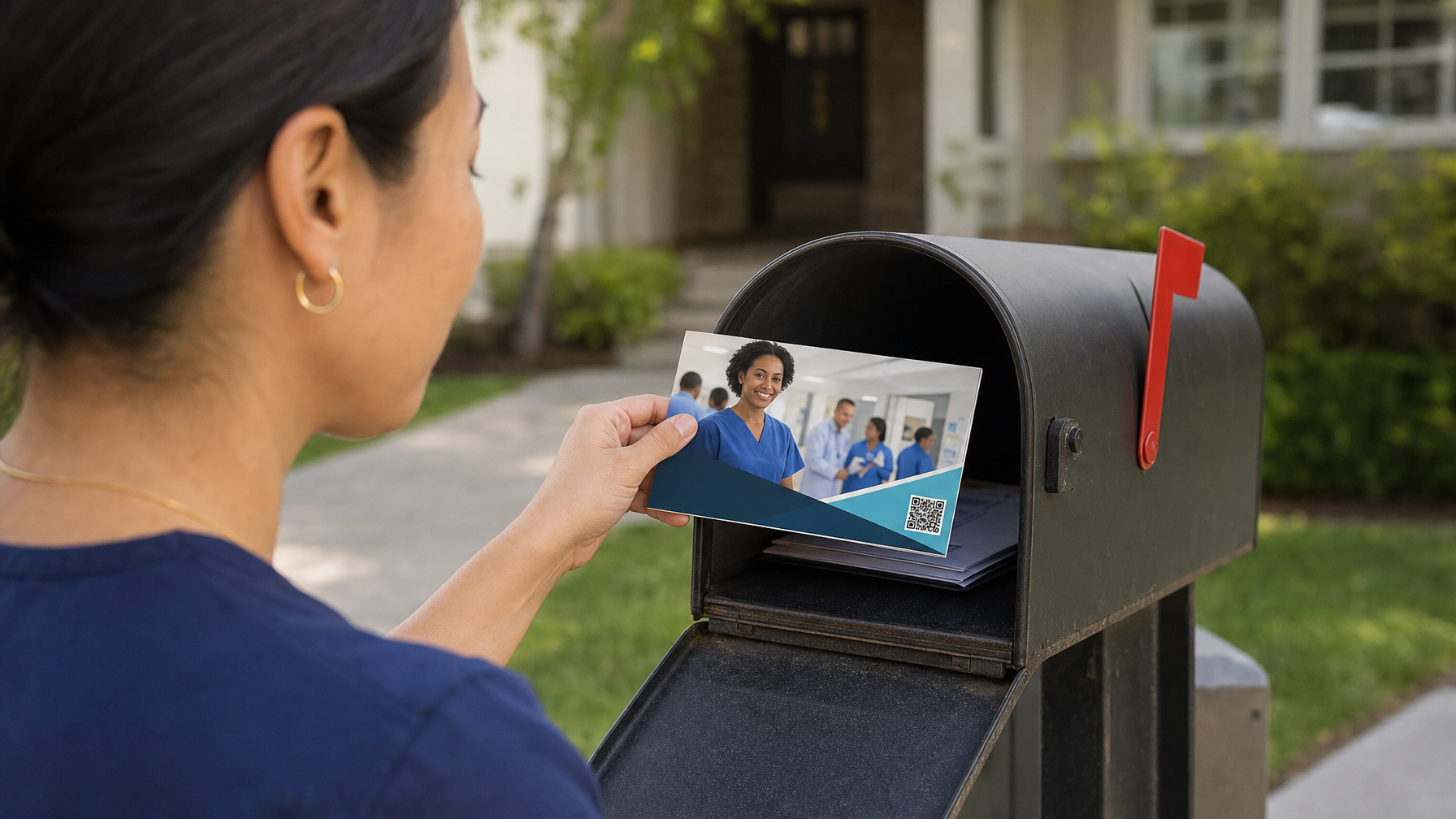
A technical recruiting mail campaign is a managed process, not a purchased mailing list. RecruitCard can coordinate audience targeting by license type, specialty or trade, and geography, then manage personalized card design, printing, postage, delivery, and response tracking for employers hiring hard-to-reach licensed or certified professionals.
Who This Article Is For
This guide is for hospital and health-system HR and talent-acquisition teams hiring licensed healthcare professionals for difficult roles. That may include RNs or LPNs for ICU, ED, OR, labor and delivery, oncology, case management, rehabilitation, or night-shift work.
It is also relevant to engineering and skilled-trade employers seeking licensed or certified candidates, as well as recruitment marketing agencies that want to offer a white-label direct mail service without operating their own print, postage, and response-tracking workflow.
A campaign can support several recruiting objectives:
- A specific requisition that is not closing through normal channels.
- Ongoing local hiring for recurring roles such as CNAs, HHAs, caregivers, or similar positions.
- A hiring event, open house, apprenticeship, training program, or new-facility announcement.
- Long-term candidate pipeline development before a vacancy is open.
A Campaign Is More Than a Mailing List
A generic list handoff gives you contact or mailing data and leaves the rest to your team. A managed recruiting mail campaign connects the full workflow: audience planning, creative development, personalization, physical production, delivery, and response measurement.
The key is not simply sending mail. It is matching a defined audience with a message that fits the recruiting objective. For example, an ICU night-shift opening needs a different audience and message than a dental hygiene role near a practice, a physical therapy opening serving a rural area, or an apprenticeship awareness campaign.
RecruitCard is positioned as a managed campaign partner. The work extends beyond audience planning to the card itself, the mailing process, and a measurable response destination.
1. Audience Targeting by License, Specialty, and Geography
Precision targeting means defining the audience by the license type, specialty or trade, and geographic area relevant to your need. It is not a broad demographic mailing.
Depending on the campaign brief, an audience may focus on:
- ICU nurses in a defined market.
- Dental hygienists near a practice or group of practices.
- Physical therapy candidates relevant to a rural hiring need.
- Licensed tradespeople in selected locations.
The campaign brief should establish what is actually in scope before creative work begins. Useful details include the role, license type, specialty or trade, locations, and the shift or work setting when those details matter to the decision.
It should also identify the action you want recipients to take. A candidate may be asked to view a role, register for an event, learn about a program, or enter a recruiting process through a designated landing page.
2. Personalized Card Strategy and Creative
A recruiting card should be direct and specific. RecruitCard's card approach has four core components:
- Personalized name: The recipient's actual first name appears on the card.
- Specialty-specific message: The copy speaks to the relevant role, unit, specialty, trade, or recruiting objective.
- Credible employer branding: Your logo and employer brand can be incorporated into the creative.
- One clear action: The card directs the recipient to one primary next step through a QR code and short URL.
The message should give the recipient a reason to pay attention. For a nursing campaign, that might mean addressing the unit, work setting, or night shift. For a hiring event, it may mean stating the event purpose and what the recipient can do next. For an apprenticeship, it should explain the program awareness objective in plain language.
One primary call to action helps avoid confusion. Rather than asking recipients to call, email, visit several pages, and complete multiple steps, the card can direct them to a single response destination.
3. Printing, Postage, and Delivery
After the creative is approved, RecruitCard manages the physical production steps: printing, postage, and delivery. Your team does not need to coordinate separate production vendors for each part of the mail process.
This is a practical difference between a managed campaign and a list vendor. A list provider may stop after providing data. A managed campaign carries the work through the card's production and delivery.
Campaigns can be planned for a single market or for a nationwide rollout, depending on the role and recruiting objective. A local need may call for a defined geographic focus, while a multi-location initiative may require several geographic segments or a broader rollout.
4. Response Tracking Through QR Codes and Landing Pages
The QR code on the card directs recipients to a campaign landing page or other designated response experience. This creates a measurable connection between the physical mail piece and online activity.
RecruitCard can track QR scans and landing-page traffic. These measures help show whether recipients engaged with the card and visited the campaign destination.
That activity is useful for reviewing campaign engagement. It should not be treated as a guarantee of applications, interviews, hires, response rates, or return on investment. The landing-page experience still needs to make sense for the next step you are asking a candidate to take.
How the Pieces Work Together
A technical recruiting mail campaign works as a sequence of connected decisions:
- Define the hiring objective.
- Identify the license type, specialty or trade, and geography in scope.
- Develop a personalized message and one clear action.
- Review and approve the card creative.
- Print, apply postage, and deliver the campaign.
- Review QR scans and landing-page traffic after delivery.
A mismatch at any point can weaken the effort. A precise audience still needs a relevant message. A strong message still needs one understandable next step. And a QR code needs a destination that supports the actual recruiting goal.
Consider a hard-to-fill rural night-shift healthcare role. The audience definition may center on the relevant license, specialty, and geography. The card should then address the work setting or shift in a way that is relevant to that audience. The action might send recipients to a page built specifically for learning about that role. Each part supports the same objective.
What Technical Recruiting Mail Can Support
Direct mail recruiting is not limited to one open job. It can support several types of workforce needs.
Individual difficult requisitions
For a role that has remained open despite job postings and other standard activity, a targeted mail campaign can add a direct outreach channel to professionals who may not be actively looking.
Continuous local hiring
Employers with recurring needs for CNAs, HHAs, caregivers, or other high-volume roles can use the same model to maintain recruiting awareness in a defined area.
Events and awareness campaigns
A campaign can promote a hiring event, open house, apprenticeship, training program, or new facility. This is useful when the opportunity is not something a candidate would necessarily search for on a job board.
Pipeline development
You can also use direct mail to build awareness with relevant professionals before the next vacancy opens. The objective is not limited to immediate application activity.
Multi-location initiatives
When hiring spans more than one market, the campaign can be structured around multiple locations or a nationwide recruiting initiative.
Why Mail Can Reach Candidates Digital Channels Miss
Job boards and paid search are primarily built around active behavior. They depend on people searching for jobs, browsing related content, or engaging with digital advertising.
Many licensed or certified professionals are already employed and are not actively searching. They may not see your posting, even when they could be open to the right role, setting, shift, or location.
Targeted direct mail is an additional outreach channel for these passive candidates. It reaches recipients at home with a message built around their relevant license type, specialty or trade, and geographic area. It does not guarantee attention or reach every passive professional. It gives your team another way to create awareness beyond conventional digital recruiting.
What RecruitCard Manages for You
RecruitCard manages the components of an end-to-end direct mail recruiting campaign:
- Audience targeting by license type, specialty or trade, and geography.
- Card strategy, copy, and creative that incorporates employer branding.
- Personalization using the recipient's actual first name.
- Printing, postage, and delivery.
- QR code and landing-page response tracking.
For recruitment marketing agencies, RecruitCard also offers a white-label option. This allows an agency to offer a direct mail channel without building its own in-house print, postage, delivery, and tracking operation.
Questions to Settle Before Launch
A clear brief helps align the audience, card, response destination, and measurement plan. Before launch, settle these questions:
- Which role, license type, specialty or trade, and geography are in scope?
- Is the campaign for one requisition, recurring hiring, an event, an apprenticeship, or pipeline development?
- What should a recipient do after receiving the card?
- Which employer-brand elements and specialty-specific details should appear in the creative?
- Which activity should the team review after delivery, including QR scans and landing-page traffic?
Frequently Asked Questions
Is this the same as buying a generic mailing list?
No. The campaign is built around license type, specialty or trade, and geography. It is then connected to personalized creative, production, delivery, and response tracking.
Can you target a specific healthcare unit or specialty?
Yes. A campaign can be planned around defined specialties and roles, such as ICU, OR, night shift, rehabilitation, or other hard-to-fill needs, subject to the audience brief.
Do you handle design and printing?
Yes. RecruitCard manages card design, personalization, printing, postage, and delivery as part of the managed campaign.
Can a campaign be nationwide?
Yes. RecruitCard supports both single-market campaigns and nationwide rollouts.
How are results measured?
QR scans and landing-page traffic provide measurable indicators of engagement with the campaign destination. They do not by themselves guarantee applications, interviews, or hires.
Discuss Your Campaign Objective
A technical recruiting mail campaign covers the full path from audience definition and personalized creative to physical delivery and measurable response activity. If you are working on a hard-to-fill licensed or certified role, hiring event, apprenticeship, or pipeline need, a short planning conversation can help clarify the audience and objective.
Enjoyed this? There's more from RecruitCard.
Book a 15-minute call →