What Long Term Care Employers Consider When Shifting Spend Toward Continuous Caregiver Hiring

Continuous caregiver hiring works best as an ongoing recruitment channel, not as a temporary response to one vacancy. This approach is for long term care employers that need a steady pipeline of CNAs, HHAs, or caregivers across recurring roles, shifts, or facilities.
- Continuous hiring needs a defined audience, relevant message, and response process that can be repeated as needs recur.
- Job platforms primarily engage active candidates who are already searching or applying. Targeted mail can add a way to reach employed caregivers who are not browsing openings.
- Audience planning should focus on caregiver role and geographic area, not a broad household or demographic list.
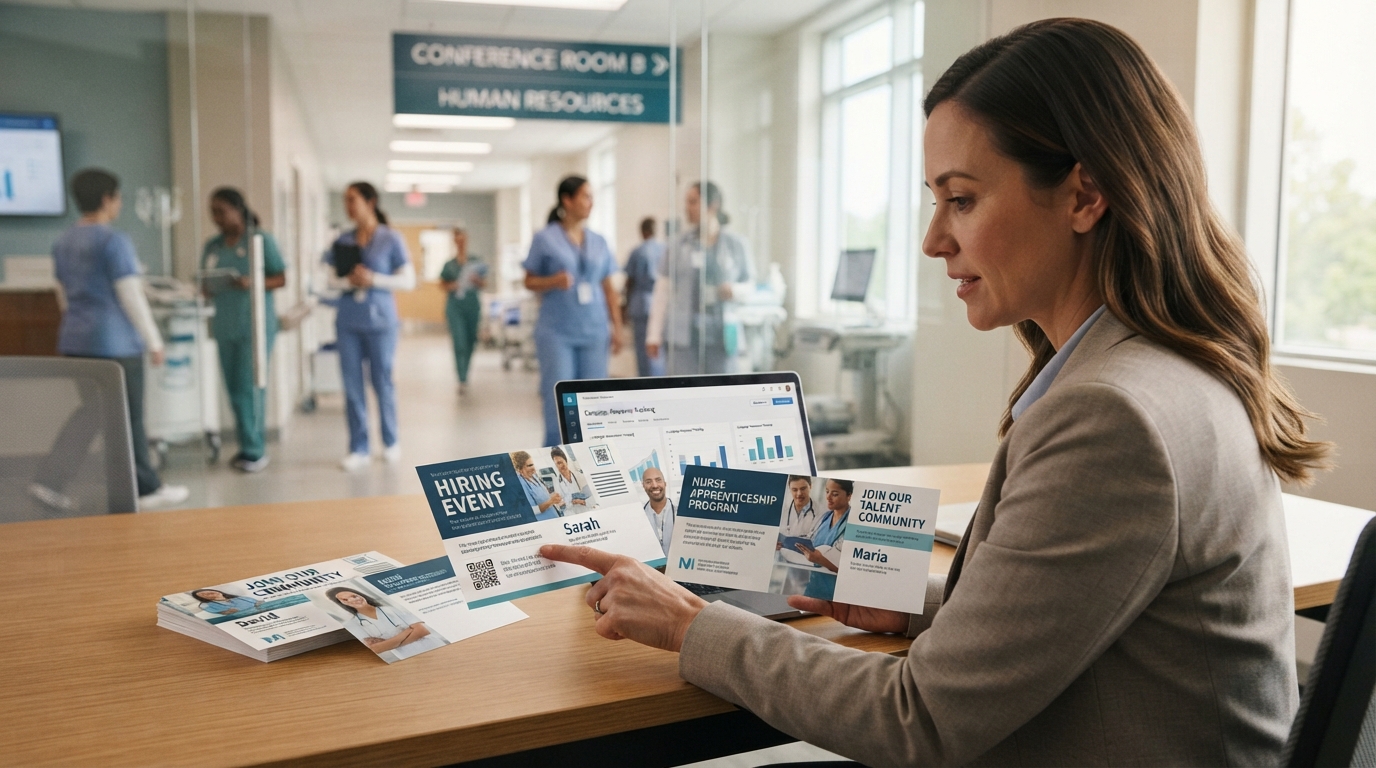
- Each card should use the recipient's actual first name, a caregiver specific message, credible employer branding, and one clear action through a QR code and short URL.
- RecruitCard manages targeting, creative, printing, postage, delivery, and response tracking for single market and nationwide campaigns.
Why continuous caregiver hiring requires a different approach
Continuous caregiver hiring creates a recurring audience and communication problem, not just a single requisition problem. Long term care organizations may need to recruit for similar caregiver roles across multiple facilities, shifts, and periods of staffing need.
An active candidate is someone already searching for work, applying, or engaging with job openings. A passive candidate is someone who is employed or not currently looking, but who may consider a different schedule, location, workplace setting, or employer.
Job boards and digital recruiting remain useful channels. However, they are built around people who are actively engaging with job search content. A continuous mail campaign can add another path to caregivers who may not be visible through that activity at a given moment.
What to evaluate before moving toward continuous hiring
Employers should evaluate the hiring pattern, audience, message, and measurement plan before choosing an ongoing campaign structure. The goal is to define a repeatable recruiting process rather than send mail without a clear purpose.
Confirm the recurring need
Start with the locations, caregiver roles, and shifts that regularly need attention. A recurring need might involve CNAs at several facilities, HHAs serving a defined local area, or caregivers needed for particular schedules.
Choose the recruiting goal
Decide what the campaign should support. The response path may be direct application, hiring event registration, an open house, an information request, or employer awareness in a defined market.
Define the audience and market
Keep roles distinct where possible. A campaign for CNAs should not automatically use the same audience or message as one for HHAs or caregivers. Then map the geographic area around each facility or hiring market.
Set the message and follow up plan
Your message can focus on the workplace setting, available schedules, team environment, growth opportunity, a local facility, or a specific event. Avoid vague general hiring language and unsupported promises. Before mail is delivered, decide who will handle scans, landing page visits, applications, and event registrations.
Why generic mailing lists are not enough for caregiver recruitment
A continuous caregiver campaign should be built around role and geography rather than a generic mailing list. Broad household targeting can create reach, but it does not necessarily connect the message to people relevant to your caregiver need.
RecruitCard plans audiences using license type, specialty or trade, and geographic location. For caregiver recruitment, the campaign brief can distinguish the role being recruited and the areas connected to one facility or several facilities. This is different from treating every household in a broad area as equally relevant.
For example, a long term care employer recruiting CNAs for several facilities can plan a focused audience and adapt the message to the hiring areas involved. That precision helps avoid delivering the same recruiting message to people who are unlikely to fit the role.
The four parts of a caregiver recruiting mail piece
An effective caregiver mail piece should make the recipient feel recognized, understand the opportunity, trust the employer, and know what to do next. The card should have one focused job to do.
Personalized recipient name
Use the recipient's actual first name where approved for the campaign. Personalization makes the message feel directed to a person rather than sent as a general announcement.
Caregiver specific message
Speak directly to the caregiver role, facility setting, shift need, hiring event, or local opportunity. “Now hiring” alone gives little reason to act. A role specific message provides useful context.
Credible employer branding
Use the employer's brand and relevant workplace context so recipients can understand who is reaching out. The card should present a clear, recognizable employer identity.
One clear action
Direct recipients to one QR code and short URL. That destination should match the campaign goal, such as an application page, event registration page, information form, or recruiting contact path.
Image planning: If this article uses an image, show a finished caregiver recruiting postcard on a kitchen table beside a phone showing a recruitment landing page. Do not use a blank, damaged, or unrelated postcard.
How continuous caregiver hiring can support different recruiting goals
The same targeted mail model can support recurring caregiver vacancies, hiring events, and longer term pipeline building. The audience, message, geography, and action should change to match the goal.
Ongoing local hiring
Recurring campaigns can support facilities that regularly need CNAs, HHAs, or caregivers. The campaign brief can keep the audience tied to the relevant role and local market.
Hiring events and open houses
A card can invite qualified recipients to register for an event or take another defined response action. The date, location, and next step should be easy to find and understand.
Employer awareness
Direct mail can introduce a facility, service line, or workplace opportunity that potential candidates may not find during a job search. This is useful when the campaign needs to create awareness before asking for an application.
Pipeline building and multiple locations
An employer can continue communicating with a relevant audience before the next vacancy opens, subject to its campaign plan and response process. Campaigns can support one market or a broader rollout, with each location's geography and message defined in the campaign brief.
How to measure whether the campaign is producing interest
QR scans and landing page traffic provide direct indicators of engagement with the mail piece. They show whether recipients took a measurable step after receiving the campaign.
- Track QR scans connected to the campaign.
- Review landing page visits from the QR code and short URL.
- Connect the landing page to the intended action, such as applying, registering for an event, requesting information, or contacting the recruiting team.
- Document what happens after a scan or visit, including completed actions and later recruiting outcomes.
These measures show engagement and traffic. They do not guarantee a hire or a return on investment. A clear follow up process helps your team distinguish scans, page visits, completed actions, and later hiring activity.
What RecruitCard manages for long term care employers
RecruitCard manages the campaign from audience planning through response tracking instead of handing over a mailing list alone. The managed service includes audience targeting by caregiver role and geography, card design, printing, postage, delivery, and QR code and landing page response tracking.
The card can feature your employer brand, the recipient's first name, a caregiver specific message, and one clear action. RecruitCard can support a single market or a nationwide rollout.
Ready to discuss a continuous caregiver hiring campaign? Book a 15-minute call.
How to decide whether continuous caregiver hiring is a fit
Continuous hiring is a strong fit when the employer has a recurring caregiver need and can define the audience, message, and response path. It is especially relevant when the same roles remain difficult to fill, the qualified local pool is limited, or many potential candidates are already employed.
- Use this approach when you need a recurring caregiver pipeline instead of one burst of applications.
- Use it when you can define the role, geography, and intended action clearly.
- Use it when your recruiting team can respond promptly to scans, landing page visits, event registrations, or applications.
- Use a different campaign brief when the need is too broad to define by caregiver role, geography, or action.
Frequently asked questions
Is this only for one open caregiver position?
No. The same model can support recurring CNA, HHA, and caregiver hiring, hiring events, open houses, and longer term pipeline building.
How is this different from posting a caregiver job online?
A job posting primarily reaches people who are actively looking. Targeted mail adds a way to reach employed caregivers who may not be searching at that moment.
Can the audience focus on a specific caregiver role and location?
Yes. The campaign can be planned around license type, specialty or trade, and geographic location rather than a generic mailing list.
Can we measure response?
Yes. QR scans and landing page traffic can show engagement with the campaign. Your team should also define how applications, event registrations, and other downstream responses will be recorded.
Does RecruitCard handle design and mailing?
Yes. The managed service includes audience targeting, card design, printing, postage, delivery, and QR code and landing page response tracking.
Sources
Enjoyed this? There's more from RecruitCard.
Book a 15-minute call →