Why Night-Shift Roles Need a Different Candidate-Reach Strategy

Night-shift roles often need a different candidate-reach strategy because the qualified professionals you want may already be employed and not actively searching during the day. For hospital and health-system HR and talent-acquisition teams hiring hard-to-fill overnight roles, including ICU, ED, OR, L&D, oncology, case management, and similar specialties, targeted and personalized direct mail can complement job boards and paid search by reaching licensed candidates based on license type, specialty, and geography.
Why Night-Shift Hiring Is Especially Difficult
An overnight opening does not compete for every person with a broad title such as “RN.” It competes for the smaller group of professionals who have the required license, relevant specialty experience, workable commute, and willingness to take a night schedule.
That practical candidate pool can narrow quickly. An ICU night-shift RN needs more than an active nursing license. The role may require critical-care experience, familiarity with a particular type of unit, and a schedule that works with the candidate’s life. An overnight ED opening has its own experience and pace requirements. A rural facility seeking a specialized clinician may have a smaller nearby pool before the recruiting message is even considered.
The problem is not only visibility. Your posting can be visible to active job seekers and still miss qualified, already-employed professionals who are not looking at job boards or searching for a new role online.
Why Job Boards and Paid Search May Miss Passive Night-Shift Candidates
A passive candidate is a qualified professional who is employed and not currently searching for a new role. They may be open to hearing about the right opportunity, but they are not necessarily browsing job boards, entering job-related searches, or clicking recruiting ads.
Job boards and paid search can be useful parts of a recruiting plan. They are built around a person noticing a digital message, clicking it, and taking action. That works well when someone is actively looking. It has a structural limitation when the person you want is qualified for a night-shift role but is not searching for one online.
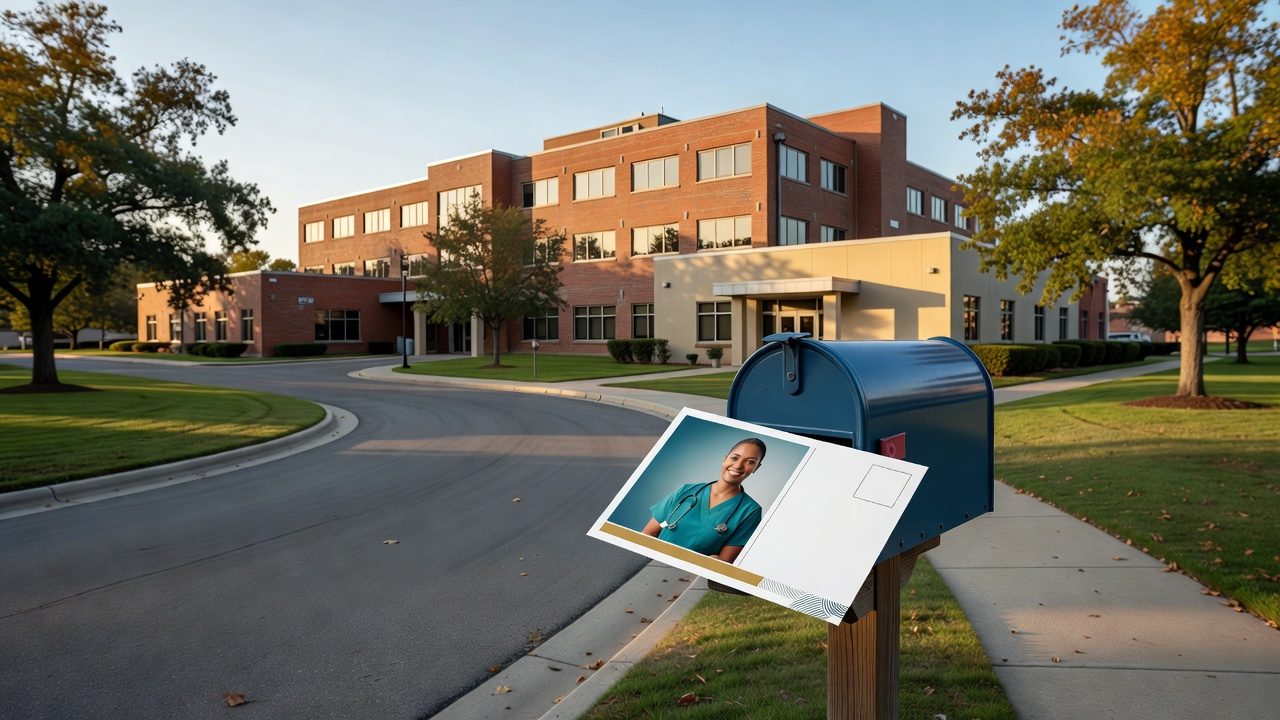
Direct mail is not a replacement for every recruiting method. It is a complementary reach channel for cases where normal digital activity is producing too few relevant conversations. A mailed card can put a defined opportunity in front of a licensed professional at home, rather than waiting for that person to begin a search.
What a Different Reach Strategy Looks Like
A different reach strategy starts with the role itself, not a generic demographic or broad purchased-list approach. RecruitCard campaigns are planned around:
- License type: the professional qualification connected to the role.
- Specialty or trade: the experience area, unit, or discipline relevant to the opening.
- Geography: the market or markets connected to your hiring need.
For example, an employer recruiting for overnight ICU coverage can define an audience around the license, specialty, and geography that matter for that need. The same model can be used for one difficult requisition, several facilities, or a broader nationwide rollout.
For a role where relocation may be part of the conversation, a campaign can present the opportunity to candidates outside the immediate market. It does not assume or promise that recipients will relocate. It gives an employer a way to introduce the role to a relevant audience and let interested people decide whether to explore it.
The Anatomy of a Night-Shift Recruiting Card
A recruiting card should make one relevant opportunity easy to understand and easy to act on. RecruitCard structures the card around four components:
- The recipient’s actual first name
- A specialty-specific message
- Credible employer branding
- One clear action, typically supported by a QR code and short URL
Make the opportunity specific
A broad “we are hiring” statement gives a clinician little reason to pause. A useful night-shift message names the part of the opportunity that makes it relevant: the specialty, unit, shift, location, or event.
For example, an illustrative ICU card could be organized as follows:
- “[First Name], explore an overnight ICU nursing opportunity.”
- A brief statement identifying the facility or health system and the unit context.
- A clear next step: “Scan to learn about the role and express interest.”
This is not a real campaign message or a promise of a particular outcome. It illustrates how specificity helps the recipient quickly decide whether the opportunity is relevant.
Give the recipient context and a simple next step
Employer branding helps a recipient understand who is reaching out. The QR code and short URL create a simple path to a campaign landing page, where the person can learn more, begin an application, or indicate interest in a recruiting conversation.
One card should generally ask for one primary action. A crowded message with several competing links, roles, and instructions can make the response path less clear.
Why Personalization Matters for Already-Employed Clinicians
Using the recipient’s actual first name makes the piece feel addressed to a specific professional rather than sent anonymously to a broad audience. Combined with a message that speaks to the person’s license, specialty, or type of shift, personalization makes the outreach more relevant.
This does not mean every recipient will respond. Personalization can support attention and relevance, but it does not guarantee interest, an application, or a hire.
It does correct a common misconception: direct mail recruiting is not simply sending a generic postcard to a broad list. A role-focused campaign is built around a defined professional audience, a credible employer message, and one clear action.
How RecruitCard Supports the Campaign End to End
RecruitCard manages the full direct mail recruiting campaign rather than handing over a mailing list for your team to manage alone. The process includes:
- Audience targeting by license type, specialty, and geography
- Card design with your employer brand, personalized recipient name, and a clear call to action
- Printing, postage, and delivery
- QR-code and landing-page response tracking
The campaign can be structured for a single market or a nationwide rollout. For recruitment marketing agencies, RecruitCard also offers a white-label option for adding a direct mail channel without creating an in-house print, postage, and tracking operation.
Campaign scope depends on the role, intended geography, message, and response path. Book a 15-minute call to discuss the requirements for your opening.
How to Measure Response From a Night-Shift Campaign
Direct mail response does not have to be a guess. A QR code and short URL can direct recipients to a campaign-specific landing page. This provides measurable response signals, including QR scans and landing-page traffic.
The landing page should match the action you want a recipient to take. Depending on the campaign, that may be:
- Learning more about an overnight role or unit
- Starting an application
- Expressing interest in a conversation with a recruiter
- Registering for a hiring event or open house
Response tracking shows campaign activity. It is not a guarantee of hiring outcomes. Hiring results also depend on timely follow-up, candidate qualifications, scheduling, compensation and role details, and the opportunity itself. Book a 15-minute call to discuss what you need to measure and what action the landing page should support.
When Direct Mail Is a Good Fit for a Night-Shift Role
Targeted direct mail may be a good fit when normal channels are not producing enough conversations with relevant professionals, particularly when the role has a clearly defined audience.
- The requisition has remained open and is not closing through usual recruiting channels.
- The qualified local pool is small and many candidates are already employed.
- The position requires a defined license, specialty, unit experience, or certification.
- The role is a hard-to-fill night shift, rural opportunity, or niche clinical specialty.
- You have continuing volume needs, such as repeated overnight nursing or caregiver hiring, where pipeline building matters alongside immediate vacancies.
The same model can also support hiring events, open houses, apprenticeship awareness, and longer-term candidate-pipeline development. It may be less appropriate when the audience, specialty, location, or desired action has not been clearly defined. Precision depends on having a specific need to plan around.
A Practical Campaign Brief for Your Next Night-Shift Opening
Before planning outreach, clarify the details that make the role relevant to the right professional. A practical brief should include:
- License type
- Specialty and unit
- Shift and schedule context
- Work location or locations
- Desired geography for outreach
- Employer brand and role information to feature
- One primary call to action
Also decide whether the campaign is intended for one requisition, several locations, a hiring event, or ongoing pipeline awareness. Then align the card message, campaign landing page, application or interest path, and your internal follow-up process. A clear handoff after a recipient responds is as important as a clear message before they scan.
If you are hiring for an overnight role that is not closing through normal channels, Book a 15-minute call to review the role and audience.
Frequently Asked Questions
Can you target ICU or OR nurses instead of mailing to all RNs?
The campaign model is designed around license type, specialty, and geography, so the audience can be planned around a defined need such as ICU or OR rather than a broad RN audience. Specific audience parameters should be reviewed for the role and market.
Can this help with rural or hard-to-fill night-shift roles?
It can be considered when the role has a clearly defined specialty, location, and audience. The campaign can present the opportunity beyond the immediate market, but it cannot guarantee that recipients will relocate or apply.
How is this different from a generic mailing list?
The approach is based on license type, specialty, and geography, with a personalized first name and a role-specific message. It is intended to reach a defined professional audience rather than a broad demographic group.
How do we know whether people responded?
QR scans and landing-page traffic provide campaign response signals. The landing page and follow-up process should be set up around the action you want recipients to take.
Can the campaign support more than one opening or an ongoing pipeline?
Yes. The model can support a specific requisition, multiple locations, hiring events, apprenticeship awareness, or longer-term candidate-pipeline building. The message and audience should be defined for each use case.
Enjoyed this? There's more from RecruitCard.
Book a 15-minute call →