A Campaign Planning Checklist Before You Define the Mailing Audience

Before you define a mailing audience, clarify the hiring objective, role requirements, geography, message, response path, and measurement plan. This checklist is for hospital and health-system talent-acquisition teams, healthcare employers, and recruitment marketing agencies planning a targeted direct mail campaign.
1. Start with the hiring problem
Name the outcome the campaign should support before discussing an audience. The campaign may be intended to fill a hard-to-close requisition, build a future candidate pipeline, promote a hiring event, or create awareness for an apprenticeship or training program.
- State whether the need is urgent, ongoing, or part of a longer-term recruiting plan.
- Confirm that the role is difficult to fill through your usual channels, particularly when qualified professionals are already employed and not actively searching job boards.
- Describe the hiring situation in practical terms.
For example, the problem might be hiring ICU RNs for night shift, reaching physical therapists for a rural site, recruiting dental hygienists, or maintaining a local caregiver pipeline. A clear problem gives the campaign a purpose and prevents the audience definition from becoming too broad.
2. Define the role precisely
Record the professional qualifications needed for the role. Start with the required license type, certification, trade, specialty, or professional category. Then add the details that make this opening distinct.
- Identify the unit, service line, shift, leadership level, or clinical focus.
- Distinguish the specialty from a broad category. ICU RN hiring, for example, is more specific than general RN hiring.
- List role conditions that should shape the message, such as night shift, call coverage, a rural setting, specialized experience, or relocation potential.
A broad label such as healthcare workers is not enough when your need is specialty-specific. Precision at this stage gives the eventual audience and message a better chance of being relevant to the recipient.
3. Set the geographic scope
Choose the locations the campaign needs to support. This may be one facility, several hiring markets, or a nationwide rollout.
- Decide whether to focus on professionals near the worksite, include people who may consider relocation, or support several locations at once.
- Document every facility, service area, and hiring market that belongs in the campaign plan.
- Identify where location-specific information will be needed in the card or landing page.
Geography is an input to audience matching. It does not replace license or specialty targeting. A geographic area alone can include many people who are not qualified for the role, so keep those decisions separate in the brief.
4. Identify the candidate you want to reach
Describe the qualified professional most likely to consider the opportunity. Include the license type, specialty, geography, and relevant work context.
- Decide whether the campaign is designed for active job seekers, passive candidates, or both.
- Note any differences that require separate campaign segments or messages, such as specialty, shift, seniority, or location.
- Clarify whether the audience includes candidates who may be open to a change but are unlikely to be searching job boards.
RecruitCard is positioned to help reach passive, already-employed professionals who may be structurally difficult to reach through job boards and paid search. This is not a generic demographic mailing or a mailing-list handoff. The planning goal is a precise match by license type, specialty, trade, and geography.
5. Choose the offer and one primary action
State what you want recipients to do after receiving the card. The answer might be to explore a role, apply, register for a hiring event, learn about an apprenticeship, or join a talent pipeline.
- Select one primary call to action. Avoid asking the recipient to choose among several competing next steps.
- Plan the response path before finalizing the audience and creative.
- Use a campaign landing page that carries the card message forward and gives the recipient a clear action to take.
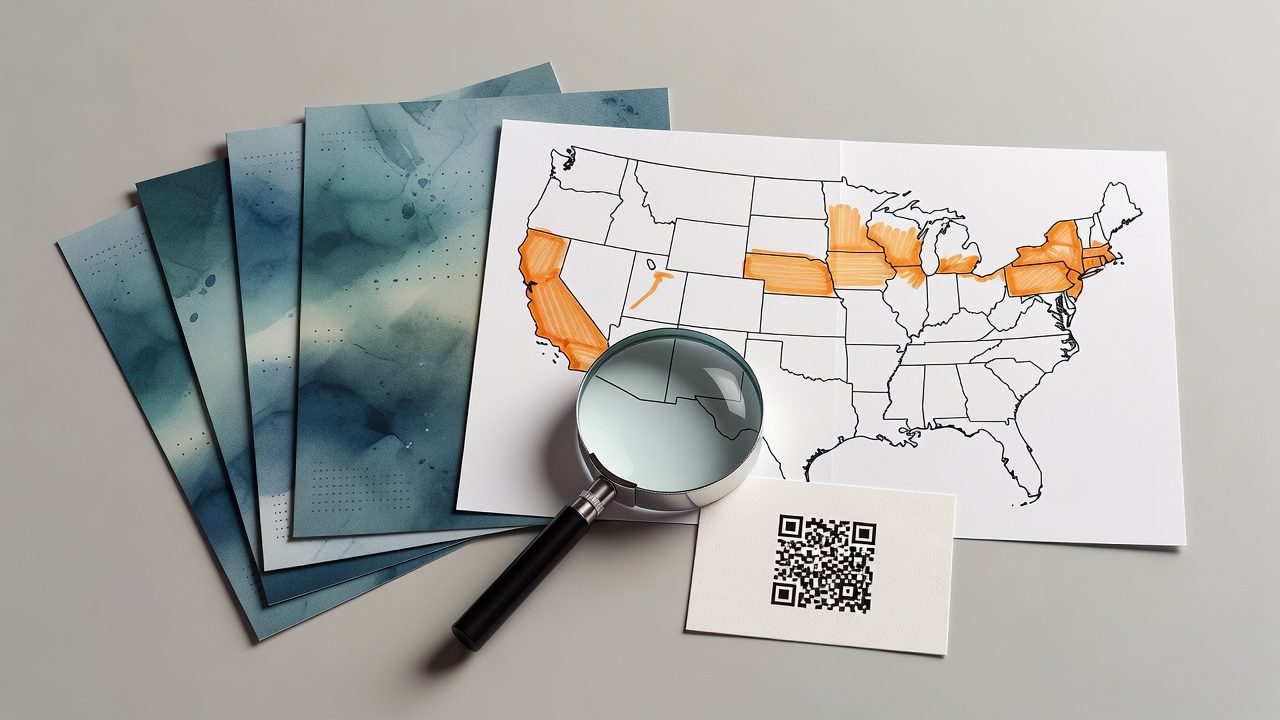
A card can direct recipients to a landing page through a QR code and short URL. The landing page should not introduce a different message or make the visitor search for the next step.
6. Gather employer-brand inputs
Collect the materials needed to make the campaign recognizable and credible as your employer communication.
- Gather the employer logo, brand guidelines, facility or team details, and approved opportunity language.
- Identify reasons a qualified professional may consider the role, such as the unit, schedule, work setting, development opportunity, or location.
- Use only claims your organization can support.
- Decide which information stays consistent across the campaign and which details should change by specialty, role, or location.
Plan for personalization using the recipient's actual first name while keeping the message professional and relevant. A useful card has four basic components: a personalized name, a specialty-specific message, credible employer branding, and one clear action through a QR code and short URL.
7. Build the measurement plan
Define what the campaign should help you observe. Direct mail recruiting does not need to rely only on anecdotal feedback when the response path is designed for tracking.
- Choose the activity you want to monitor, such as QR scans, landing-page traffic, applications, event registrations, or talent-pipeline interest.
- Confirm that response tracking is included in the campaign plan.
- Decide who will review QR scans and landing-page traffic after delivery.
- Document how responses will be routed, reviewed, and followed up.
Tracking can show campaign activity. Your recruiting process still needs a clear owner to respond to interested candidates and move them through the appropriate next step.
8. Confirm the operational requirements
Establish how the campaign will be managed before production begins.
- Decide whether you need a single-market campaign, multiple locations, or a nationwide rollout.
- Confirm who approves audience criteria, creative, landing-page content, and employer branding.
- Plan for the full workflow: audience targeting, card design, printing, postage, delivery, and response tracking.
If you are a recruitment marketing agency, determine whether a white-label delivery model fits your client service. This can allow you to offer a direct mail channel without building your own print, postage, and tracking operation.
9. Review the audience brief before matching begins
Bring the decisions above into one final brief. This document becomes the basis for matching the audience and building the campaign.
- Include the hiring objective, license or trade, specialty, geography, candidate context, offer, call to action, landing-page destination, and measurement requirements.
- Check that the definition is narrow enough to support relevance and broad enough to support the hiring goal.
- Resolve open questions about multiple locations, multiple specialties, hiring events, relocation, and ongoing pipeline use.
Use the completed brief as the starting point for audience matching by license type, specialty, trade, and geography.
10. Decide whether the campaign is ready for planning
Proceed when the role, audience logic, geographic scope, message, response path, and measurement plan are clear. Return to this checklist if the campaign still depends on a generic audience, several competing calls to action, or an undefined landing page.
RecruitCard provides a managed campaign model for organizations that need support with targeting, creative, print, postage, delivery, and response tracking. Book a 15-minute call to review your campaign brief and determine whether targeted direct mail fits the hiring need.
Enjoyed this? There's more from RecruitCard.
Book a 15-minute call →