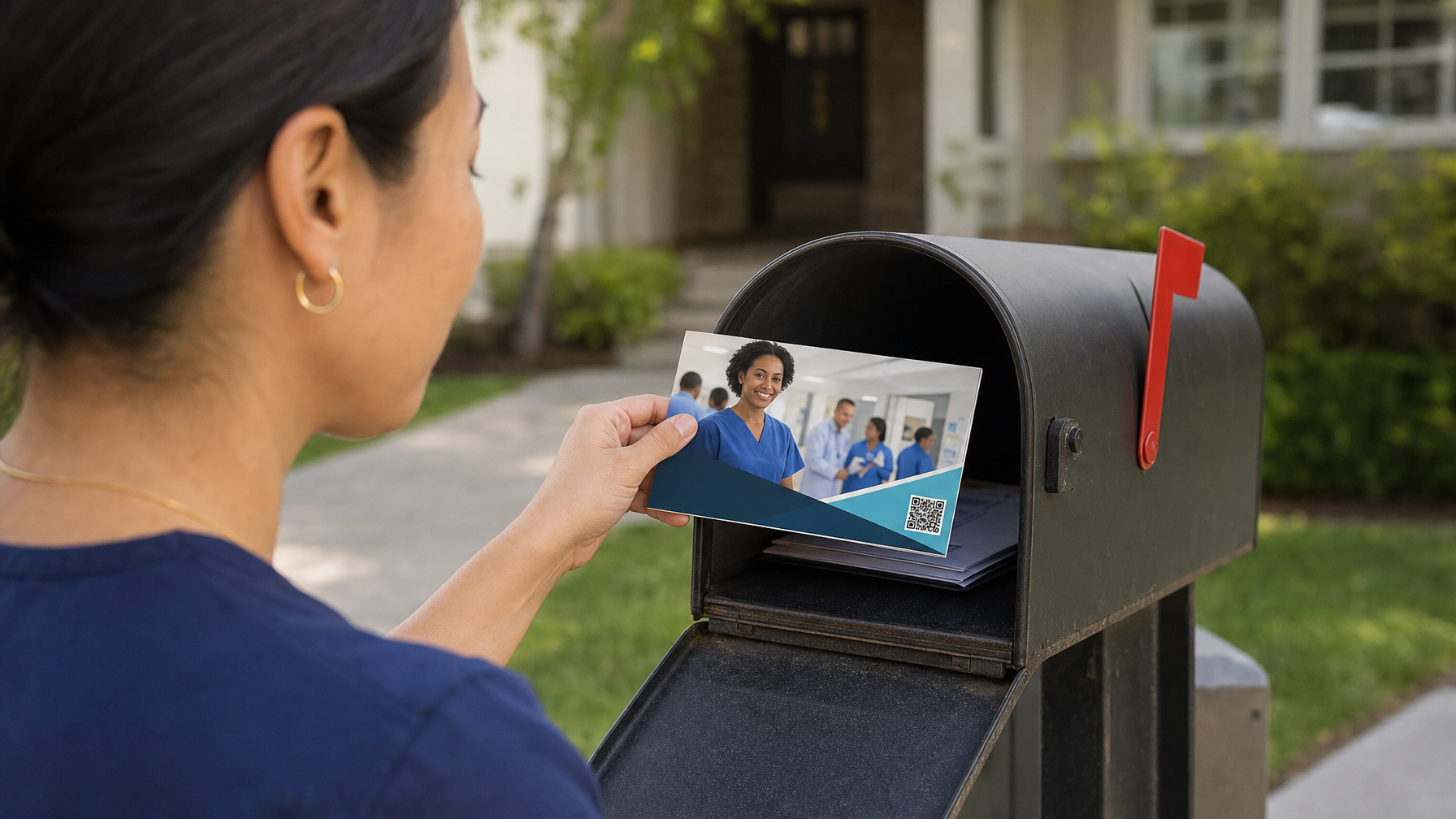
A Practical Campaign Plan for Hard to Fill Respiratory Therapy Roles

A RecruitCard campaign for hard to fill respiratory therapy roles follows a clear workflow from audience selection through response tracking. This approach reaches licensed therapists at home with a personalized card and measures results via QR activity.
- Audience selection uses license type, specialty, and geography rather than a generic mailing list.
- Each card includes a real first name, a respiratory therapy message, employer branding, and one action.
- RecruitCard manages targeting, design, print, postage, delivery, and response tracking as one campaign.
- Results show up as QR scans and landing page visits, not as guessed mailbox outcomes.
Select the audience by license and geography
Start with respiratory therapy license matching in the geographic areas you need to cover, then refine who should receive the mail.
Match license type to the markets you serve
You define the role first: licensed respiratory therapists in the cities, counties, or regions where you hire. Targeting is by license type, specialty, and geography. It is not a mass mailing and it is not a purchased demographic list.
That precision matters because the therapists you most want are often already employed. Job boards and paid search mainly reach people who are actively looking. A home mailbox can reach a passive candidate who never opened a job posting.
Refine by specialty or setting
If the requisition is critical care, pediatrics, nights, or a rural site, the message and the audience should match that setting. You can keep the list limited to people whose license and likely practice area fit the opening instead of mailing every therapist in a zip code.
This step is for hospital and health system talent teams filling RT roles that will not close through normal channels. The same model also supports clinics, long term care, and other licensed healthcare hiring when the pool is small and already working.
Create the card with four required parts
Every piece should carry a personalized name, a specialty specific message, credible employer branding, and one clear action.
Personalized name
Use the recipient's actual first name on every card. A named piece reads as a direct invitation, not as a flyer dropped on a neighborhood.
Specialty specific message and employer brand
Write a short line for respiratory therapists, not a generic clinical job blurb. Name the unit, shift, or setting when that is the reason the role stays open. Put your logo and employer brand on the card so the sender is recognizable at a glance.
One call to action
Finish with a single next step: a QR code and a short URL that go to the same destination. Do not stack multiple asks. The anatomy of the card is name, message, brand, and action.
The candidates you most want are structurally invisible to job boards because those channels only reach people who are already looking. A targeted mail piece reaches them at home with less competition for attention.
Handle production and delivery
RecruitCard runs printing, postage, and mailing so you are not stitching together separate vendors.
Full service instead of a list handoff
The campaign includes audience targeting, card design, printing, postage, delivery, and tracking. You do not receive a raw list and then hunt for a printer. The same process supports a single market or a nationwide rollout.
Where this plan fits
Use it when one RT requisition has sat open, when you need continuous local volume, or when you are building awareness for a hiring event or a new unit. Recruitment marketing agencies can run the same work under a white label option if they need mail without an in house print operation.
Book a 15-minute call to walk through license, specialty, and geography for your next respiratory therapy opening.
Measure results through scans and traffic
Each card uses a QR code and landing page so you can see scans and visits instead of guessing whether the mail worked.
What gets reported
Tracking records QR activity and landing page traffic. You can see response volume and how it relates to the markets you mailed. That view applies whether you are supporting one hard to fill role or an ongoing pipeline.
What happens after the scan
The candidate should land on a page that matches the card: the same employer, the same RT role or event, and one way to apply or register. Keep the digital destination as simple as the card.
FAQ
How is this different from posting on a job board?
A posting reaches people who are searching. License, specialty, and geography targeting can reach employed therapists who are not in the applicant pool. Direct mail is a complementary channel, not a replacement for every digital source.
Can you target a setting, not only the RT license?
Yes. You can aim the audience and the copy at critical care, pediatrics, nights, or other settings that match the requisition, rather than mailing every licensed therapist in a broad area.
Do you handle design and printing?
Yes. RecruitCard manages targeting, creative, print, postage, delivery, and QR plus landing page tracking as one campaign.
Can a campaign cover more than one location?
Yes. The same model supports a single market and a nationwide distribution when you need licensed therapists across multiple sites.
How do you know who is licensed?
The audience is built from license, specialty, and geography matching. That is the approved description of how the list is formed.
Sources
Enjoyed this? There's more from RecruitCard.
Book a 15-minute call →