Can Health Systems Target Experienced Pediatric Oncology Nurses Without Wasting Ad Spend?

Why Broad Digital Ads Waste Budget on Niche Clinical Roles
Broad digital advertising campaigns waste recruitment budgets because they show job postings to thousands of general nursing professionals who lack specialized pediatric oncology training. When health systems launch pay per click campaigns or post on general job boards, they pay for impressions and clicks from candidates across all clinical backgrounds. A pediatric oncology unit requires specific clinical competencies, chemotherapy administration training, and experience with complex pediatric protocols. Generic digital channels cannot reliably restrict exposure to only those nurses who possess these exact qualifications.
Experienced pediatric oncology nurses are rarely active on job search platforms. Most of these professionals hold stable roles in established pediatric hospitals, outpatient infusion centers, or academic medical centers. They do not maintain active profiles on commercial job boards or spend work hours searching for openings. Because they are not actively looking, digital ad campaigns targeting search intent or active job seekers consistently miss this core group of candidates.
Social media platforms and search engines rely on general demographic parameters and broad interest categories. A campaign configured to target registered nurses in a specific metropolitan area will serve ads to emergency room nurses, home health aides, and school nurses alongside pediatric specialists. Paying for digital engagement from professionals who cannot step into a pediatric oncology unit drives up applicant acquisition costs without filling the open requisition.
Filtering by License and Subspecialty Certification
Filtering nurse candidate pools by state license data and subspecialty credentials isolates qualified professionals before any outreach begins. Rather than casting a wide net, health systems can start with active state nursing board records to identify registered nurses licensed in their target jurisdiction. Subspecialty filtering narrows this list further by checking for specialized certifications, such as the Certified Pediatric Hematology Oncology Nurse credential recognized by national nursing bodies.
Geographic parameters keep outreach focused on nurses within realistic commuting distances or planned expansion zones. Setting precise radius boundaries around a hospital campus prevents spent budget on candidates who live outside reasonable driving distance and have no intention to move. When regional relocation is required for specialized units, geographic targeting can focus on neighboring territories where nursing licenses are transferable through multi state compact agreements.
Matching active license history with facility experience ensures that messages reach nurses with verified clinical backgrounds. Pediatric oncology care requires familiarity with central line management, pediatric dosage calculations, and family centered care models. By prioritizing nurses who hold active credentials and relevant care setting experience, health systems eliminate non qualified clicks and focus their resources on viable candidates.
Engaging Passive Candidates Outside Digital Search Channels
Engaging passive pediatric oncology nurses requires a compelling narrative about the clinical environment rather than a standard job description list. Nurses who already have steady positions are rarely persuaded by generic job postings that emphasize basic responsibilities. They respond to specific details about nurse to patient staffing ratios, specialized unit culture, schedule flexibility, and opportunities to participate in clinical trials or advanced care programs.
Direct offline communication delivers these specialized unit details straight to the candidate outside the noise of crowded digital channels. Work email addresses are often monitored by employers or protected by strict spam filters, while personal email accounts are frequently inundated with marketing messages. Delivering clear, thoughtful communications directly to a candidate's physical address creates a dedicated moment of attention away from shift demands and online distractions.
Reaching candidates at home allows nurses time to evaluate an opportunity in a quiet setting. A targeted physical message sitting on a kitchen table provides space for candidates to consider a prospective career move, discuss shift options with family, and review health system benefits without the pressure of a pop up digital ad or immediate phone outreach.
Connecting with Targeted Nurses Through Direct Mail
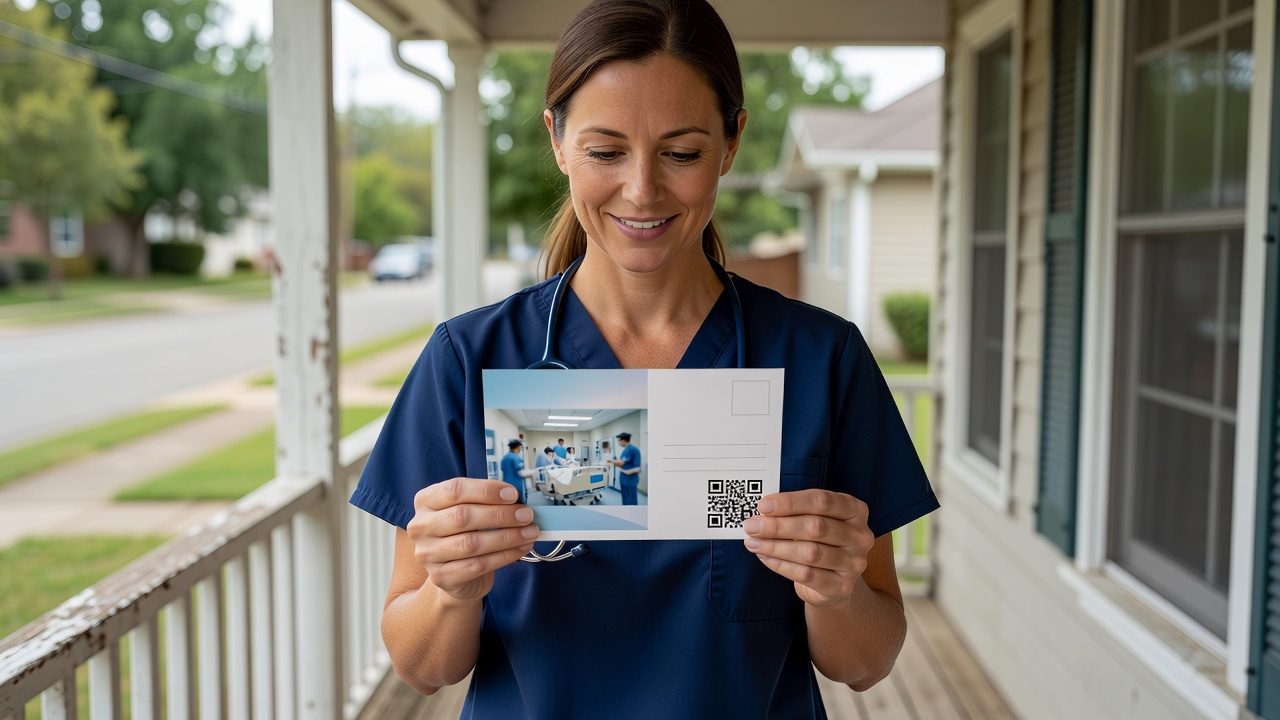
Targeted direct mail campaigns allow health systems to send personalized postcards directly to pediatric oncology nurses based on verified license records and location. When digital ads produce high costs and low intent, a precise physical mailer reaches passive candidates at their home addresses. This approach ensures that every card printed and delivered reaches an actual licensed professional qualified for the pediatric oncology unit.
Each card features personalized details, including the recipient's first name, specialty specific messaging focused on pediatric oncology, distinct employer branding, and a single clear action step. A dedicated QR code and short URL direct the candidate to a dedicated landing page where they can review shift details and schedule a conversation. Responses are tracked automatically, giving talent acquisition teams clear visibility into candidate engagement.
RecruitCard manages audience targeting by license type and geography, card design, printing, postage, delivery, and response tracking. For health systems struggling to fill specialized nursing roles, this full service approach delivers measurable candidate connections without wasting recruitment budgets on broad digital ads. Book a 15-minute call to evaluate direct mail targeting for your specialized healthcare roles.
Frequently Asked Questions
How do you verify that a nurse has pediatric oncology experience?
Targeting relies on matching active state nursing license records with subspecialty certifications and verified facility care settings. This narrows the audience specifically to registered nurses holding active credentials and background in pediatric hematology or oncology environments.
Why do digital job board ads fail for specialized nursing roles?
Digital job boards rely on active searchers who visit job sites to browse postings. Experienced pediatric oncology nurses are usually fully employed and not searching job boards, meaning digital ads spend budget showing postings to general candidates who lack the required clinical expertise.
Can direct mail campaigns target specific geographic radiuses?
Yes. Audiences can be structured around specific zip codes, driving distances from a medical center, or target relocation markets to align with your health system's talent sourcing goals.
How are candidate responses measured on a postcard campaign?
Every postcard includes a personalized QR code and short URL that direct candidates to a custom landing page. Scans and page visits are tracked in real time so recruiters can measure campaign engagement directly.
Sources
Enjoyed this? There's more from RecruitCard.
Book a 15-minute call →