How Hired Healthcare Professionals Get News About Opportunities

Healthcare professionals hear about opportunities through active search, professional relationships, recruiters, employer reputation, and direct outreach. For hospital and health system talent teams hiring licensed professionals, targeted mail can introduce a specific role to people who may not be searching for it online.
- Active job seekers may use job boards, employer career pages, search engines, professional networks, and application portals.
- Employed professionals may hear about roles through colleagues, recruiters, professional associations, workplace conversations, local awareness, and employer outreach.
- A person who is not searching for a job title may never see a posting or paid employment ad for a relevant opening.
- A personalized mail piece can put a specific healthcare opportunity in front of a selected licensed or specialty audience at home.
- The clearest mail pieces use the recipient's first name, a relevant specialty message, recognizable employer branding, and one simple next step.
Who this article is for
This article is for hospital and health system HR and talent acquisition teams that need to reach licensed healthcare professionals, especially for roles that have been difficult to fill through normal recruiting activity.
The examples focus on RN and LPN hiring for ICU, ED, OR, labor and delivery, oncology, case management, and night shift positions. The same questions also apply to long term care and home care employers, outpatient clinics, allied health teams, physician practices, and recruitment marketing agencies planning healthcare campaigns.
Why employed healthcare professionals can be difficult to reach
Employed healthcare professionals can be difficult to reach because many are not taking active job search actions when your opening becomes available.
An active candidate is currently looking for a role and may search, browse career pages, speak with recruiters, or submit applications. A passive candidate is not currently conducting that search. Passive does not mean uninterested. It means the professional is not taking an active search action at that time.
A referral based candidate learns about an opportunity through a person or professional connection, such as a former coworker, colleague, or recruiter. One person may move between these categories. Someone who is not looking today may become interested after hearing a credible and relevant opportunity.
Consider an experienced ICU nurse who is content in the profession and not browsing RN openings. That nurse may still consider a role with a more workable commute, a preferred shift, a different unit, or an employer story that feels meaningful. That possibility varies by person, specialty, location, and career stage. It cannot be assumed for every employed professional.
How active candidates discover healthcare opportunities
Active candidates usually discover opportunities through channels that require them to search or respond to a visible opening.
These channels include job boards, employer career pages, search engines, professional networking sites, recruiters, and application portals. They are useful when a professional is entering a relevant search term, visiting a careers site, or choosing to engage with an opening.
Broad searches can create a mismatch with a narrow need. A search for an RN role is different from a search for an experienced ICU nurse interested in night shift work in a particular market. The more specific the hiring need, the more important it is to make the specialty, schedule, and location clear in the message.
From a recruiting perspective, digital channels are designed to capture current search activity. They may not introduce a role to a qualified professional who is not searching for that role at the time.
How passive candidates learn about opportunities
Passive candidates may learn about opportunities through trusted people, professional communities, recruiters, employer awareness, local conversation, and direct outreach.
For these candidates, discovery and application are separate steps. A colleague may mention an employer. A recruiter may start a conversation. A professional association message may make an organization familiar. A direct mail piece may introduce a role that the recipient had not planned to seek out.
Specificity matters because it gives a professional a reason to pay attention. An ICU night shift message should speak to that setting and schedule rather than making a broad announcement about nursing jobs. The same principle applies to a rural physical therapy opening, a dental hygiene opportunity, a respiratory therapy role, or a physician search.
Awareness alone does not require an immediate application. The card can create a first impression, while the landing page and recruiting follow up process help the recipient decide whether to learn more or begin a conversation.
Why personalized mail can reach a different audience
Personalized mail reaches a selected audience directly instead of waiting for a candidate to search for an opening.
RecruitCard plans audiences by license type, specialty or trade, and geography. This is different from a generic demographic mailing. The purpose is to put a relevant employer message in front of professionals whose qualifications and location align with the hiring need.
Using the recipient's actual first name can make the piece feel intended for a professional rather than sent as a broad employment announcement. The physical format also addresses a practical timing issue: the recipient does not have to be searching at the exact moment the opportunity is introduced.
Mail does not guarantee that every recipient is passive, interested, or ready to respond. It provides a way to create awareness with a defined audience that may not otherwise encounter the posting.
The elements that help a healthcare opportunity get noticed
A clear healthcare recruiting card combines personalization, relevance, recognizable branding, and one direct action.
Personalized name
Use the recipient's actual first name where appropriate. A direct greeting helps establish that the message was created for an intended professional audience.
Specialty specific message
Lead with what makes the opportunity relevant. That may be the unit, specialty, shift, location, professional setting, hiring event, or program being promoted.
Credible employer branding
Make the employer easy to recognize. The candidate should understand who is hiring and have a clear reason to consider the opportunity rather than seeing an anonymous recruiting message.
One clear action
Give the recipient one simple next step. A QR code and short web address can lead to a focused page where the professional can review the opportunity or express interest.
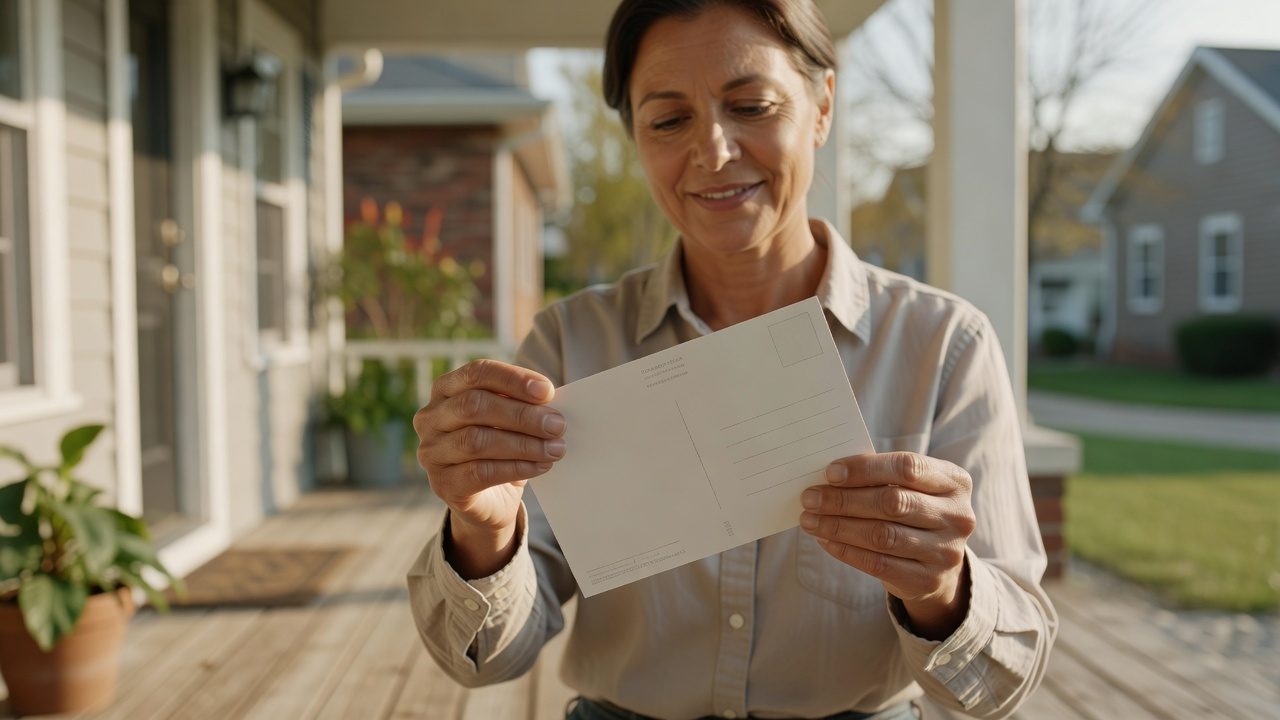
A suitable visual for this topic would show a healthcare professional reviewing a clearly designed recruiting postcard with visible ICU nursing opportunity content. Alt text: Healthcare professional reviewing a personalized recruiting postcard about an ICU nursing opportunity.
What candidates should find after they respond
After a candidate scans the QR code, the landing page should continue the same message without making the candidate search through a general careers site.
Repeat the role, specialty, employer, location, and primary call to action from the card. If the card concerns an ICU night shift opening, the page should make that context immediately clear. The next action might be reviewing the opportunity, expressing interest, or starting a conversation with the recruiting team.
RecruitCard can track QR scans and landing page traffic. These signals show engagement with the campaign. They do not, by themselves, prove an application, interview, hire, or return on investment.
How mail fits alongside job boards and digital recruiting
Targeted mail works as an additional recruiting channel, while job boards and digital recruiting remain useful for capturing active search demand.
A practical plan can keep the job posting available for candidates who are already searching while sending a specialty specific mail piece to a defined audience that may not see the posting. The message does not need to be identical. An active search listing can focus on job details, while mail can lead with the reason a particular ICU, OR, labor and delivery, or oncology professional may want to look closer.
This approach recognizes that different channels support different stages of discovery. It does not require treating mail as a replacement for every digital recruiting activity.
When this approach is a practical fit
Targeted mail is a practical option when you need awareness among qualified professionals who may not be actively searching.
- A specific requisition is still open and usual channels are not reaching the audience you need.
- The local qualified pool is small, specialized, and likely to include professionals who are already employed.
- You need continuous awareness for high volume roles such as CNA, HHA, or caregiver positions.
- You are promoting a hiring event, open house, apprenticeship, training program, or new facility that candidates may not know to search for.
- You want to build familiarity with an employer before the next vacancy opens.
- You are a recruitment marketing agency that wants to offer direct mail through a white label model.
What a managed RecruitCard campaign includes
A managed RecruitCard campaign covers audience planning, creative, production, delivery, and response tracking rather than handing over a generic mailing list.
The process includes audience planning by license type, specialty or trade, and geography. The card design combines employer branding, recipient personalization, a specialty relevant message, and one clear action. RecruitCard also manages printing, postage, delivery, QR code setup, landing page coordination, and tracking for QR scans and landing page traffic.
Campaigns can be planned for a single market or a nationwide rollout. RecruitCard's deepest stated expertise is licensed healthcare hiring, with the same model also available for engineering and skilled trade employers seeking licensed or certified candidates.
Have a hard to fill healthcare role that is not closing?
RecruitCard can help you discuss a targeted, personalized direct mail campaign for the role, specialty, geography, and candidate action you have in mind. Book a 15-minute call.
How to decide whether mail belongs in your recruiting mix
Start with the hiring problem and intended candidate action, then decide whether targeted mail can help create the awareness you need.
- Define the role, specialty, geography, schedule, and setting clearly.
- Ask whether qualified professionals are likely to be employed or not actively searching for the opening.
- Decide what you want a recipient to do after seeing the card.
- Plan a focused landing page that matches the card message.
- Identify the engagement signals you will review, including QR scans and landing page traffic.
- Make sure your recruiting team is ready to respond when interest is created.
If you have a role that needs a more precise audience than a general posting can provide, book a 15-minute call to discuss the specialty, geography, and intended candidate action.
Frequently asked questions
These answers address common questions from healthcare hiring teams considering direct mail alongside their existing recruiting channels.
Is direct mail recruiting the same as buying a generic mailing list?
No. RecruitCard plans the audience around license type, specialty or trade, and geography, then pairs that audience with a personalized employer message. It is a managed campaign rather than a generic list handoff.
Can mail reach healthcare professionals who are not looking for a job?
Mail can introduce an opportunity to a selected audience that may not be searching at the time it arrives. It does not guarantee that every recipient is passive or interested, but it does not depend on an active job search to create the first impression.
How is this different from posting a healthcare job online?
An online posting generally depends on a candidate taking a search or discovery action. A targeted mail piece brings a specific employer message to a selected audience and can work alongside online recruiting.
How do we measure whether the campaign was noticed?
QR scans and landing page traffic provide trackable engagement signals. Review them separately from downstream measures such as applications, interviews, and hires.
Can a campaign promote something other than one open role?
Yes. The same model can support hiring events, open houses, apprenticeship awareness, new facility awareness, and long term pipeline building.
Sources
These resources provide general healthcare occupation and terminology context.
Enjoyed this? There's more from RecruitCard.
Book a 15-minute call →