How to Promote a Healthcare Career Fair With Targeted Direct Mail

A healthcare career fair needs more than broad awareness. Targeted direct mail can put a clear invitation in front of licensed professionals by matching the audience to license type, specialty, and geography, then directing recipients to event details through a QR code and landing page. This approach is for hospital, health-system, clinic, and healthcare recruiting teams promoting a career fair or hiring event.
Why Career Fair Promotion Needs Targeted Reach
Many of the professionals you want to meet may already be employed. They may not be searching job boards, watching recruiting ads, or following your organization’s career channels when your event is announced.
Broad event promotion can create awareness without necessarily reaching the nurses, therapists, technicians, or other licensed professionals connected to your hiring need. A general invitation also makes it harder for a recipient to see why the event is relevant to them.
Targeted direct mail is one additional channel. It delivers a personalized invitation to a defined audience at home, with messaging tied to the recipient’s license type, specialty, or area of practice. It can support awareness, registration activity, and follow-up planning, but it cannot guarantee event attendance.
Who This Approach Is For
A targeted career-fair mail campaign can fit organizations with a defined audience and a clear event purpose, including:
- Hospital and health-system talent-acquisition teams promoting a fair across several clinical departments.
- Employers hiring for ICU, emergency department, operating room, labor and delivery, oncology, case management, or night-shift roles.
- Long-term care and home-care employers with ongoing hiring needs for CNAs, HHAs, and caregivers.
- Outpatient, rehabilitation, behavioral health, pharmacy, dental, and allied-health employers with specific roles to promote.
- Recruitment marketing agencies that want to offer a managed direct-mail channel under their own brand.
It is particularly useful when the local pool is defined by a license or specialty and many qualified people are not actively job hunting.
Why Job Boards and Digital Ads May Not Be Enough for a Career Fair
Job boards and paid search are important recruiting tools, but they are most visible to people who are already looking for work or actively engaging with recruiting content. An already-employed licensed professional may never encounter your career-fair announcement through those channels.
Digital recruiting messages also compete with a crowded stream of other job ads, employer messages, and everyday online activity. Direct mail does not replace digital promotion, recruiter outreach, event planning, or follow-up. It gives you another way to reach a defined group with a focused invitation.
For example, a hospital with openings across ICU, ED, OR, and labor and delivery can use digital channels for broad visibility while mailing specialty-relevant invitations to professionals in selected markets. The mail piece can direct recipients to the same event page used by all other promotion.
What Targeted Direct Mail Means in Healthcare Recruiting
Targeted direct mail is not a generic demographic mailing. For healthcare recruiting, the audience is planned around the license type, specialty, and geography relevant to the event.
The campaign starts with a hiring objective. That objective might be a career fair for several departments, an open house for a new facility, a multi-location hiring event, or longer-term awareness for an emerging candidate pipeline.
From there, the audience can be shaped around the professionals you want to invite, subject to campaign planning and approved audience criteria. The goal is relevance: invite people whose license, specialty, or local market connects to the roles and event you are promoting.
How to Promote a Healthcare Career Fair With a Direct-Mail Campaign
Start with the event objective
Define what the event needs to accomplish before developing the card. Common objectives include filling named roles, introducing a new facility, recruiting for multiple locations, promoting an apprenticeship or training pathway, or beginning a longer-term pipeline conversation.
A clear objective guides the audience, the message, the landing page, and the internal follow-up process.
Define the audience by license, specialty, and geography
Specify who should receive the invitation and where they should be located. Examples include:
- RNs in a selected market for a health-system career fair.
- ICU, ED, OR, or labor and delivery nurses for a specialty-focused event.
- Physical therapists near a new outpatient or rehabilitation location.
- CNAs, HHAs, or caregivers for ongoing local hiring.
- Licensed professionals across selected markets for a coordinated multi-location event.
A narrower audience often supports a more useful message. A recipient should be able to tell quickly why the invitation was sent to them.
Create one clear invitation
The card should answer a few basic questions without making the recipient work for the information: who is hiring, which roles or departments are relevant, what the event is, and what to do next.
Choose one primary action. That might be viewing event details, registering, expressing interest, or visiting an employer-designated event page. Avoid giving the recipient several competing next steps.
Coordinate the card, event page, and follow-up
The direct-mail piece should lead to a landing page that matches the invitation. Confirm that the event information, registration process, recruiter contact plan, and post-event follow-up are ready before creative approval.
The same campaign model can support one local event, multiple locations, or nationwide planning when appropriate. What changes is the audience definition and the event experience you are asking recipients to consider.
The Four Parts of an Effective Healthcare Career Fair Card
RecruitCard campaigns use four practical card components designed to make the invitation clear and relevant.
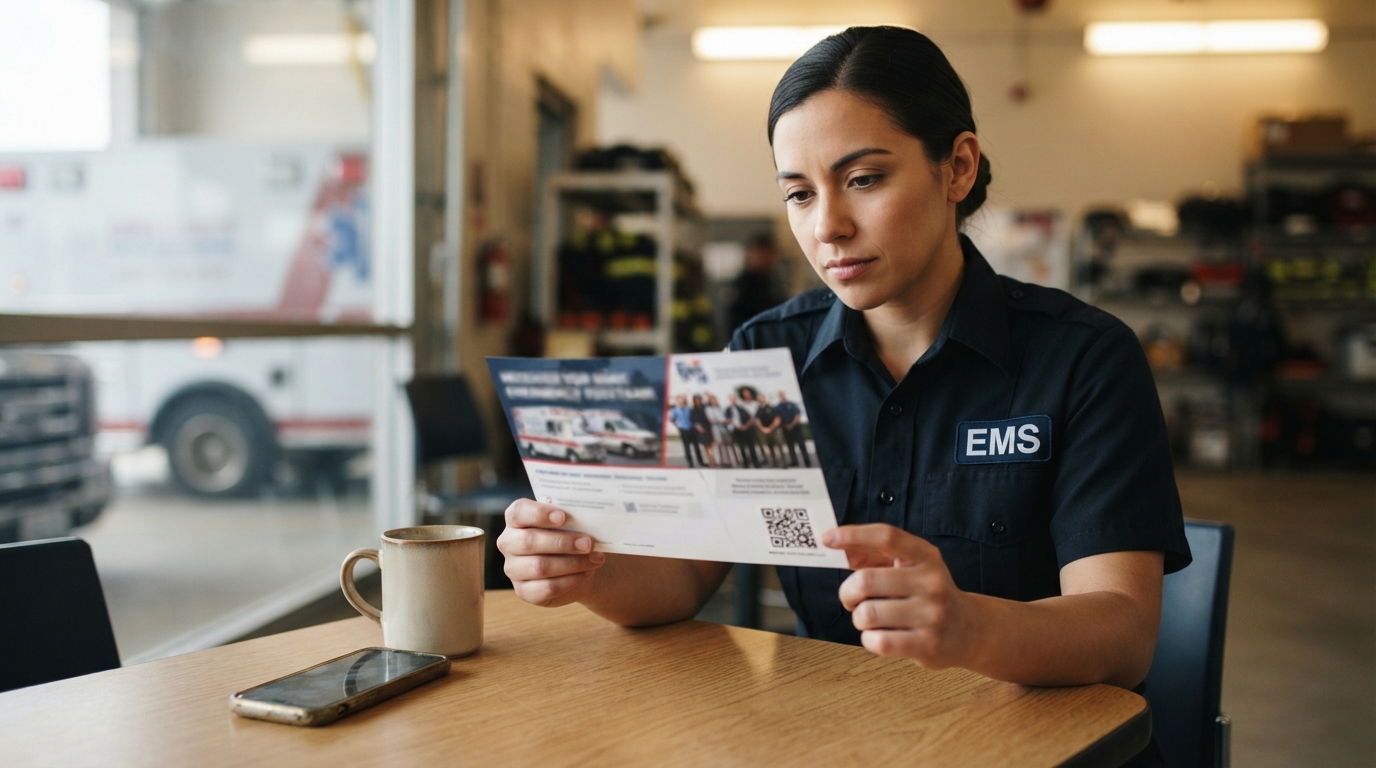
1. Personalized recipient name
Address the professional by their actual first name rather than using a generic greeting. Personalization helps establish that the card is an invitation intended for the recipient, not a broad community flyer.
2. Specialty-specific message
Connect the event to the recipient’s license, trade, or area of practice. An invitation for an ICU nurse should not read like a generic message for every healthcare worker. The message can identify relevant units, shifts, locations, or departments without overcrowding the card.
3. Credible employer branding
Use your organization’s logo, visual identity, location information, and a concise reason to consider the event. The card should make clear who is extending the invitation and what kind of opportunity or conversation is being offered.
4. One clear action
Include a QR code and short URL that lead to event details, registration, or your designated landing page. The recipient should not have to search for the next step.
Clarity matters more than dense copy. A card works best when the essential information can be understood quickly.
What the Landing Page Should Provide
The landing page is where a recipient decides whether to take the next step. It should be easy to use on a mobile device because many recipients will arrive by scanning the QR code from their phone.
- State the event date, location, and purpose clearly.
- List the roles, specialties, shifts, departments, or locations being recruited for when relevant.
- Explain what attendees can expect, such as conversations with recruiters or hiring teams, without promising a particular outcome.
- Provide a registration or interest form if your event uses one.
- Include practical details such as parking, virtual-event access, or instructions for bringing a résumé when applicable.
- Use campaign-specific tracking so event-related traffic can be reviewed separately from other recruiting activity.
Keep the path simple. If the card asks people to register, the landing page should take them directly to registration rather than asking them to navigate through a general careers site first.
How to Measure Career Fair Promotion
Direct-mail event promotion can be measured through response activity. RecruitCard campaign structures include QR-code and landing-page tracking, allowing your team to review engagement connected to the mailed invitation.
- Track QR scans from the mailed piece.
- Review landing-page traffic associated with the campaign.
- Compare activity by audience segment, geography, specialty, or mailing wave when the campaign is structured that way.
- Connect campaign activity with your registration, inquiry, and recruiting follow-up processes where appropriate.
Set expectations carefully. QR scans and landing-page visits show response activity. They do not guarantee registrations, attendance, applications, interviews, hires, or return on investment. Review them alongside the rest of your recruiting activity and the follow-up your team conducts.
Career Fair Use Cases
One event for multiple nursing units
A health system may hold one career fair for several hard-to-fill nursing units. The invitation can make the event relevant to nurses whose specialties align with ICU, ED, OR, labor and delivery, oncology, or case management needs.
Night-shift opportunities
A hospital may invite licensed clinicians to learn about night-shift opportunities. The card can state the relevant shift and department directly, helping recipients decide whether the event is worth exploring.
Rehabilitation hiring
A rehabilitation department can promote an event to physical therapists, physical therapist assistants, or related roles near the locations where it is hiring.
Continuous hiring for high-volume roles
A long-term care or home-care employer can use an event to support ongoing local hiring for CNAs, HHAs, or caregivers. The event becomes a defined action for potential candidates rather than relying only on an always-open job posting.
Multi-location coordination
A multi-location employer can promote a coordinated hiring event across selected markets, with audience and event details adapted to each location where needed.
Awareness for something candidates may not search for
An event can introduce a new facility, service line, apprenticeship, or training pathway. These are opportunities that candidates may not know to search for, making a direct invitation useful for awareness.
How RecruitCard Manages the Campaign
RecruitCard provides a managed, end-to-end direct-mail recruiting campaign for employers and recruitment marketing agencies. Its deepest expertise is licensed healthcare hiring.
- Audience targeting by license type, specialty, and geography.
- Card design using your employer brand, the recipient’s actual first name, specialty-specific messaging, and one clear action.
- Printing, postage, and delivery as part of the managed campaign.
- QR-code and landing-page response tracking.
- Support for single-market and nationwide rollouts.
- A white-label option for recruitment marketing agencies that want to offer direct mail without building their own print, postage, and tracking operation.
This is more than a mailing-list handoff. The campaign brings together audience planning, creative, production, delivery, and response measurement around the event you need to promote.
Questions to Answer Before You Mail
Planning is easier when the key decisions are settled before the card is designed. Work through these questions with your recruiting and event teams:
- Which license types or specialties should receive the invitation?
- Which geography should the campaign cover?
- Is the event for one requisition, several departments, multiple locations, or ongoing pipeline development?
- What is the one action recipients should take after receiving the card?
- Where should the QR code send them?
- How will registrations, inquiries, and event follow-up be handled internally?
- Which event details must be final before creative approval?
- What reporting will your recruiting team review after delivery?
These decisions help prevent a common problem: an attractive invitation that leads to an unclear candidate experience.
When Targeted Direct Mail Is a Good Fit
Consider targeted direct mail when the following conditions apply:
- You are promoting a defined healthcare career fair, open house, or hiring event.
- The event is tied to specific license types, specialties, locations, or hard-to-fill roles.
- Your target candidates may already be employed and unlikely to encounter the event through active job searching.
- You need an employer-branded invitation rather than a generic list handoff.
- You want to measure activity through QR scans and landing-page traffic.
- You need support with targeting, creative, printing, postage, delivery, and response tracking.
What Direct Mail Cannot Do on Its Own
Direct mail is a promotion channel, not a substitute for the work required to run a useful hiring event.
- It cannot guarantee registrations, attendance, applications, interviews, or hires.
- It does not replace event planning, recruiter follow-up, digital promotion, or a clear candidate experience.
- It cannot compensate for unclear event details, difficult registration steps, or a weak job offering.
- Its response activity should be interpreted alongside your broader recruiting activity and follow-up process.
The strongest campaigns connect a focused invitation with an event that is easy to understand, easy to access, and supported by a prepared recruiting team.
Promote Your Career Fair With a Defined Audience and Clear Next Step
Targeted direct mail can help promote a healthcare career fair by putting a personalized, specialty-relevant invitation in front of a defined audience and tracking response activity through QR scans and landing-page traffic.
RecruitCard manages licensed healthcare recruiting campaigns from audience targeting and card production through delivery and measurement. To discuss your event, audience, geography, and desired action, Book a 15-minute call. You can also Call RecruitCard.
Enjoyed this? There's more from RecruitCard.
Book a 15-minute call →