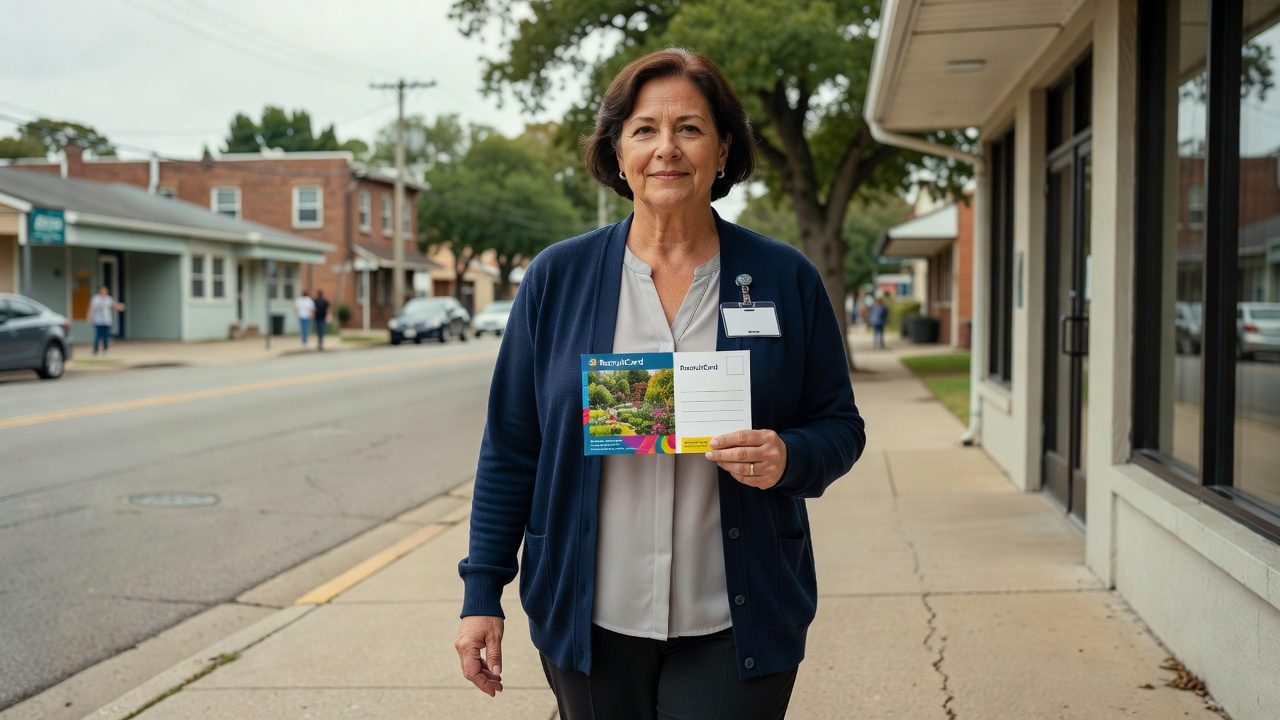
How to Recruit Behavioral Health Professionals Who May Relocate

To recruit behavioral health professionals who may relocate, build a targeted campaign around the candidate’s specialty, the role’s location, and a clear reason to consider the move. Direct mail can help you reach licensed professionals who may not be actively searching, then direct interested people to a focused landing page where you can measure interest and continue the conversation. This workflow is for behavioral health employers and talent-acquisition teams hiring counselors, social workers, psychiatric nurses, therapists, and related licensed professionals.
1. Define the behavioral health role and relocation opportunity
Start with one concrete hiring need. Avoid beginning with a broad goal such as “hire more behavioral health staff.” Define the professional category and the opportunity a candidate would be evaluating.
- Identify the role, such as a counselor, clinical social worker, psychiatric nurse, therapist, or another behavioral health specialty.
- Document the care setting, shift expectations, employment model, required license or certification, and job location.
- Clarify whether the need is for one vacancy, several related openings, a hiring event, or a longer-term behavioral health pipeline.
Next, identify the legitimate reason a qualified professional might explore a move. That reason may be a particular clinical opportunity, a new facility, a community need, or an upcoming hiring event. State only details your organization can support and approve. A relocation message is more useful when the recipient can quickly understand what is distinctive about the opportunity.
2. Define the audience by license, specialty, and geography
Specify the license or professional category you need instead of mailing a broad healthcare audience. A relocation campaign should be designed for the actual role, not for everyone with a general interest in healthcare employment.
- Define the required license type or professional category.
- Separate roles when their qualifications, settings, or messages differ materially.
- Set the geography around the role location and the areas from which professionals may consider relocating for the opportunity.
For example, a psychiatric nursing opportunity and a clinical social work opportunity may share an employer and location, but they should not automatically share the same message. The daily work, qualifications, and reasons to explore the role can be different.
This is precision targeting by license type, specialty, and geography. It is not a generic demographic mailing or a purchased-list handoff. RecruitCard builds the campaign audience around those criteria, then manages the creative, print, postage, delivery, and response-tracking work as one process.
If you are unsure how to define the audience, use an initial planning conversation to align the license, specialty, and geographic criteria before developing the campaign.
3. Build a relocation-focused message
Lead with the specific behavioral health opportunity and its location. The recipient should not have to search the card to understand why they received it.
- Name the behavioral health role or specialty.
- Identify the location clearly.
- Describe the care setting, patient population, team structure, schedule, and role scope where those details are accurate and approved.
- Present relocation as an invitation to learn more, not as an assumption that the recipient is ready to move.
Use language that reflects the recipient’s professional background. A message for a therapist can speak to the relevant setting and scope of practice. A message for a psychiatric nurse can focus on the nursing opportunity. Specialty-specific language makes the invitation more relevant than a general statement about healthcare hiring.
Keep the card focused on one next step: learning more about the role, exploring the location, or starting a conversation with the hiring team. Do not try to fit the full job description onto the mail piece.
4. Design the card around four essential elements
A recruiting card needs to earn the next action quickly. Build the creative around four elements.
1. Personalized name
Use the recipient’s actual first name where supported by the campaign setup. Personalization helps make the outreach feel like an invitation intended for a professional, rather than a general employment advertisement.
2. Specialty-specific message
Connect the opportunity directly to behavioral health work and the recipient’s professional category. Replace broad recruiting language with a clear statement of the role and setting.
3. Credible employer branding
Make your organization and the opportunity recognizable. Include your employer brand without crowding the card with every program detail, benefit statement, or job requirement.
4. One clear action
Use a QR code and short URL that lead to the campaign landing page. The action should be singular and easy to understand, such as learning about the opportunity or requesting a conversation.
The card’s purpose is to create enough interest for a qualified person to take the next step. The landing page can carry the fuller explanation.
5. Create a landing page that answers relocation questions
Match the landing page to the card’s role, specialty, location, and message. This consistent handoff matters: a person who scans a card about a behavioral health role in a specific location should arrive at a page that immediately confirms that opportunity.
- Explain the position, location, work setting, qualifications, and next step in plain language.
- Include relocation-relevant information that your organization has approved for publication.
- Offer a low-friction way to express interest or request a conversation.
- Allow professionals who are not ready to submit a full application to take an initial step.
The page can support an immediate opening, a related group of openings, a hiring event, or an ongoing pipeline. That flexibility is useful when your organization wants to introduce a location or opportunity before a candidate is ready to make a change.
6. Launch the campaign through a managed workflow
Coordinate the campaign as one connected workflow rather than treating audience selection, design, mail production, and response handling as separate tasks.
- Confirm the audience definition by license type, specialty, and geography.
- Approve the role location, specialty-specific message, employer brand, and call to action.
- Prepare the card, QR code, and matching landing page.
- Coordinate printing, postage, and delivery.
- Prepare the response path so interested candidates reach the appropriate recruiter or hiring contact.
RecruitCard manages targeting, card design, printing, postage, delivery, and QR-code and landing-page response tracking. Campaigns can be structured for a single market or a nationwide rollout, based on the actual hiring need. A broader geography is not automatically better; it should match the role and relocation strategy.
If you are a recruitment marketing agency, a white-label structure can let you offer this mail channel without building an internal print, postage, and response-tracking operation.
7. Measure interest and follow up deliberately
Mail recruiting does not require guessing whether the campaign generated attention. Track QR scans and landing-page traffic to see the activity produced after recipients receive the card.
- Review QR scans and landing-page visits by campaign.
- Where the campaign structure allows, review engagement by role, specialty, and geography.
- Route interested candidates promptly to the appropriate recruiter or hiring contact.
- Give each interested person a clear next conversation rather than leaving them with a generic application path.
A scan or page visit is an engagement signal. It is not a guaranteed hire and it does not replace thoughtful recruiting follow-up. Use what you learn to refine the audience definition, role message, target locations, and future behavioral health pipeline campaigns.
8. Decide whether direct mail fits your relocation challenge
Direct mail can be a good fit when the qualified behavioral health pool is small, many professionals are already employed, and job postings or paid search are not reaching enough of the people you need to meet. Those channels primarily engage people who are actively looking. A targeted mail piece creates a separate way to introduce a relevant opportunity to licensed professionals at home.
This approach can support a hard-to-fill behavioral health role, a rural or specialized opportunity, a hiring event, an awareness campaign, or ongoing pipeline development. It is not a generic replacement for every recruiting channel. Its role is to reach a precisely defined audience with a personal, specialty-specific invitation.
If you want to explore a behavioral health relocation campaign, book a 15-minute call to discuss the role, audience, geography, message, and tracking plan.
Enjoyed this? There's more from RecruitCard.
Book a 15-minute call →