Behavioral Health Hiring Events: How to Reach Professionals Before They Register

Behavioral health hiring events work better when qualified professionals hear about them before they begin searching for an event to attend. This workflow is for behavioral health employers and recruitment marketing agencies that want to reach counselors, social workers, psychiatric nurses, and related professionals with a targeted, measurable invitation before registration opens.
1. Define the event and the professional you need to reach
Start by defining the event in practical terms. A clear event definition determines who should receive the invitation, what the card should say, and where the QR code should lead.
- Write down the event purpose: a hiring event, open house, facility launch, recruiting session, or pipeline-building event.
- Identify the roles and qualifications that matter, such as counselors, social workers, psychiatric nursing professionals, or another behavioral health specialty.
- Specify the geography. Include the facility location and the surrounding area relevant to potential attendees.
- Choose the desired next step: event registration, a conversation with a recruiter, an application, or early awareness for a future opportunity.
For example, an invitation for psychiatric nursing professionals to learn about a new behavioral health program should not use the same framing as an event focused on counseling or social work roles. The role, care setting, and reason to attend should be clear from the start.
2. Build the audience around license, specialty, and geography
Build the campaign audience around the professional criteria that relate directly to the event: license type, specialty, and geographic location. This differs from sending an invitation to a broad demographic mailing list.
- Use license type, specialty or trade, and geography as the core audience criteria.
- Separate audiences when the reason to attend differs by role. A psychiatric nurse may be interested in different details than a licensed counselor or social worker.
- Include professionals who are already employed and may not be looking at job boards or paid-search results.
- For organizations with multiple facilities, decide whether the invitation supports one market, several locations, or a nationwide rollout.
This matters because many behavioral health professionals an employer wants to meet are not actively searching for an event or applying to posted jobs. A targeted invitation can put a specific opportunity in front of them at home, before they enter an active search.
3. Create the invitation before registration opens
Do not wait until registration is live to begin building awareness. Create an invitation that gives recipients a relevant reason to pay attention now, even when the final registration path is not yet available.
- Lead with the value of the event, such as learning about behavioral health roles, meeting the hiring team, or exploring a new facility or program.
- Write to the recipient’s specialty. Avoid a broad headline such as healthcare professionals wanted when the event is intended for a defined behavioral health audience.
- Give the recipient one useful next step, such as visiting an event information page, joining an interest list, or reviewing relevant opportunities.
- Position the piece as an event invitation and early awareness tool, not as a generic job announcement.
The goal is to create recognition before the event begins competing with other work, personal, and recruiting messages. A recipient who already understands the employer and the purpose of the event has more context when registration becomes available.
4. Build the card around four clear elements
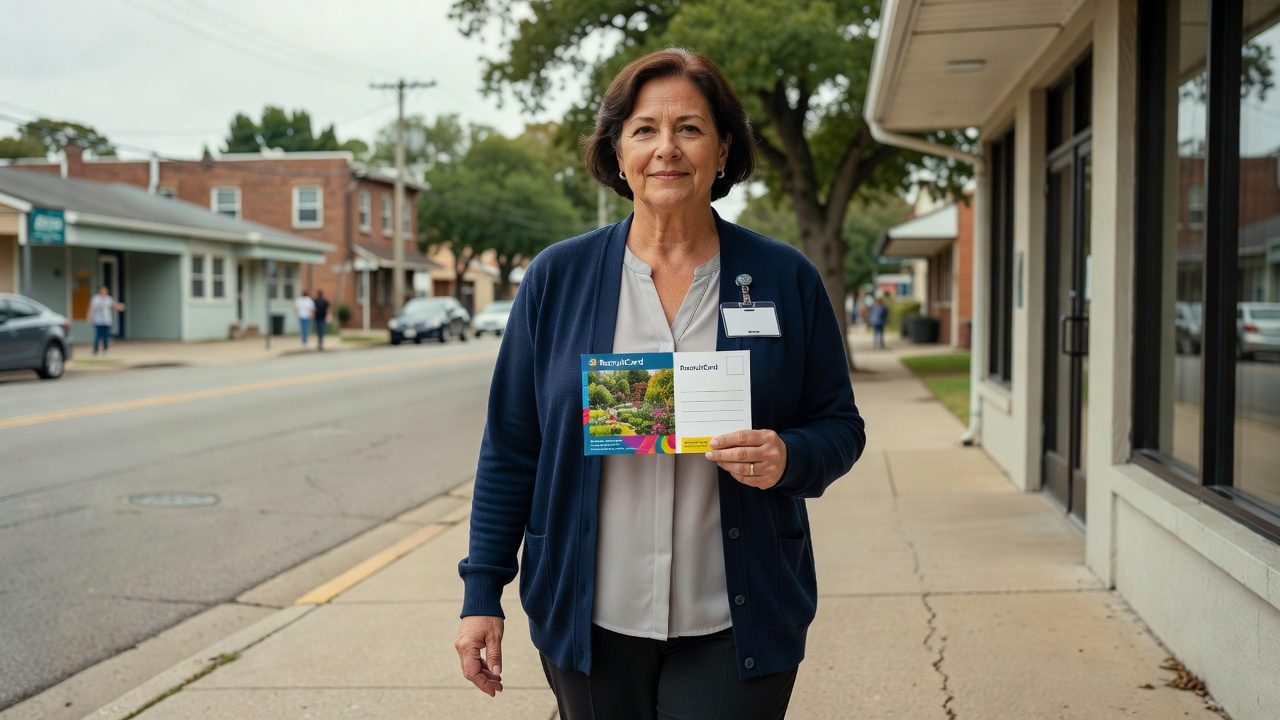
A direct mail invitation should make the event recognizable and the next action simple. Keep the card focused on four components.
Personalized name
Address the recipient by their actual first name when the campaign is configured for personalization. A named invitation is more direct than a message addressed to a broad professional category.
Specialty-specific message
Reference the relevant behavioral health role or professional area. For example, an invitation may speak directly to psychiatric nursing professionals, counselors, or social workers rather than trying to cover every healthcare role with one message.
Credible employer branding
Show the organization, facility, or care setting clearly. The invitation should feel connected to a real employer and a defined opportunity to learn more.
One clear action
Use a QR code and short URL that direct the recipient to the event page or interest page. Avoid adding multiple competing actions. If the card asks recipients to register, apply, call, email, and visit several pages, the next step becomes less clear.
5. Send the audience to a focused landing page
The landing page should continue the same conversation started on the card. Sending recipients to a general careers homepage can force them to search for the event information that prompted their scan.
- Match the page title, event description, and role focus to the mailed invitation.
- Explain what the event is, who should attend, the behavioral health roles involved, location or access details, and the next step.
- Use an event-specific page rather than a general careers page.
- If registration is not open, offer an appropriate early action, such as requesting details or expressing interest in future communication.
- Make the page useful on a mobile device, since a recipient may scan the QR code directly from the card.
A focused page also makes response tracking more meaningful. You can distinguish campaign-related traffic from visitors who arrived through other career-site paths.
6. Coordinate the campaign before the event schedule is final
Plan the audience, message, card, landing page, delivery, and tracking as one campaign. This is especially important when you want to build interest before every event detail is settled.
- Confirm the details that need to appear on the card, including the employer name, role focus, location, and call to action.
- Build the landing page so details can be updated if the event schedule changes after the mail piece is produced.
- Keep the mailed call to action durable. For example, an event-information or interest page can remain useful while final timing is added or adjusted online.
- Do not promise a mailbox arrival schedule until the campaign team has confirmed the applicable production and delivery plan.
This approach gives you a stable printed invitation while retaining flexibility on the page recipients reach after scanning.
7. Measure early interest and event response
Direct mail recruiting does not need to be treated as an unmeasurable awareness effort. Use the campaign’s QR code and landing page to observe early engagement with the invitation.
- Track QR scans and landing-page traffic tied to the campaign.
- Compare activity before registration opens with registrations or other tracked actions after the registration path is available.
- Record which specialty and geographic audience received each invitation so activity can be interpreted by segment.
- Use what you learn to decide whether to send a follow-up invitation, adjust the event message, or continue pipeline-building outreach.
These signals do not replace your recruiting team’s follow-up process. They do give you a clearer view of whether recipients reached the event information and took the intended next step.
8. Extend the campaign beyond one hiring event
A behavioral health hiring event can be one point in a longer candidate relationship. Keep the audience strategy available for future recruiting needs instead of treating it as a one-time mailing exercise.
- Reuse the approach for future open houses, hiring events, facility awareness, and ongoing behavioral health recruiting.
- Create follow-up messages for people who showed interest but did not register or apply immediately.
- Use the same model for roles that are difficult to fill through normal channels, including specialized behavioral health positions and psychiatric nursing roles.
- Adapt the invitation for awareness campaigns when you need candidates to know about a new program, facility, or future event.
For roles with a limited local pool of qualified professionals, sustained awareness can be as important as one event date. The invitation starts a conversation that your recruiter, event page, and later outreach can continue.
9. Decide whether managed direct mail fits your event
A managed direct mail campaign can bring the moving parts together: audience targeting, personalized card design, employer branding, printing, postage, delivery, QR codes, landing-page traffic, and response tracking.
RecruitCard focuses on licensed healthcare hiring. Its campaigns target by license type, specialty, and geography rather than handing over a generic list. This model is designed for employers trying to reach qualified professionals who may be employed and structurally less reachable through job boards and paid search alone.
Recruitment marketing agencies can also use a white-label option when they want to offer a direct-mail channel without building their own print, postage, and tracking operation.
For a behavioral health hiring event, book a 15-minute call to discuss the audience, event goal, geography, and next action.
Enjoyed this? There's more from RecruitCard.
Book a 15-minute call →