How to Recruit Home Health Nurses in a Specific Geographic Market

For home health employers, recruiting in a specific geographic market starts with defining the exact nurse audience, location, and role message—not sending a generic job promotion. A targeted direct mail campaign can help you introduce an RN or LPN opportunity to passive candidates, then measure interest through QR scans and landing-page traffic.
Who This Article Is For
This guide is for home health agencies and healthcare employers hiring nurses in a defined U.S. market. It is most relevant when you need to cover a particular service area, have recurring nurse openings, are struggling with a difficult territory, or have a role that is not closing through ordinary recruiting channels.
It is also relevant to recruitment marketing agencies that want to offer healthcare direct mail under their own brand without taking on the targeting, creative, print, postage, delivery, and tracking work internally.
Recommended Answer: Use a Market-Specific, Nurse-Specific Recruitment Campaign
Build the campaign around three decisions: the nursing license type, the relevant role or specialty, and the geographic market you need to cover. For example, an employer may be focused on RNs in a defined service territory, LPNs for recurring local coverage, or a nursing audience for a particular home health hiring event.
This is different from buying a broad mailing list or running a demographic-based promotion. The goal is precision: audience matching by license type, specialty or trade, and geography, paired with a message that speaks to the actual opening.
Direct mail can complement job boards and paid search by giving you another way to introduce an opportunity to nurses who are already employed and not actively searching. Not every nurse will be interested, and a mail piece does not guarantee an application or hire. It does create a direct, measurable point of contact outside an active-job-search environment.
Licensing information and available fields can vary by jurisdiction and campaign requirements. The practical campaign question is whether the audience can be matched to the approved license-type, specialty, and geographic criteria for the role.
Why Home Health Nurse Recruiting Requires Geographic Precision
Home health nursing is closely connected to the area you serve. Patient locations, travel expectations, local coverage needs, and the size of the service territory all affect whether an opportunity is relevant to a prospective nurse.
A broad nurse audience can include people whose license type, experience, location, or work preferences do not fit the opening. A stronger campaign definition might focus on RNs or LPNs in a specified market, with home health or other relevant clinical experience considered where appropriate to your hiring plan.
For example, you may need to build awareness for:
- A local home health territory with an immediate coverage need.
- A rural service area that requires a more focused recruiting effort.
- A market where nurse coverage gaps recur.
- A defined group of cities, counties, ZIP codes, or a broader regional market.
Geography is a planning choice. It helps define who the campaign is intended to reach; it is not a promise that every recipient is within a particular commute or will be available for your role.
Define the Audience Before You Design the Card
Start with the role
Name the position clearly. Is the campaign for RNs, LPNs, or another defined nursing role? If the need is tied to a care setting, coverage model, shift, or territory, identify that before creative work begins.
Define the geography
Specify the market you want to cover. Depending on the campaign, that may mean selected cities, counties, ZIP codes, a radius, multiple markets, or a broader U.S. geography. Make this decision based on your service area and hiring needs rather than treating “local” as a vague label.
Clarify the hiring use case
A campaign should have a defined purpose. Common home health use cases include one open requisition, recurring local hiring, a hiring event or open house, and long-term nurse pipeline building.
Set the audience criteria
RecruitCard builds campaign audiences around license type, specialty or trade, and geographic matching. Before launch, confirm the criteria that matter most for the role so the message and the intended audience are aligned.
Choose a Message That Fits Home Health Nursing
Lead with the specific role and the geographic opportunity. “RN opportunity serving patients in [market]” is more useful than a broad “we are hiring” message because it tells the recipient why the card may apply to them.
Your card can also address practical reasons someone may want to learn more, such as the service area, care setting, schedule, team, or employer mission. Only include details your organization can support and that are relevant to the opening.
Keep the next step simple. Ask the recipient to scan a QR code or use a short URL to learn more or express interest. One clear action reduces ambiguity and makes campaign engagement easier to track.
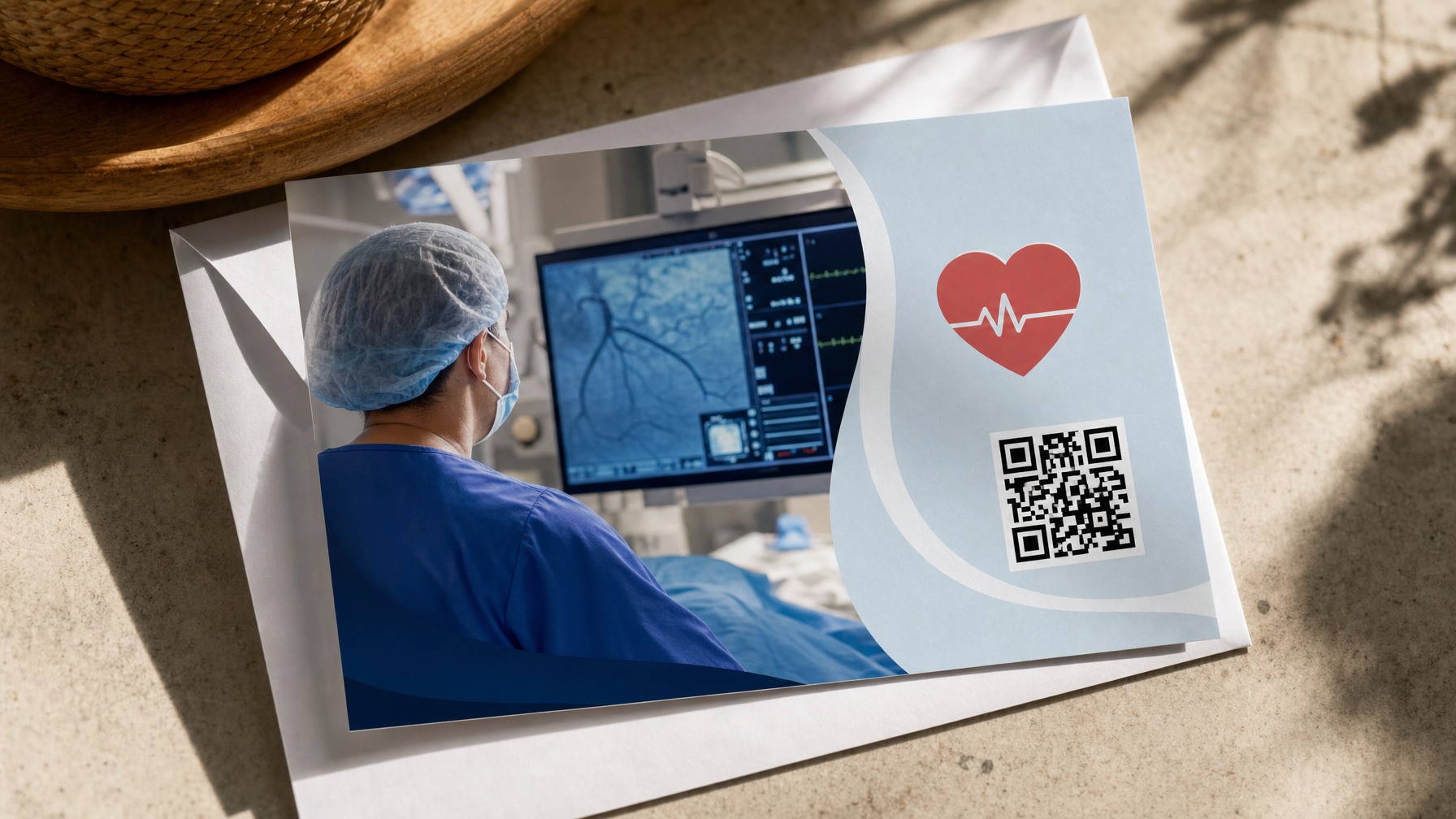
The Anatomy of an Effective Recruitment Card
Personalized recipient name
Use the recipient’s actual first name where available within the campaign’s approved personalization process. A named message is more direct than a generic salutation.
Specialty-specific message
Speak to home health nurses, not an undifferentiated healthcare audience. The role, market, and reason to explore the opportunity should be apparent quickly.
Credible employer branding
Include your logo, visual identity, and a clear description of the opportunity. The card should make it easy for the recipient to understand who is reaching out and what the message concerns.
One clear action
Use a QR code and short URL that send recipients to the campaign landing page. The landing page should continue the same role and market message shown on the card.
Why Add Direct Mail to Job Boards and Paid Search?
Job boards and search advertising are useful when a nurse is actively looking, searching for roles, or engaging with recruiting content. But many nurses you may want to reach are already employed and may not be visiting those channels at the moment your position is open.
Direct mail adds another channel: a personalized introduction to a relevant role at home. It is not necessarily a replacement for job boards, search, referrals, or other recruiting activity. It is a way to reach beyond the active applicant pool with a defined audience and message.
Recruiting mail also is not simply a generic list purchase. RecruitCard manages audience targeting, card creative, printing, postage, delivery, and QR-code and landing-page response tracking as one campaign.
How the Campaign Works From Planning to Response Tracking
1. Confirm the hiring objective
Define the role, market, service area, and desired candidate action. A campaign for recurring LPN coverage has a different objective from a campaign inviting RNs to an open house.
2. Build the audience
Match license type, specialty or trade, and geography to the campaign requirements. This step keeps the intended recipient audience connected to the role you need to fill.
3. Develop the card
Bring together the personalized name, home health-specific message, employer branding, and one call to action. The card should tell recipients what the opportunity is and where to go next.
4. Produce and deliver the mail
RecruitCard manages printing, postage, and delivery as part of its end-to-end campaign service.
5. Track engagement
QR scans and landing-page traffic show how recipients engaged with the campaign. These are engagement measures, not the same thing as applications, interviews, or hires. Your internal recruiting process should track what happens after a candidate reaches the landing page.
What Should the Landing Page Include?
The landing page should repeat the role and geographic market named on the card so visitors immediately know they are in the right place. Keep the page focused and easy to use from a phone, since many recipients will arrive after scanning the QR code.
- A clear title for the RN, LPN, or other nursing opportunity.
- The applicable service area or geographic market.
- An employer-approved explanation of the position, care setting, expectations, and next step.
- A clear way to learn more or express interest.
- Campaign-specific tracking so landing-page traffic can be associated with the mail effort.
Avoid adding unapproved compensation, benefits, start-date, or hiring-timeline details. The page should provide enough context for a nurse to decide whether to take the next step without making promises the employer cannot support.
Use Cases Beyond One Open Home Health Role
Recurring nurse hiring
If you regularly need nurses in the same market, an ongoing campaign approach can help maintain awareness rather than waiting for every opening to become urgent.
Hard-to-fill coverage areas
Use a market-specific card to introduce an opportunity in a territory where the qualified local pool is limited or where usual recruiting channels are not producing enough interest.
Hiring events and open houses
A card can build awareness for a hiring event and direct recipients to event details or registration through the campaign landing page.
Long-term pipeline building
You can introduce your organization before the next vacancy opens. This is useful when consistent local awareness matters as much as response to one requisition.
Multi-market or nationwide planning
RecruitCard can support a single-market campaign or a broader rollout across multiple locations or nationwide, subject to campaign planning and audience criteria.
Questions to Ask Before Selecting a Campaign Partner
- Can the partner target by license type, nursing specialty, and geography rather than offering a generic audience?
- Does the partner manage creative, printing, postage, delivery, and tracking, or only hand off a list?
- Can the card include the recipient’s first name and your employer brand?
- How are QR scans and landing-page visits reported?
- Can the campaign support one market, multiple locations, or a nationwide rollout?
- If you are an agency, can you offer the campaign under your own brand?
- Which campaign details, pricing, and launch timing need to be confirmed in a consultation rather than assumed?
When This Approach Is a Good Fit
Consider a targeted home health recruitment mail campaign when:
- A role remains open despite your ordinary recruiting channels.
- You need nurses in a defined geographic market rather than a broad national audience.
- The qualified pool is small, specialized, or likely to include already-employed professionals.
- You have recurring local hiring needs, an event to promote, or an early pipeline-building objective.
- Your team wants a managed campaign instead of coordinating targeting, design, printing, postage, delivery, and measurement separately.
Conclusion: Recruit for the Market You Actually Need to Cover
Effective home health nurse recruiting begins with a precise definition of the nurse audience and service area you need to cover. From there, use a relevant personalized message, a clear next step, and a landing page that tracks engagement through QR scans and visits.
Direct mail is an additional way to reach passive home health nurses, not a guaranteed replacement for every recruiting channel. For a role that is not closing through normal channels, it can provide a focused way to introduce the opportunity to a market-specific nursing audience.
Discuss Your Home Health Hiring Need
If you have a specific home health role, geographic market, audience criteria, or campaign objective in mind, Book a 15-minute call to discuss the fit.
Enjoyed this? There's more from RecruitCard.
Book a 15-minute call →