How to Recruit Med-Surg Nurses Without Relying Only on Job Boards

For hospital and health-system HR and talent-acquisition teams hiring med-surg nurses, the strongest approach is usually to keep job boards in the mix and add direct outreach for qualified nurses who are not actively searching. Targeted direct mail can complement your digital recruiting efforts by introducing a relevant role to nurses at home, then measuring engagement through QR scans and landing-page traffic.
Why Med-Surg Hiring Often Needs More Than Job Boards
Job boards serve an important purpose: they make your opening available to nurses who are actively looking for their next role. But many qualified med-surg nurses are already employed and may not be regularly searching job sites or responding to paid ads.
That does not mean job boards or digital advertising should be abandoned. It means your channel mix may need another way to put a specific opportunity in front of nurses who are not currently looking. Direct mail recruiting is designed to be that complementary outreach channel.
This article focuses on three practical parts of a med-surg campaign: defining the audience, presenting a credible and relevant role, and tracking candidate engagement after the mail piece arrives.
Why Med-Surg Nurse Recruiting Can Be Difficult
“Med-surg RN” can describe a broad field, but your opening is more specific. A candidate may weigh the shift, schedule, unit environment, patient population, location, growth opportunities, and employer reputation before considering a conversation.
A general “RN wanted” message can miss that context. A nurse who may consider a med-surg night-shift role, for example, needs to see information that helps them assess that actual role. The same applies to day-shift needs, particular unit settings, new facilities, and roles with a defined professional-development path.
Med-surg is the example here, but the planning principle applies across nursing specialties. When a qualified local pool is small and many candidates are already employed, a specialty-specific message can be more useful than broad healthcare recruiting language.
The Limits of Relying Only on Job Boards and Paid Search
Job boards and paid search are designed to capture visible demand: people who are searching, browsing openings, or ready to respond to an ad. They can be useful recruiting tools for that audience.
The limitation is channel coverage. Nurses who are settled in their current roles may not visit job boards often, even if they would consider the right opportunity. Digital placements also appear alongside many other nursing roles competing for the same attention.
For a med-surg role that is not closing through normal channels, adding targeted direct mail gives you another way to introduce the opportunity. It is not a replacement for your career site, job description, screening process, interviews, offers, or candidate follow-up. It is an additional way to start the conversation.
What Targeted Direct Mail Adds to a Med-Surg Campaign
Targeted direct mail recruiting is outreach built around license type, specialty, and geography. It is not the same as sending a broad demographic mailing or simply handing off a generic mailing list.
The aim is to place a relevant med-surg opportunity in front of qualified nurses in the market you select. RecruitCard manages the campaign from audience targeting through card creative, printing, postage, delivery, and response tracking.
That managed approach keeps the campaign connected. The audience criteria inform the message, the message leads to a specific landing page, and the QR code and page traffic provide engagement signals to review.
Build the Audience Around the Actual Med-Surg Role
Start with the requirements of the opening rather than a broad job category. For a med-surg campaign, the audience discussion should include:
- The nursing license type relevant to the role.
- Med-surg specialty criteria or relevant experience criteria.
- The geography connected to the opening.
- Whether the campaign supports one location, selected markets, or multiple locations.
- The role details that make the opportunity distinct, such as shift, schedule, unit setting, location, or advancement path.
RecruitCard’s targeting model matches by license type, specialty, and geography. The exact criteria should be reviewed against the role and the selected market before launch. Fields and available detail can vary by campaign context, so it is better to define the audience around the actual hiring need than assume every market can be approached in exactly the same way.
A single-market campaign can focus on the area tied to one facility. A broader rollout can coordinate outreach across selected locations while keeping the local role details clear.
The Anatomy of an Effective Med-Surg Recruitment Card
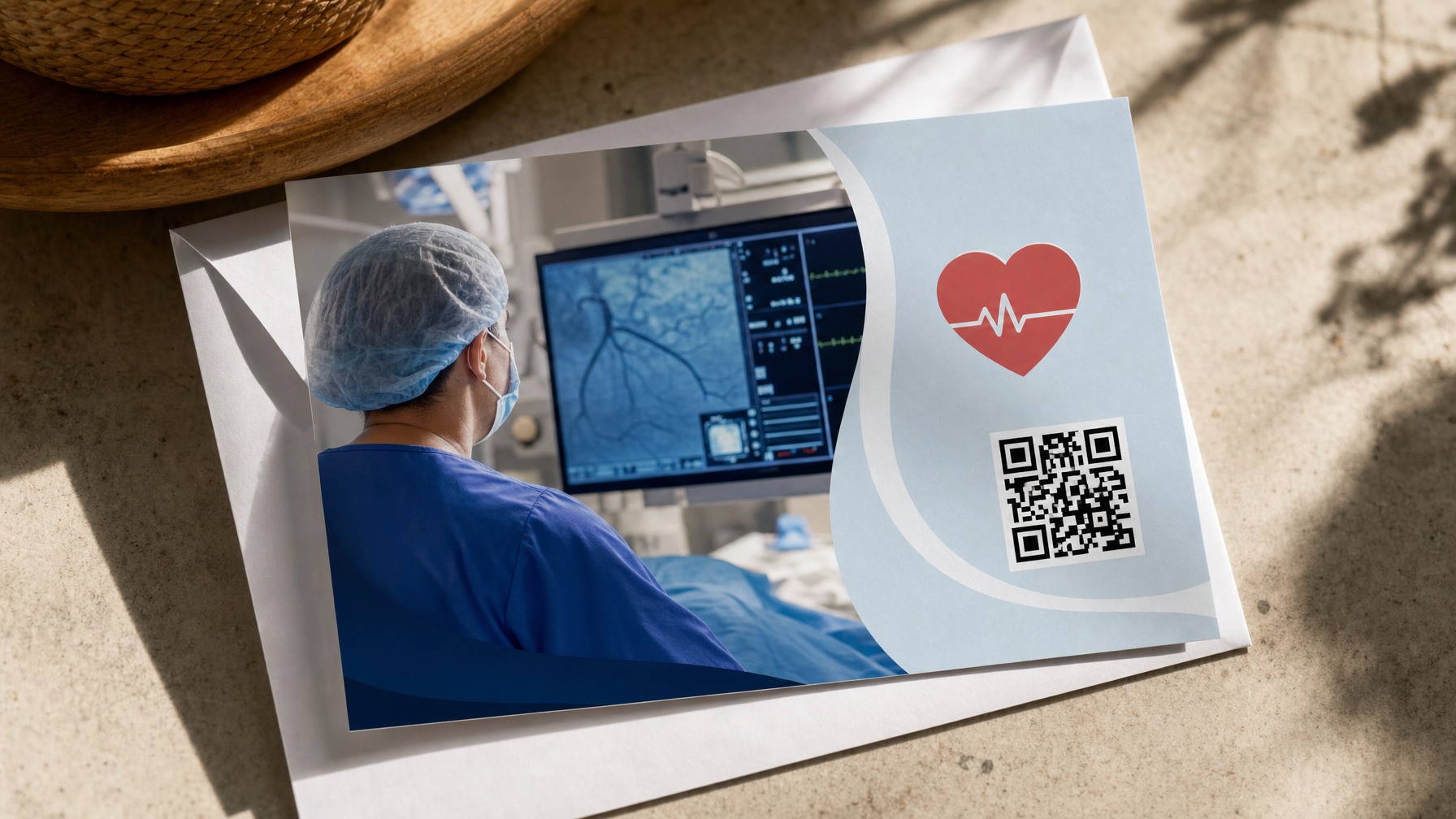
A recruitment card needs to be understood quickly. RecruitCard’s card format centers on four components.
Personalized name
Where available through the campaign process, the card uses the recipient’s actual first name. A personalized introduction helps make the piece feel like direct outreach rather than a generic healthcare advertisement.
Specialty-specific message
The message should speak to med-surg nursing directly. It should not rely on a vague statement that the employer is hiring healthcare professionals.
Possible message themes to evaluate include:
- A specific med-surg unit or care setting.
- A day, night, or other stated shift need.
- A defined schedule or location detail approved by your organization.
- Professional development or advancement information you can clearly support.
- An upcoming hiring event, open house, interview event, or facility tour.
Credible employer branding
The card should clearly identify your hospital, health system, or facility and reflect your employer brand. The purpose is to give a nurse enough context to decide whether your organization and role merit a closer look.
One clear action
Give the recipient one next step. A QR code and short URL can lead to the campaign landing page. Avoid filling the card with competing instructions that make it unclear whether the candidate should apply, call, attend an event, or look for another page.
What Happens After a Candidate Scans
The QR code can direct a candidate to a landing page built around the med-surg campaign. That page should continue the same message shown on the card and make the next action obvious.
A focused landing page may include:
- The med-surg role or campaign purpose.
- Your employer branding.
- Location and schedule information.
- Relevant unit or work-environment details.
- A clear application, contact, or event-registration action.
QR scans and landing-page traffic provide measurable engagement signals. They can help you see whether recipients are interacting with the campaign and which role pages or markets are receiving attention.
Engagement tracking does not itself guarantee applications, interviews, hires, or return on investment. Your recruiting team still needs a clear process for responding to candidate interest and moving qualified people through the hiring process.
Match the QR destination to the campaign objective. A card for one requisition should generally lead to information about that role. A multi-location campaign may lead to a location-selection page. A hiring-event card should lead to the event details and registration or contact action.
Use Cases Beyond One Open Med-Surg Requisition
The same direct mail model can support more than a single opening. Common uses include:
- One hard-to-fill opening: Introduce a specific med-surg unit or shift to nurses in the selected market.
- Ongoing hiring: Maintain awareness and support pipeline building for recurring nursing needs.
- Hiring events: Promote an open house, interview event, or facility tour to the right audience.
- Multiple locations: Coordinate a campaign across selected markets or a broader rollout, with location-specific information where appropriate.
- Employer awareness: Introduce a hospital, unit, new facility, or opportunity that a candidate may not encounter during a routine job search.
Pipeline building is particularly useful when you do not want every recruiting action to begin only after a vacancy becomes urgent. The campaign can create awareness before the next requisition opens, while the landing-page experience provides a place for interested candidates to learn more or take the designated next step.
How to Combine Direct Mail With Your Existing Recruiting Process
Direct mail works best as a connected part of your recruiting process, not as an isolated tactic.
- Keep active-search channels available. Maintain your job postings and career-site content for nurses who are already looking.
- Align the message. Make sure the card, landing page, and live job description use consistent role details and employer branding.
- Prepare follow-up. Decide who monitors applications, contact requests, event registrations, and other candidate inquiries.
- Review engagement. Use QR scans and landing-page traffic to understand which campaign pages, messages, or markets are drawing attention.
- Continue the recruiting work. Use your established process for screening, interviews, offers, and candidate communication after interest is expressed.
This structure helps ensure that a nurse who scans a card finds a coherent experience rather than a generic career page with no clear connection to the message that prompted the scan.
Questions to Ask Before Launching a Med-Surg Campaign
Before building the audience or card, align your recruiting and operational stakeholders around a few practical questions:
- Which med-surg role, unit, or shift is the campaign supporting?
- Is the priority one requisition, several locations, a hiring event, or a longer-term pipeline?
- Which license type, specialty criteria, and geography should define the audience?
- Which shift, schedule, location, and employer details would make the message relevant?
- What one action should the recipient take after scanning?
- Who will respond to candidate interest and manage follow-up?
- Which QR scans and landing-page traffic will the team review after delivery?
- For a multi-market or nationwide campaign, how will messaging be adapted for the selected locations?
Clear answers make it easier to build a campaign that reflects the real hiring need instead of a broad message that could apply to any nursing opening.
Why RecruitCard Is a Fit for This Recruiting Challenge
RecruitCard runs managed direct mail recruitment campaigns for employers and recruitment marketing agencies. Its deepest expertise is licensed healthcare hiring, including nursing roles that are difficult to fill through standard channels alone.
The model combines precision targeting by license type, specialty, and geography with personalized creative, employer branding, printing, postage, delivery, and QR-code and landing-page response tracking. Campaigns can support a single market or a nationwide rollout.
For recruitment marketing agencies, RecruitCard also offers a white-label option for adding a direct mail channel without building an in-house print, postage, and tracking operation.
Add Another Way to Reach Med-Surg Nurses
Job boards can remain an important part of your med-surg recruiting plan. Targeted direct mail adds another channel for reaching qualified nurses who are already employed and not actively searching.
The core planning principles are straightforward: define the audience precisely, make the message relevant to the actual med-surg role, and measure engagement through QR scans and landing-page traffic. Those signals can inform your recruiting process without promising a particular application, hiring, cost, or return outcome.
Schedule a consultation about your med-surg recruiting campaign.
Enjoyed this? There's more from RecruitCard.
Book a 15-minute call →