How to Recruit Oncology Nurses With Targeted Outreach
For oncology nurse hiring, targeted outreach can help you reach qualified professionals who are not actively searching on job boards. This guide is for hospital and health-system HR and talent-acquisition teams recruiting oncology nurses for hard-to-fill roles, units, shifts, or locations.
A targeted direct mail campaign puts a relevant opportunity in front of nursing professionals based on approved license, specialty, and geographic criteria. It is an outreach channel to evaluate alongside your existing recruiting efforts, not a promise of hiring outcomes. Schedule a consultation to discuss whether it fits your oncology hiring need.
Why Oncology Nurse Recruiting Needs a Targeted Approach
Oncology nursing needs are often more specific than a broad RN opening. You may need nurses for an inpatient oncology unit, an infusion setting, an outpatient cancer center, a particular shift, or a location with a limited local talent pool. The role may also require clinical experience and unit fit that narrow the relevant audience.
When a requisition is not closing through normal channels, a more precise outreach approach can be worth considering. Rather than placing another general nursing message in a crowded digital environment, you can deliver a specialty-focused message directly to an intended audience at home.
The goal is not to assume every recipient is ready to change jobs. It is to make a relevant opportunity visible to professionals who may be open to learning more but are not actively applying that day.
Why Job Boards Alone May Miss Oncology Nurses
Job boards and paid search can be useful parts of a recruiting plan. They are designed to reach active job seekers: people who are searching, browsing listings, or clicking on recruiting messages at a particular moment.
That leaves a different group harder to reach: already-employed professionals who are not conducting a job search. A qualified oncology nurse may be willing to consider a different unit, schedule, employer, care setting, or location without searching for an oncology opening on the day your posting appears.
Targeted outreach is an additional channel for reaching that passive audience. It does not replace every digital recruiting channel. Instead, it can give a defined group of professionals a direct path to learn about a role they may otherwise never encounter.
What Makes Oncology Nurse Recruiting Specific
“RN” is usually too broad to describe an oncology recruitment audience. A campaign should begin with the actual hiring need and define the intended audience more precisely.
Dimensions to evaluate
- License type: The nursing license category relevant to the opening.
- Specialty or role fit: The oncology-related role, care setting, or experience profile the campaign is intended to support.
- Geography: The market, group of markets, or broader area associated with the hiring plan.
For example, a campaign may support an inpatient oncology unit, an infusion role, an outpatient cancer center, a night-shift opening, a rural location, or another difficult-to-close requisition. The audience matching should reflect the campaign's approved license, specialty, and geography criteria. It should not be treated as a generic nursing mailing.
How Targeted Direct Mail Works for an Oncology Nurse Campaign
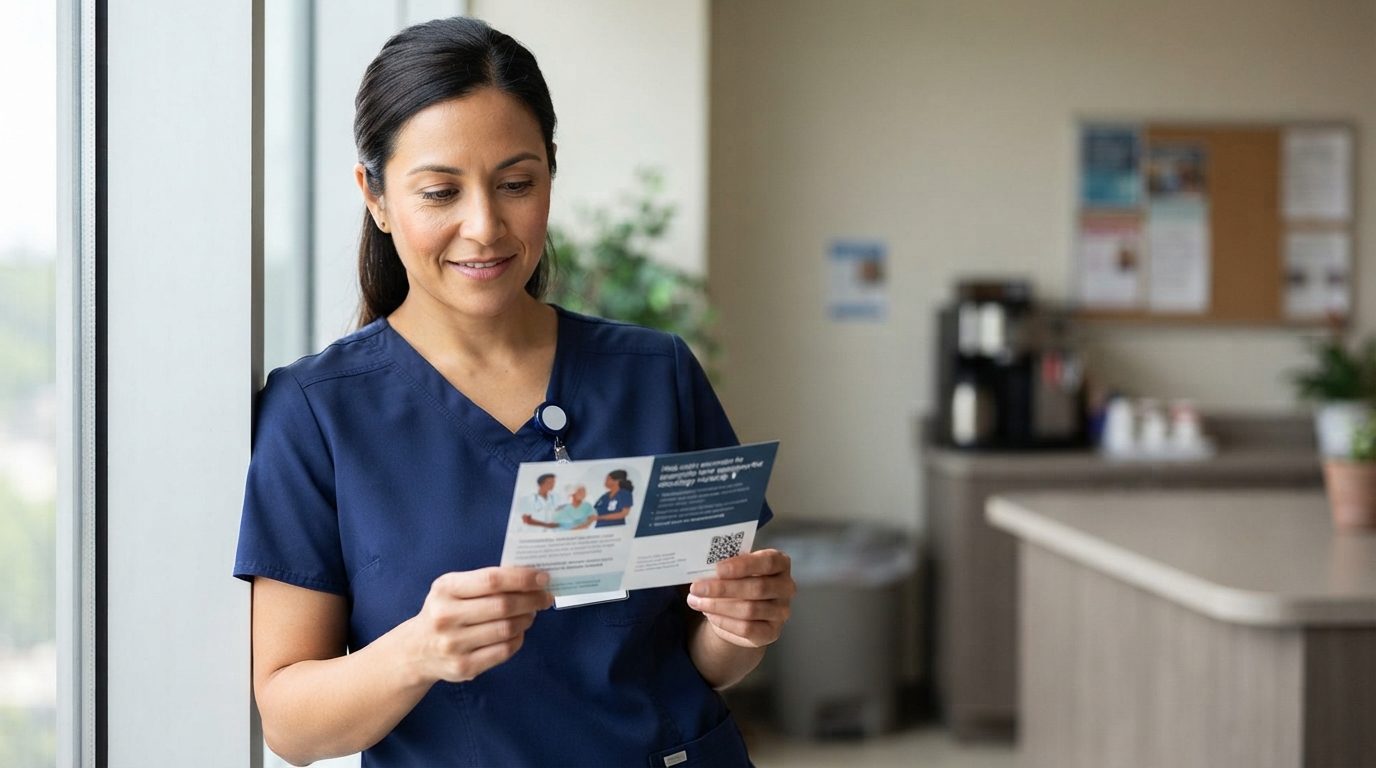
RecruitCard manages an end-to-end direct mail recruiting campaign. The process includes audience matching, card design, printing, postage, delivery, and response tracking through QR-code scans and landing-page traffic.
This differs from buying a generic mailing list or receiving a list handoff. The campaign is built around a defined outreach objective, a relevant audience, a personalized card, and a focused response path.
A typical campaign flow
- Define the oncology role, program, event, or pipeline goal.
- Set approved audience criteria by license type, specialty, and geography.
- Develop the card message, employer branding, and one clear call to action.
- Prepare a focused landing page for recipients who scan the QR code or use the short URL.
- Coordinate printing, postage, delivery, and response tracking.
- Review engagement alongside your own applicant and recruiting records.
A campaign can support a defined local market or a nationwide rollout, depending on the recruiting need. RecruitCard's deepest stated expertise is licensed healthcare hiring, including campaigns for healthcare employers seeking licensed professionals.
The Anatomy of an Oncology Nurse Recruitment Card
A recruitment card works best when it is focused. One audience, one opportunity or theme, and one primary next step make it easier for recipients to understand why the message is relevant.
Personalized recipient name
Using the recipient's actual first name makes the piece more direct than a general greeting. Personalization supports relevance, but it should be paired with a message that clearly identifies the opportunity.
Specialty-specific message
The copy should speak to oncology nursing or the relevant care setting rather than describing a generic nursing vacancy. A message for an infusion setting may emphasize the setting and role; a message for an inpatient unit can identify the unit and shift.
Credible employer branding
The card can feature your health system, hospital, cancer center, practice, or program identity. Include employer-approved details that give recipients a reason to consider learning more.
One clear action
A QR code and short URL should lead to a focused landing page. The next step might be viewing role details, registering for a hiring event, expressing interest, or starting an application. Choose one primary action instead of asking recipients to navigate several competing options.
Messages That May Matter to Oncology Nurses
Effective campaign messaging is organized around the role and the information your organization can substantiate. The card does not need to make broad promises. It needs to make a relevant opportunity understandable enough for the recipient to take the next step.
Message themes to evaluate
- The oncology specialty or specific role.
- The unit, program, or care setting.
- The shift or schedule being recruited.
- The location and the type of opportunity available there.
- Employer-approved information about the professional environment.
- A clear next step for learning more.
How the message can vary by setting
| Hiring need | Message focus to consider |
|---|---|
| Inpatient oncology unit | Identify the unit, role, shift, and a concise reason to explore the opening. |
| Infusion center | Lead with the infusion setting, location, and the next step for reviewing the opportunity. |
| Outpatient cancer program | Describe the program or care setting in employer-approved terms and direct recipients to role details. |
| Oncology leadership opening | Specify the leadership role, program context, and a focused way to learn more. |
Do not add compensation, benefits, clinical outcomes, staffing ratios, culture statements, or career-development claims unless your organization provides and approves those details.
Use Cases Beyond One Open Oncology Role
Targeted outreach can support more than a single vacancy. The same audience-and-message model can be planned around several oncology recruiting objectives.
- Hard-to-fill requisitions: Put a specific oncology opening in front of an intended audience when normal channels are not closing the role.
- Hiring events or open houses: Send recipients to event details and registration on the campaign landing page.
- New facilities or service lines: Build awareness for an oncology program that potential candidates may not know exists.
- Long-term pipeline building: Maintain awareness before the next vacancy opens, subject to your campaign strategy.
- Multiple locations: Plan outreach for a defined market or a broader rollout when several locations have related needs.
How to Measure a Targeted Outreach Campaign
Direct mail recruiting can be measured for engagement. RecruitCard campaign tracking can include QR-code scans and landing-page traffic.
These signals can help you see whether recipients engaged with the card and whether the landing page attracted attention. To make that review useful, align the landing page and tracking setup with the campaign's single call to action.
Keep the measurement boundary clear
QR scans and landing-page traffic show engagement. By themselves, they do not establish hires, response rates, cost per hire, or return on investment. Review campaign activity together with your own applicant records, recruiter follow-up, and hiring process data to understand what happened after an interested recipient reached your landing page.
Questions to Ask Before Launching
- Which oncology role, unit, shift, or location is the campaign intended to support?
- What license type, specialty, and geography define the intended audience?
- Is the goal to fill one requisition, promote a hiring event, introduce a program, or build a pipeline?
- What employer-brand elements and role details should appear on the card and landing page?
- What single action should recipients take after scanning?
- How will QR scans, landing-page traffic, applications, and recruiting follow-up be reviewed together?
- Does the campaign need to support one market or a nationwide rollout?
What a Full-Service Campaign Should Include
For a recruiting team, direct mail has several operational pieces. A full-service campaign should address them as one coordinated effort rather than leaving your team to manage each mailing step independently.
- Audience targeting by license type, specialty, and geography.
- Creative development and employer-brand integration.
- Personalization using the recipient's actual first name.
- Printing, postage, and delivery coordination.
- QR-code setup and a focused landing-page response path.
- Response tracking for QR scans and landing-page traffic.
- Campaign coordination from planning through delivery.
Recruitment marketing agencies can also discuss a white-label arrangement when they want to offer this channel under their own brand without operating the print, postage, and tracking workflow in-house.
Is Targeted Outreach a Fit for Your Oncology Hiring Need?
Targeted outreach is worth evaluating when you have a defined oncology requisition, a small or specialized qualified pool, passive candidates who are unlikely to encounter the posting, a hard-to-reach shift or location, or a need to build awareness over time.
It should be part of a broader recruiting approach, not treated as a guaranteed replacement for every other channel. If the right oncology nurses are not seeing or responding to your posting, consider whether a more precise outreach channel belongs in the mix.
Discuss Your Oncology Nurse Outreach Plan
Recruiting oncology nurses with targeted outreach means matching an audience by license type, specialty, and geography, then delivering a personalized message with one measurable next step. A focused card combines four elements: the recipient's first name, a specialty-specific message, credible employer branding, and a QR code plus short URL.
Hospital and health-system hiring teams can discuss the role, market, intended audience, creative direction, landing page, and tracking plan before deciding whether to launch a campaign. Schedule a consultation.
Enjoyed this? There's more from RecruitCard.
Book a 15-minute call →