How to Use Direct Mail to Promote a Hiring Event

How to Use Direct Mail to Promote a Hiring Event
For a hiring event, direct mail can put a specific invitation in front of licensed professionals who may not be actively searching online. It is particularly useful for hospital and health-system HR and talent-acquisition teams promoting events for hard-to-fill healthcare roles. Recruitment marketing agencies can also use the model through a white-label service.
Use a targeted, personalized mail piece to invite qualified professionals to your event, then direct them to one clear registration or event-information page. The strongest fit is an event tied to defined roles, specialties, units, locations, or shifts, not a broad message that simply says you are hiring.
Direct mail is one channel in an event campaign, not a replacement for your other recruiting activity. Your event details, audience selection, creative, printing, delivery, landing page, and response tracking need to support the same action.
Why Hiring Events Can Miss the People You Most Want to Reach
Job boards and paid search are useful when people are actively looking for work or responding to recruiting messages online. But many licensed healthcare professionals are already employed and may not be conducting a job search when an event is announced.
That matters when your event supports a smaller, specialized pool: ICU nursing, operating room roles, labor and delivery, oncology, night-shift coverage, a rural facility, or an allied-health department. A standard online announcement may not put the event in front of every qualified person who could be open to a conversation.
A targeted mail invitation adds a physical touchpoint to your channel mix. It can place a specialty-specific event invitation at home, outside the crowded environment of job listings and online ads. It does not guarantee that someone will attend. It gives the right type of recipient a clear opportunity to learn about the event and choose a next step.
Start With the Event, Not the Postcard
Define the event before you define the audience or write the card. The purpose shapes every other campaign decision.
Your event may be designed for:
- Immediate interviews for open roles
- Conversations with candidates for multiple units or departments
- An open house that introduces a facility or team
- Awareness for a new service line, location, or program
- Longer-term pipeline building before future openings arise
Identify the exact roles and specialties the event supports. “Nursing hiring event” may be too broad if the real need is experienced night-shift RNs for the ED and ICU. A focused purpose helps you make the invitation relevant.
Before creative begins, confirm the information recipients need:
- Event date and time
- In-person location or virtual-access information
- Roles, units, specialties, or shifts represented
- What attendees can expect
- Whether and how they should register or learn more
If attendance is limited, your registration page or event process should make that clear. Do not leave recipients guessing whether registration is required or whether walk-ins are appropriate.
Build the Audience Around the Hiring Need
Direct mail recruiting is not the same as sending a generic message to a broad demographic audience. RecruitCard builds campaign audiences through matching by license type, specialty or trade, and geography.
For an event, that means the audience can align with the hiring need. For example, an invitation may focus on licensed nurses in a defined area, or on professionals connected to a particular specialty. The appropriate audience depends on the event’s roles, location, and hiring objective.
A single event can support one market, multiple locations, or a nationwide rollout. The targeting approach should still begin with the roles you need to reach and the geography relevant to those roles. Broader reach is not automatically better if it makes the invitation less relevant.
Design the Mail Piece Around One Event Action
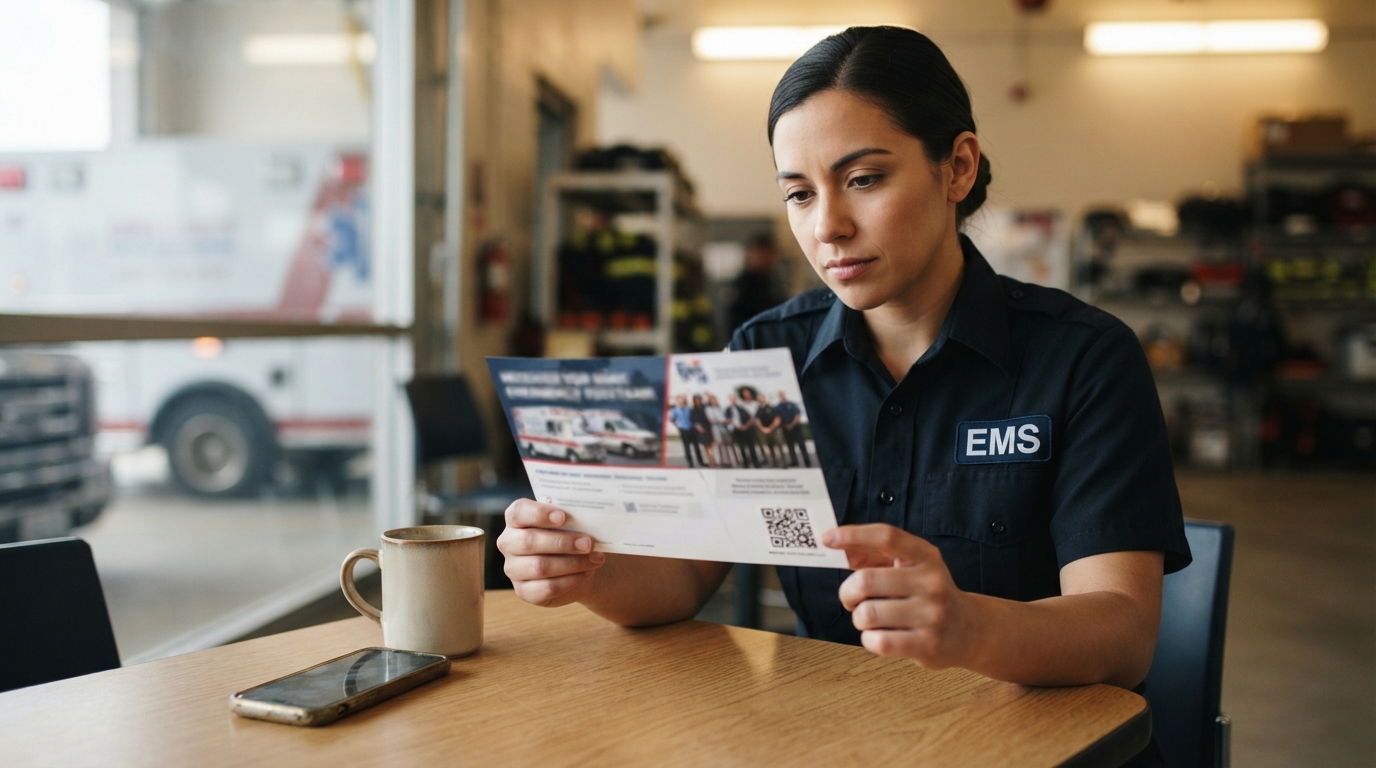
A hiring-event card should make the invitation easy to understand at a glance. RecruitCard’s card format centers on four elements:
- The recipient’s actual first name
- A specialty-specific message
- Credible employer branding
- One clear action, supported by a QR code and short URL
Lead with the event invitation rather than trying to fit several competing job descriptions and calls to action onto one card. The recipient should quickly understand who is inviting them, why the event may matter to their work, and what to do next.
Illustrative message directions include:
- Meet the team hiring for night-shift nursing roles.
- Explore rehabilitation opportunities at our upcoming hiring event.
- Talk with leaders about operating room career opportunities.
Use your logo, facility or system identity, and the event details needed to establish a credible, specific invitation. The QR code and short URL should lead to the same event-information or registration destination. Because many recipients will scan from a phone, that destination should be mobile-friendly.
Write the Invitation for a Passive Candidate
A passive candidate may not be looking for a new role today. Give them a reason to pause before asking for their time or information. Start with the professional relevance of the event, not generic language about open positions.
Where appropriate for the campaign, connect the invitation to a recipient’s specialty, license, shift context, or professional setting. A message for an ICU hiring event should not read like a general employment advertisement.
The card should answer the practical questions that influence whether someone scans:
- Which roles or specialties are represented?
- Who will be available to speak with attendees?
- Are interviews part of the event?
- What is the next step?
Keep the physical card concise. Put fuller role descriptions, employer information, and event logistics on the landing page. Depending on your process, the call to action might be to register, view event details, or choose a time for an event conversation.
Make the Landing Page Continue the Conversation
The landing page should feel like the next step from the card, not a separate campaign. Match the employer branding, event name, audience, and message used in the invitation.
Place the essential details near the top of the page:
- Event date and time
- Location or virtual-access details
- Roles and eligibility information
- What attendees should expect
- A clear registration or contact action
Explain what happens after someone submits information, but only promise steps your team can support. If a registrant will receive confirmation, instructions, or a follow-up from a recruiter, state that clearly when it is part of your process.
Include the same short URL shown on the card for recipients who prefer not to scan a QR code. Avoid unrelated recruiting offers that distract from the event action.
Use Tracking to Measure Interest
Direct mail does not have to be unmeasurable. QR scans and landing-page traffic show how recipients interacted with the campaign’s digital destination.
Those measures are different from event attendance, interviews, applications, and hires. Your own event and recruiting records are needed to understand those downstream actions. A scan indicates interest in learning more; it does not, by itself, establish why a person later attended or accepted a role.
Agree in advance on what you will compare across the campaign. Depending on your process, that may include:
- QR scans
- Landing-page visits
- Event registrations
- Attendance records
- Follow-up actions after the event
Tracking helps answer whether the mail piece generated measurable interest. It should be considered alongside the rest of your event activity rather than treated as proof that mail alone caused a final hire.
Coordinate Direct Mail With the Rest of the Event Campaign
Direct mail works best as part of a coordinated invitation, not as the only event-promotion method. Align the card with your landing page, email, social channels, recruiter outreach, and event reminders where those channels are part of your plan.
Use the same event name, date, location, role focus, and registration instructions across every material. Consistency reduces confusion when a recipient sees the invitation in more than one place.
The right timing depends on the event, the audience, the campaign scope, and the details your team has confirmed. Plan the mail component alongside your other event communications so the information remains accurate and the registration path is ready when recipients respond.
What RecruitCard Handles for a Hiring-Event Campaign
RecruitCard manages the direct mail campaign from audience targeting through response tracking. The service includes:
- Audience targeting by license type, specialty, and geography
- Card design using your employer brand and the recipient’s first name
- Printing, postage, and delivery
- QR-code and landing-page response tracking
This is more than a mailing-list handoff. The card, event action, and tracking path are built as parts of one managed campaign. Campaigns can support a single market or a nationwide rollout based on your requirements.
RecruitCard’s deepest expertise is licensed healthcare hiring, including difficult-to-fill roles and specialty needs. The same direct mail model can also extend to other licensed or certified roles. Recruitment marketing agencies can use a white-label option to offer this channel without building an in-house print, postage, and tracking operation.
When Direct Mail Is a Good Fit for a Hiring Event
Direct mail may be a good fit when your event has a focused purpose and you need to add a more targeted invitation to the campaign.
- The event is tied to a hard-to-fill specialty, unit, shift, or location.
- The qualified local pool is limited and many potential candidates are already employed.
- You need awareness for an event that candidates may not find through a job search alone.
- The event supports several related openings and calls for one focused invitation.
- You want measurable digital engagement from a physical recruiting touchpoint.
- The event contributes to an ongoing candidate-pipeline strategy, not only a single requisition.
Questions to Ask Before You Launch
- Which licenses, specialties, roles, and geographic areas should be included?
- What exactly should the recipient do after receiving the card?
- Is the event for immediate hiring, exploratory conversations, awareness, or pipeline building?
- What event information is confirmed and ready for the landing page?
- Who will manage registration, attendance records, interviews, and follow-up?
- Which campaign interactions will be tracked through QR scans and landing-page traffic?
- Will the campaign support one location, multiple locations, or a nationwide rollout?
- For agencies, should the campaign appear under the agency’s brand through a white-label arrangement?
Conclusion: Give the Event a More Targeted Invitation
Direct mail can help promote a hiring event by putting a personalized, specialty-specific invitation in front of a precisely defined audience. For hard-to-fill licensed healthcare roles, the practical approach is straightforward: define the event, match the audience to the hiring need, make the card specific, provide one clear action, and track QR scans and landing-page traffic.
If your event needs to reach beyond active job seekers, Schedule a consultation about your hiring event campaign.
Enjoyed this? There's more from RecruitCard.
Book a 15-minute call →