Recruiting Psychiatric Nurses for Night Shifts: A Channel Strategy for Hard-to-Fill Roles

A strong night-shift psychiatric nurse recruiting strategy combines precise audience targeting, a message built around the realities of behavioral health work, and channels that can reach licensed nurses who are not actively job searching. This approach is for behavioral health hospitals, health systems, psychiatric facilities, and recruitment teams trying to fill difficult night-shift roles.
Job postings, recruiter outreach, referrals, and digital advertising can all have a place. But for a specialized night-shift role, they may not put the opportunity in front of already-employed psychiatric nurses who are not browsing for jobs. A coordinated channel mix, including precision-targeted direct mail, gives you another way to introduce the role to that audience.
Why Psychiatric Nurse Night Shifts Need a Different Channel Strategy
Psychiatric nursing is specialized work. A night shift adds another decision point for candidates. The right audience may include RNs, LPNs, and other qualified psychiatric nursing professionals, depending on the position, clinical setting, and hiring market.
A standard posting is visible to people who see it and choose to engage. That is useful for active job seekers. It does not necessarily reach nurses who are employed, credentialed, and open to the right conversation but are not searching job boards.
For hard-to-fill roles, the goal is not to replace every existing channel. It is to add a channel that reaches a different part of the qualified audience with a message that is specific to the specialty, shift, and location.
Why Night-Shift Psychiatric Nursing Roles Are Hard to Fill
These roles combine several constraints at once: nursing license requirements, behavioral-health experience or interest, shift preference, location, employer setting, and the realities of the unit. Each constraint can narrow the available audience.
A general message such as “nurse needed” may not give psychiatric nurses enough reason to stop and consider an opportunity. Candidates often identify with the type of care they provide and the environment in which they work. Behavioral-health experience should be addressed directly when it is relevant to the role.
Before responding, a candidate may want to understand practical details such as:
- The overnight schedule and how it is structured.
- The patient population and care setting.
- The unit environment and available support structure.
- Safety resources and workplace expectations.
- The commute or facility location.
- Career-development context and the next step in the process.
An active job seeker may find a visible posting on their own. A passive candidate needs the role introduced in a credible, relevant way.
Where Common Recruiting Channels Fall Short
Common recruiting channels are not failures. They simply have different reach and limitations. A hard-to-fill psychiatric night-shift role often needs more than one route to market.
Job boards and careers sites
Job boards and careers pages help capture active search demand. Their reach depends largely on candidates who are already searching, browsing, or setting job alerts. An already-employed psychiatric nurse may not be in that audience at a given time.
Paid search and digital advertising
Paid search can create visibility when candidates search for related terms. It still depends on active intent, and the opportunity competes with other messages for attention. Broad social or demographic targeting may also lack the precision needed for a psychiatric nursing audience in a defined geography.
Referrals and recruiter outreach
Employee referrals and recruiter outreach can create valuable personal contact. However, a small specialty pool may be repeatedly contacted, and these channels may not generate enough reach for an ongoing or difficult requisition.
The practical response is channel diversification: retain the channels that capture active demand, then add a route that can place a relevant opportunity in front of passive licensed professionals.
Build the Audience Around License, Specialty, and Geography
Precision targeting means matching the campaign audience to the relevant license type, psychiatric or behavioral-health specialty, and geographic location. It is not the same as sending a generic local mailing or purchasing a broad demographic list.
This structure helps make the message more relevant to the role. For example, the audience can be planned around the license requirements for an overnight psychiatric nursing opening, the behavioral-health focus of the role, and the market or markets where the employer needs to recruit.
Geography can support different hiring plans:
- One facility or a defined local market.
- Several facilities or locations within a broader recruiting area.
- A multi-market or nationwide rollout.
If relocation is part of the opportunity, the campaign can present that opportunity beyond the immediate area. Whether a candidate is willing to relocate remains their decision and should not be assumed.
Choose the Right Message for a Psychiatric Nurse Night-Shift Role
Lead with the specific opportunity. “Overnight Psychiatric RN” is more useful than a vague employer-awareness message when the purpose is to fill a defined requisition.
The message should acknowledge behavioral-health work directly and give a candidate enough context to decide whether to learn more. It should answer the most important questions without trying to fit a full job description onto a card.
- What is the role and required license level?
- Is it a night-shift opportunity?
- What is the patient population, unit, or facility setting?
- Where is the role located?
- What should the recipient do next?
Use credible employer branding. Avoid exaggerated language or candidate-facing promises that cannot be supported. The objective is clarity: the recipient should recognize who is hiring, why the role may be relevant, and how to take one simple next step.
The Anatomy of an Effective Recruitment Card
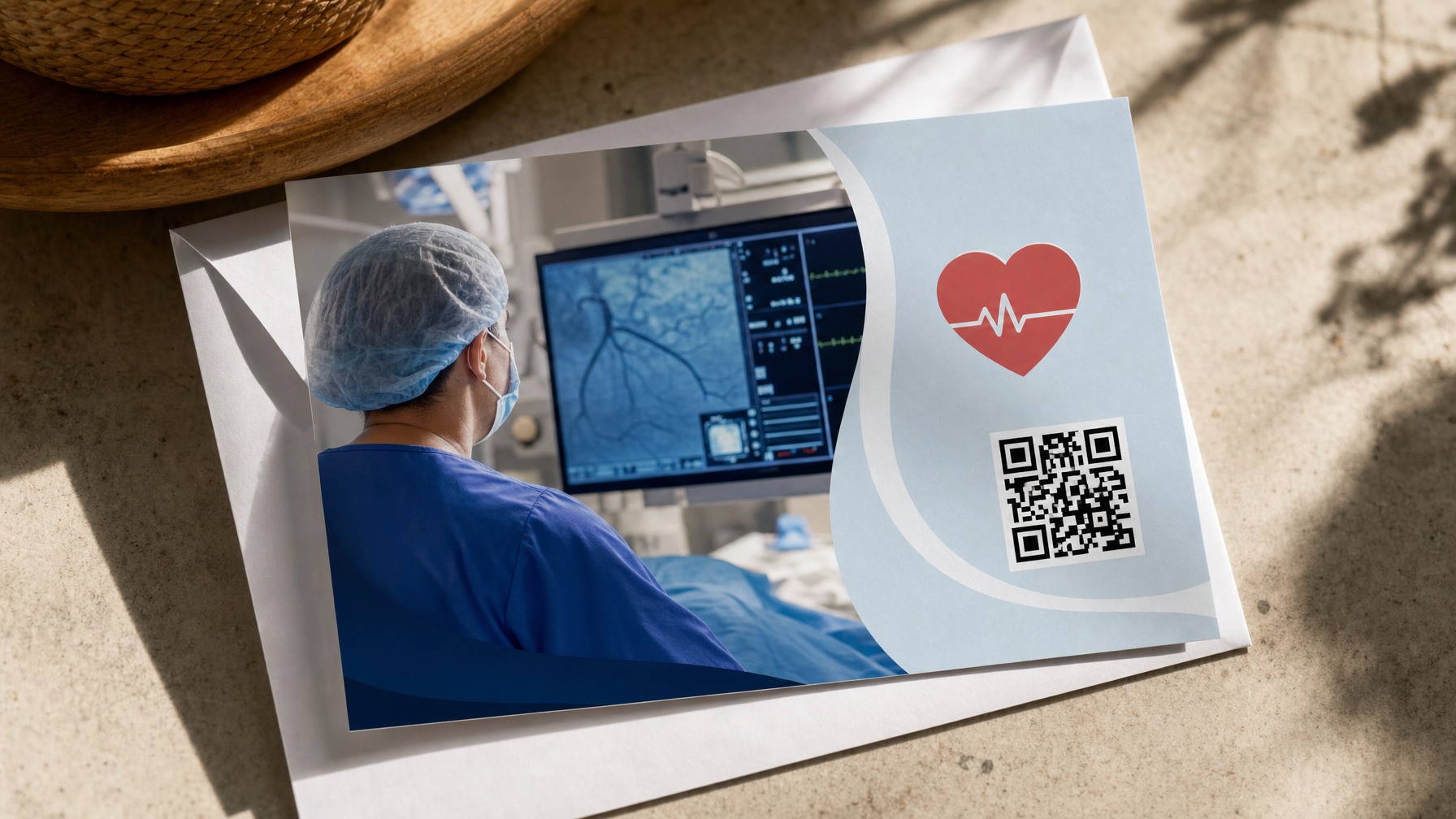
A recruitment card works best when it is focused. RecruitCard plans cards around four core components.
Personalized recipient name
Using the recipient’s actual first name makes the message feel directed to a person rather than broadcast to a general audience.
Specialty-specific message
The copy should speak to psychiatric or behavioral-health nursing, not generic nursing hiring. The specialty and shift are central to why the opportunity may matter to the recipient.
Credible employer branding
The employer, facility, or opportunity should be recognizable. Branding should support trust and clarity without crowding out the core role message.
One clear action
A QR code and short URL should lead to one intended next step, such as applying, learning more, contacting a recruiter, or registering for an event.
The card should support the digital destination rather than repeat every detail from the job description. For example, a card might introduce an overnight psychiatric RN opening, identify the facility and location, briefly summarize the opportunity, and direct the recipient to a role-specific landing page.
Use Direct Mail to Reach Passive Licensed Nurses
Personalized direct mail can put a targeted opportunity in front of licensed professionals who may not be browsing job boards or responding to paid-search ads. It is a way to reach outside the active-search environment.
This is different from a generic list purchase or mass mailing. The audience is matched by license type, specialty, and geography, while the creative speaks to the actual role being hired.
Direct mail is particularly worth considering when a role has stayed open despite normal recruiting activity, the qualified local pool is limited, or the employer needs to build an ongoing nursing pipeline. It does not eliminate the need for postings, outreach, or referrals. It adds a distinct point of contact in a less crowded setting: the candidate’s home.
Connect the Card to a Focused Landing Page
A card should send recipients to a focused landing page, not a general careers homepage where they must search again for the opportunity. The destination should match the promise of the card.
For a psychiatric night-shift campaign, the landing page can include:
- The position title, shift, and location.
- Essential qualifications and relevant license requirements.
- Context about the employer, facility, or unit.
- A clear application, recruiter-contact, or event-registration path.
Recipients may scan a QR code from a phone, so the page should be straightforward to use on mobile. Keep the call to action consistent. If the card invites the nurse to learn about an overnight psychiatric role, the landing page should bring them directly to that information.
The QR code and short URL create a measurable path from the mail piece to the campaign destination.
Measure the Channel Without Guessing
Direct-mail recruiting does not need to be treated as unmeasurable. QR scans and landing-page traffic show whether recipients engaged with the campaign destination.
Those signals can help your team understand whether the message generated attention and visits. Where your recruiting workflow permits, campaign traffic can also be reviewed alongside inquiries, applications, and recruiter conversations.
No single metric tells the entire hiring story. Review the campaign alongside job-board activity, recruiter outreach, referral activity, and the quality of candidate conversations. This gives you a more complete view of how the channel is contributing.
Coordinate Direct Mail With the Rest of the Recruiting Mix
Direct mail works best as part of a consistent recruiting system.
- Use job postings and your careers site to capture active search demand.
- Use recruiter outreach and employee referrals to create personal contact opportunities.
- Use paid and organic digital channels to reinforce visibility and provide more information.
- Use targeted mail to introduce the opportunity to qualified passive candidates.
Keep the core message consistent across channels. The role, shift, location, employer identity, and next action should align from the card to the landing page to the recruiter follow-up. Plan the mailing around the hiring need without treating it as a substitute for the rest of the recruiting process.
When This Strategy Is a Good Fit
A targeted direct-mail campaign may be a good fit when:
- An overnight psychiatric nursing requisition remains open despite normal recruiting activity.
- The qualified audience is specialized, licensed, and likely to include already-employed professionals.
- You need to recruit in one defined market, across several locations, or more broadly.
- You want to build a behavioral-health nursing pipeline before the next vacancy opens.
- Your team needs a managed process covering audience matching, card design, personalization, printing, postage, delivery, and response tracking.
Other Uses Beyond One Open Night-Shift Requisition
The same model can support more than an immediate opening. A behavioral-health employer might use targeted mail to promote a nursing hiring event or open house, introduce a new psychiatric unit or service line, or maintain awareness for recurring night-shift vacancies.
Broader psychiatric nursing recruitment can also be supported with separate creative for different specialties, shifts, facilities, or locations. This allows the campaign message to remain specific even when the overall recruiting need is ongoing.
Questions to Resolve Before Launch
Clear planning improves the relevance of the audience, card, and landing page. Resolve these questions before the campaign begins:
- Which license types and psychiatric nursing specialties should be included?
- Which geography or locations should the campaign cover?
- Is the objective one difficult requisition, multiple openings, a hiring event, or long-term pipeline development?
- What concerns about the night shift and work setting should the creative address?
- What is the one action after scanning: apply, learn more, contact a recruiter, or register for an event?
- Who will approve employer branding, landing-page content, and candidate-facing claims?
- Which campaign signals will the recruiting team review, including QR scans and landing-page traffic?
How RecruitCard Supports the Campaign
RecruitCard provides managed, end-to-end direct mail recruiting campaigns with its deepest expertise in licensed healthcare hiring. For psychiatric nurse night-shift recruitment, the workflow includes audience matching by license type, specialty, and geography; card design; personalization with the recipient’s first name; printing; postage; delivery; and QR-code and landing-page response tracking.
Campaigns can support a single market or a nationwide rollout. RecruitCard can also support recruitment marketing agencies through a white-label option, allowing an agency to offer the channel without building its own print, postage, and tracking operation.
Build a More Complete Channel Strategy for Psychiatric Night Shifts
Hard-to-fill psychiatric nurse night shifts require a strategy that reaches both active and passive candidates. Keep the message specific to behavioral health and the shift. Use job postings, search, outreach, and referrals to capture active interest, then add precision-targeted direct mail to introduce the opportunity to licensed nurses who may not be searching.
By matching the audience around license type, specialty, and geography, and connecting the card to a measurable landing-page path, direct mail can be a practical complement to your existing recruiting mix.
If you are planning a campaign for an overnight psychiatric nursing role, a hiring event, or a longer-term behavioral-health pipeline, Book a 15-minute call to discuss the role, audience, geography, and campaign objective.
Enjoyed this? There's more from RecruitCard.
Book a 15-minute call →