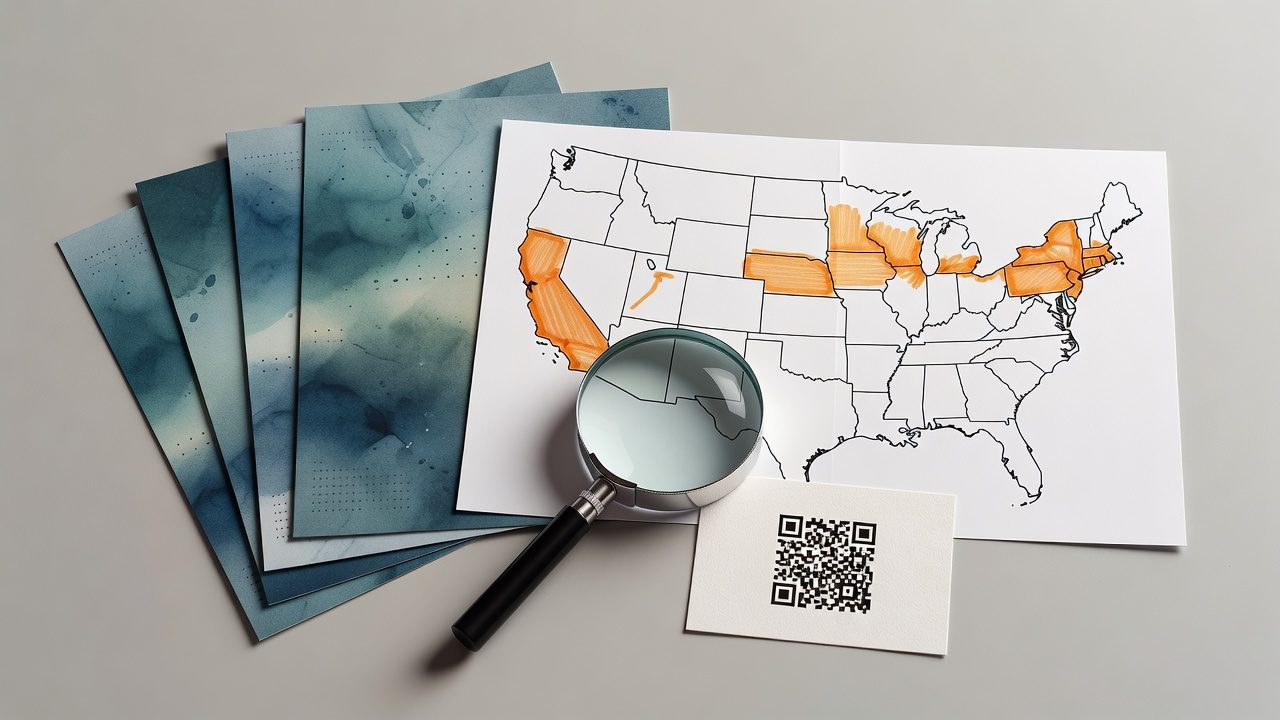
Rural Behavioral Health Recruitment: Reaching a Small Qualified Audience

Rural behavioral health recruitment is difficult because the qualified local audience is often small, specialized, and already employed. For rural hospitals, behavioral health organizations, clinics, and recruitment marketing agencies hiring counselors, social workers, psychiatric nurses, and related professionals, a targeted direct mail campaign can add a measurable way to reach people by license type, specialty, and geography with a personalized message.
Why Rural Behavioral Health Roles Are Hard to Fill
A rural employer may have a limited number of qualified behavioral health professionals within a practical commuting area. That constraint becomes sharper when a role requires a particular license, care background, schedule, or clinical focus.
A broad behavioral health audience is not necessarily the audience for your opening. A need for a licensed clinical social worker differs from a need for a professional counselor, psychiatric nurse, substance-use treatment professional, or behavioral health leader. Each role calls for a more defined recruiting conversation.
Normal recruiting activity can still leave a role open. Job boards and paid search are built around people who are actively looking and responding to online opportunities. Many qualified professionals are working, are not searching, or may not see a rural role during their usual job-search behavior.
That does not mean direct mail guarantees a hire. It gives you another channel for introducing a relevant opportunity to a defined audience when ordinary channels are not producing enough qualified conversations.
Start With the Exact Behavioral Health Audience You Need
Precision targeting means matching the campaign audience to license type, specialty, and geography. It is different from sending a generic demographic mailing or a broad “behavioral health” message to people whose work may not match the opening.
For example, your campaign may need to distinguish among:
- Clinical social work roles
- Professional counseling roles
- Psychiatric nursing roles
- Substance-use treatment positions
- Community-based behavioral health professionals
- Behavioral health leadership roles
Geography matters in rural recruitment. You may want to define a practical service area around one facility, include several communities served by your organization, or build a broader audience when relocation interest is part of the recruiting objective. The appropriate geography depends on the role, your location, and the kind of candidate you need to reach.
RecruitCard builds campaign audiences from license, specialty, and geographic matching. That lets the message stay focused on the professionals most relevant to the role rather than functioning as a general employment advertisement.
Reach Passive Behavioral Health Professionals Outside Active Job Searches
Job postings, paid search, and online recruiting are important tools. They mainly engage people who are already looking for work or interacting with job-related content. A qualified behavioral health professional who is settled in a current position may never see your posting at the right moment.
A mailed card adds an offline point of contact. It can introduce a rural clinic, psychiatric nursing role, community-based program, or remote-area opportunity to professionals who are not conducting an active search. It should complement, not replace, your postings, employee referrals, outreach, screening process, and other recruiting channels.
Direct mail will not reach every passive candidate or ensure that every recipient reads the message. Its value is in creating a focused, lower-competition introduction at home for a defined professional audience.
The Anatomy of a Rural Behavioral Health Recruitment Card
Personalized recipient name
Using the recipient’s actual first name makes the card more direct than a generic “Now Hiring” message. Personalization helps establish that the communication is intended for a particular professional audience.
Specialty-specific message
The copy should describe the work that matters to the intended recipient. An outpatient counseling message should not read like a psychiatric nursing message. Depending on the campaign, the card may focus on crisis services, substance-use treatment, clinical social work, counseling, psychiatric nursing, or another clearly defined need.
Credible employer branding
Your logo, mission, and care setting help recipients understand who is reaching out. The card should briefly explain why the opportunity may be relevant, without trying to fit every job detail onto a small format.
One clear action
Give the recipient one primary next step. A QR code and short URL can lead to a focused landing page for the role, location, or event. This is clearer than directing someone to a broad careers page where they must search again for the opportunity that prompted the outreach.
Make the Rural Opportunity Clear Without Overselling It
Rural candidates often need enough context to decide whether it is worth learning more. Your message can address practical details such as the care setting, patient population, schedule, team structure, location, and available support.
State what makes the opportunity distinct, but do not overpromise. Do not add compensation, benefits, relocation support, or career outcomes unless those details are approved and can be presented accurately. A clear, credible message is more useful than a crowded card full of broad claims.
The card’s job is to create relevant interest. The landing page can provide fuller job details, explain the organization and location, and give the candidate a simple way to take the next step.
In most cases, keep each card centered on one role or a closely related group of roles. A card trying to recruit every type of employee can become too general for the behavioral health professional you most need to reach.
Use Direct Mail for More Than One Open Position
Hard-to-fill vacancy
A campaign can focus on a specific rural behavioral health requisition that has remained open despite normal recruiting activity. The message can identify the relevant role and the reason it may be worth a closer look.
Hiring event
A targeted card can invite qualified professionals to an open house, interview event, or recruitment session. The audience and landing page should align with the professionals the event is intended to attract.
Program awareness
Direct mail can also raise awareness of a new behavioral health service, training opportunity, or apprenticeship-style pathway when your organization actually offers it. This is useful when candidates cannot easily search for something they do not yet know exists.
Long-term pipeline
Repeated, relevant outreach can help maintain awareness before the next vacancy opens. This is a pipeline-building use case, not a promise of a particular number of candidates or hires.
Measure Interest With QR Scans and Landing-Page Traffic
Mail recruiting does not have to be unmeasurable. RecruitCard can track QR scans and traffic to the campaign landing page, providing a way to see activity associated with the card.
For clearer interpretation, build the landing page around the mailed role, location, and call to action. A candidate who scans a card about a rural psychiatric nursing opening should arrive at a page that continues that specific conversation.
A scan or page visit is a measurable engagement signal, not a completed application or a hire. Review campaign activity alongside applications, recruiter conversations, interviews, and hires in your own recruiting system to understand the full path from outreach to outcome.
What RecruitCard Manages for You
RecruitCard manages the campaign from end to end: audience targeting, card design, employer branding, recipient-name personalization, printing, postage, delivery, and QR-code or landing-page response tracking.
That differs from a mailing-list handoff. With a list alone, your team would still need to manage creative, production, mailing, and measurement separately. RecruitCard’s model is designed to keep those pieces connected around one recruiting objective.
Campaigns can support a single rural market or a broader U.S. rollout, depending on your recruiting need. Recruitment marketing agencies can also explore a white-label option for offering this channel under their own brand.
Book a 15-minute call to discuss the role, audience, geography, and campaign objective.
When Rural Behavioral Health Direct Mail Is a Good Fit
- A specific behavioral health role has been open for an extended period, and normal channels are not producing enough qualified conversations.
- The relevant local audience is small, specialized, or likely to be already employed.
- You need to reach a defined license or specialty group in a rural service area.
- You are promoting a hiring event, new program, or future pipeline rather than only one vacancy.
- You are a recruitment marketing agency seeking a targeted direct mail option to provide under your own brand.
Planning Questions Before Launch
- Which license type, specialty, or behavioral health role is the campaign designed for?
- Which geography should the audience cover: a local service area, a relocation-oriented audience, or a broader U.S. rollout?
- What is the one action you want recipients to take after receiving the card?
- Which employer details will make the rural opportunity credible and relevant without overcrowding the card?
- How will you distinguish QR scans and landing-page traffic from applications, interviews, and hires in your recruiting process?
- What questions about pricing, campaign size, contract terms, and delivery timing should be discussed directly before launch?
FAQ
Can you target behavioral health professionals by specialty?
Yes. The campaign audience can be matched by license type, specialty, and geography, allowing the message to focus on counselors, social workers, psychiatric nurses, and related behavioral health professionals.
Can a campaign reach candidates who are not actively job hunting?
Direct mail adds an offline channel for reaching passive professionals who may not be searching job boards or responding to paid search ads. It works alongside your other recruiting channels rather than replacing them.
How do we measure whether the campaign generated interest?
RecruitCard can track QR scans and landing-page traffic. Review those signals with your application and recruiting data to understand the full recruitment path.
Can this support a rural hiring event or behavioral health program launch?
Yes. The same targeted approach can promote a hiring event, raise awareness of a new service or training opportunity, or support longer-term candidate pipeline activity.
Does RecruitCard handle the card design and mailing?
Yes. The managed service includes audience targeting, personalized card design, printing, postage, delivery, and response tracking. Book a 15-minute call to discuss your rural behavioral health hiring need.
Enjoyed this? There's more from RecruitCard.
Book a 15-minute call →