Should Nursing Schools Target Local Hospitals to Recruit Licensed Clinical Faculty?

Yes. Nursing schools should consider targeted outreach to licensed bedside nurses with advanced degrees when job board postings bring too few qualified clinical faculty applicants. This approach is for nursing school deans, program directors, faculty recruiters, and academic HR teams hiring for a defined clinical teaching need.
- Keep job postings active for broad visibility, but do not depend on them as the only faculty recruiting channel.
- Reach experienced nurses working in local hospitals who may not be searching for academic roles.
- Define the audience by license, specialty, geography, and the academic qualifications required for the role.
- Explain the clinical teaching work, schedule expectations, student supervision, and degree requirements clearly.
- Use a dedicated landing page, QR code, or short URL to create a measurable response path.
Should nursing schools recruit clinical faculty through local hospital outreach?
Yes, local hospital outreach can be a sensible addition when you need an experienced nurse for a particular specialty or local clinical placement area. It gives your school a way to introduce a faculty opportunity to qualified professionals who are already employed and may not be browsing academic job listings.
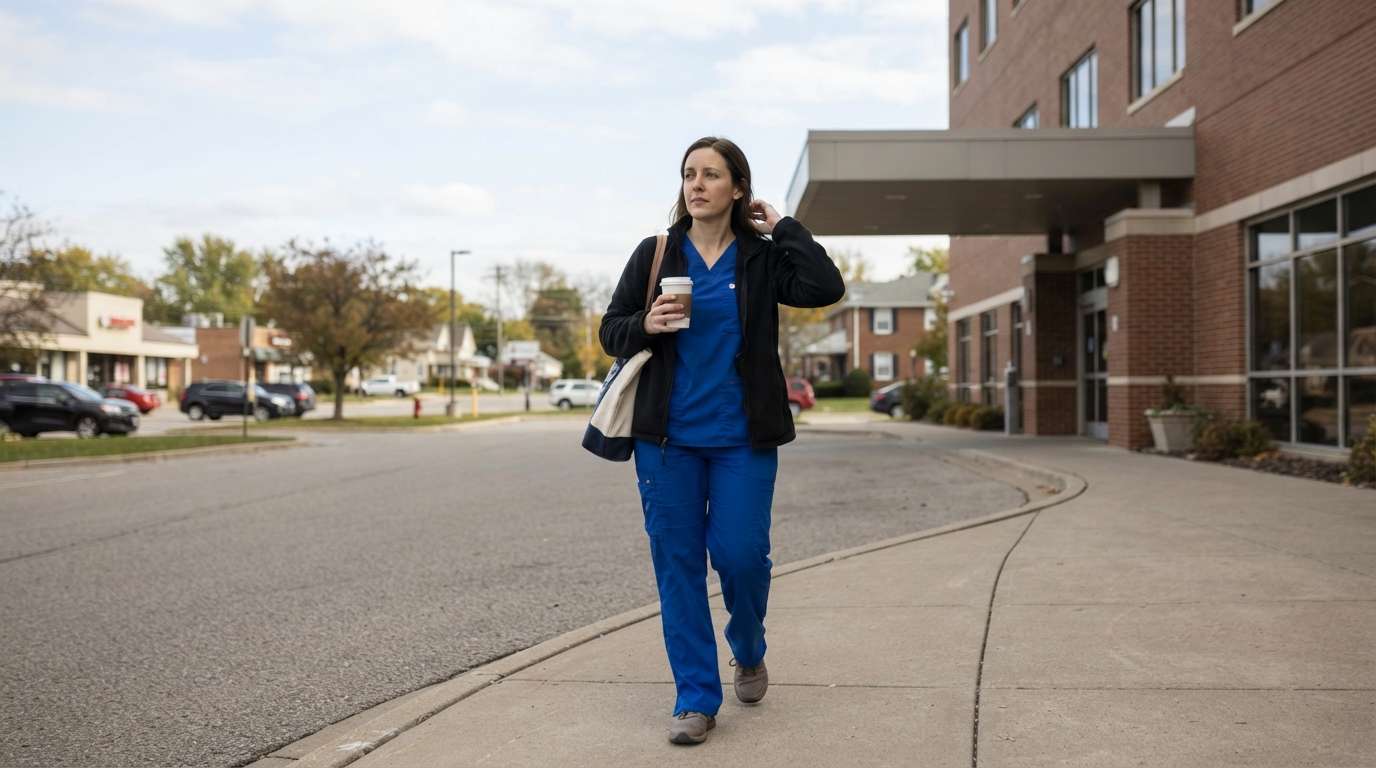
A bedside nurse with the right graduate education, clinical background, and interest in teaching may be open to a conversation about faculty work without conducting a job search. That does not mean every experienced nurse is qualified for or interested in the opening. It means the school can make the opportunity visible to a narrower, relevant audience.
Hospital outreach should supplement your institutional posting, referral process, academic networks, and other established recruiting work. The official job description should remain available for candidates who find the position through search, referrals, or professional connections.
Why can job board postings miss qualified clinical faculty?
Job board postings mainly reach people who are actively looking for a new role, so they can miss nurses who are settled in bedside practice but might consider teaching. A nurse may search for positions in their clinical specialty rather than use an academic title such as clinical faculty or nursing instructor.
For example, an emergency department nurse with a graduate degree may not be reviewing faculty listings. An ICU nurse who meets a school's adult health teaching requirements may be focused on clinical roles. A nurse practitioner with the appropriate preparation may not know that your program needs someone to teach advanced practice students.
A general faculty listing can also hide the part of the role that matters most to a specialty clinician. If the need is adult health clinical instruction, candidates should see that immediately. The same is true for pediatric, psychiatric mental health, maternal health, and community health teaching roles.
Job boards still have a place. They provide a public, formal place to review the position and apply. The limitation is audience behavior, not the value of the posting itself.
Which nurses should a school target?
The right audience is defined by the actual faculty need: license type, clinical specialty, geography, and academic qualification. Start with the official role requirements rather than a broad idea of reaching nurses in the area.
Match qualifications to the teaching assignment
Depending on the position, the potential audience may include registered nurses with graduate degrees, nurse practitioners, clinical nurse specialists, nurse educators, or experienced nurses with relevant teaching preparation. Your school should determine the required degree, license, clinical experience, and other qualifications before outreach begins.
An adult health opening needs a different audience and message than a pediatric, maternal health, psychiatric mental health, or community health opening. A candidate should be able to tell why their own clinical experience is relevant to the student learning and supervision involved.
Use geography that reflects the work
Local geography matters when faculty members need dependable access to campus, nearby clinical sites, or a particular hospital placement area. A broader audience may make sense when the role structure and school requirements support it. The audience can be planned through approved matching by license, specialty, and geography.
What should the outreach message say?
The message should lead with the specific teaching opportunity and clinical area, then explain what the school needs from the candidate. A generic academic employment message gives a specialty nurse little reason to stop and learn more.
- Name the clinical area and teaching assignment.
- Connect the candidate's bedside experience to student learning and clinical supervision.
- State the required degree, license, specialty background, work location, and teaching expectations when those details are confirmed by the school.
- Use the school's employer brand to communicate its mission, students, faculty culture, and clinical focus.
- Offer one clear next step, such as viewing the role details or starting a conversation with the program.
Be accurate about the work. Do not portray a faculty role as an easy side job unless the schedule and employment structure support that description. Candidates need enough detail to judge whether the teaching load, clinical supervision, and application process fit their situation.
How does a job board posting compare with targeted outreach?
A job board makes a role available to active searchers, while targeted outreach can introduce the role to qualified nurses who are already employed. Using both gives candidates a formal application destination and gives the school more control over who sees the initial message.
| Channel | Likely audience | Message control | Specialty focus | Measurable response path |
|---|---|---|---|---|
| Institutional or job board posting | People actively searching for a role | Position description and posting format | Often broad unless the candidate searches the exact specialty or title | Application activity and site analytics, where available |
| Targeted outreach | Defined licensed professionals in a chosen specialty and geography, including employed nurses | Role specific message, school branding, and one selected action | Planned around the faculty need | Dedicated landing page traffic, QR scans, and inquiries |
Keep the formal posting live. Candidates may still arrive through search, referrals, academic networks, or a conversation prompted by outreach.
How can a nursing school plan local hospital outreach?
Start with one defined faculty need, then make every audience and message decision support that role. For example, a school might begin with adult health clinical faculty in a particular metropolitan area.
- List the required license, specialty, degree, clinical experience, and geographic area.
- Confirm the teaching load, clinical supervision duties, schedule, student population, work location, and application steps.
- Create a role specific landing page that answers those questions in plain language.
- Coordinate the message with HR and nursing leadership so it matches the official position description.
- Set a review process for QR scans, landing page traffic, inquiries, and completed applications.
Those actions show engagement with the outreach. They should not be treated as a promise that every scan, visit, or inquiry can be attributed to a hire.
Plan the response path before outreach begins.
Make it easy for a nurse to move from initial interest to role details. A dedicated page should explain the clinical area, qualifications, teaching expectations, and next step without requiring the candidate to search through a general careers site.
How can targeted direct mail support a faculty search?
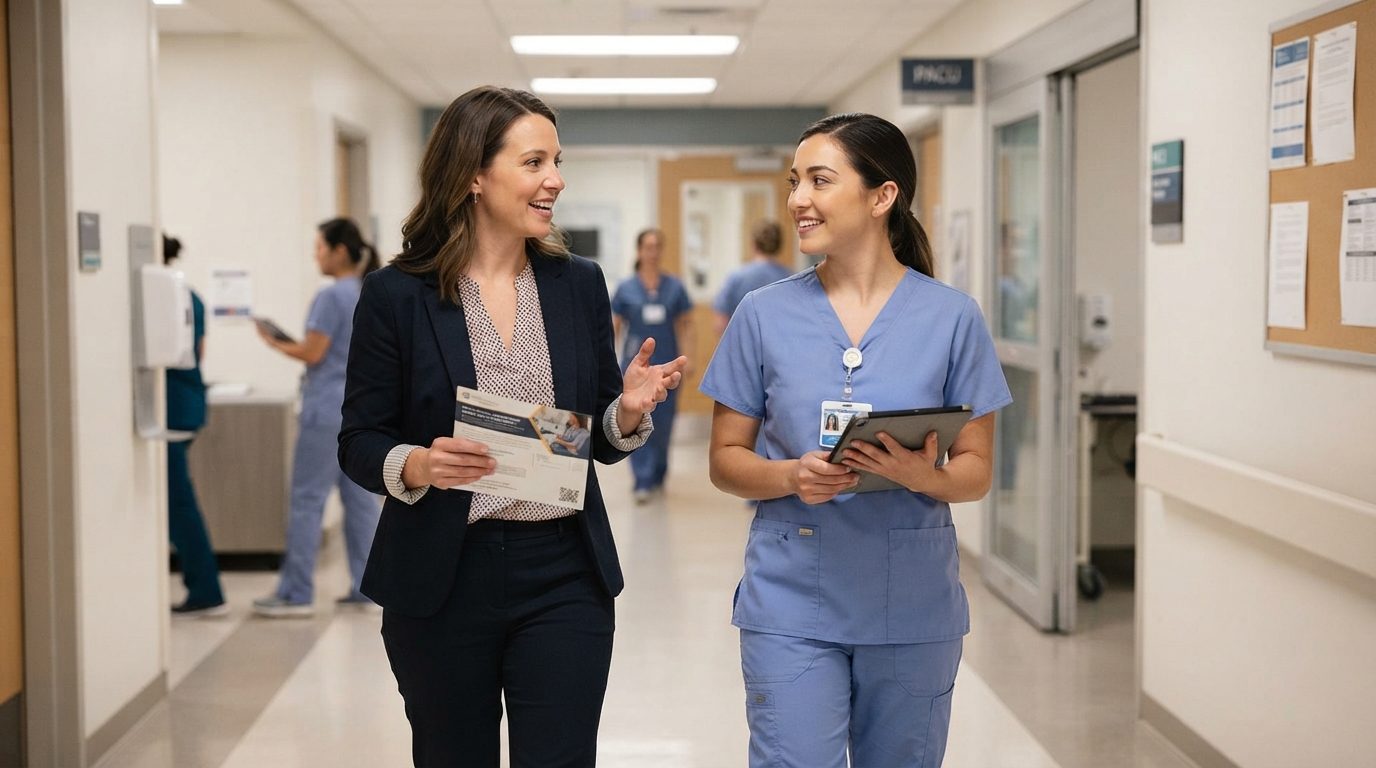
Targeted direct mail can put a faculty opportunity in front of licensed professionals in the relevant specialty and geography, including employed nurses who may not be checking academic job boards. It is an outreach option for a narrow faculty search, not a replacement for the school's formal posting process.
A planned mail piece has four parts: the recipient's first name, a specialty specific message, credible nursing school branding, and one clear action through a QR code and short URL. RecruitCard manages audience targeting, creative, printing, postage, delivery, and response tracking as one campaign.
If you are considering this channel for a defined clinical faculty opening, Book a 15 minute call.
Questions nursing school recruiters may still have
Should the school stop posting on job boards?
No. Keep the official posting active and add targeted outreach when the qualified audience is narrow or mostly employed.
Can outreach focus on a specialty such as ICU or labor and delivery?
Yes. A campaign can be planned around license type, specialty, and geography, subject to the approved audience definition and the school's confirmed faculty requirements.
Can the school reach nurses who are not looking for faculty work?
That is the purpose of targeted outreach. It introduces the opportunity to qualified professionals who may not be actively searching for academic positions.
How can the school measure interest?
Use a dedicated landing page and track QR scans and landing page traffic. Treat these actions as engagement signals, not guaranteed hires.
Does this work for a local hospital partnership or a program with several locations?
The same model can support a defined local market or a broader rollout when the audience and message are planned by location.
Sources
These resources provide background on nursing education, nurse educator teaching resources, and postsecondary teaching work.
Enjoyed this? There's more from RecruitCard.
Book a 15-minute call →