Should You Mail One Zip Code or an Entire Metro Area for Your Next Hygienist Search
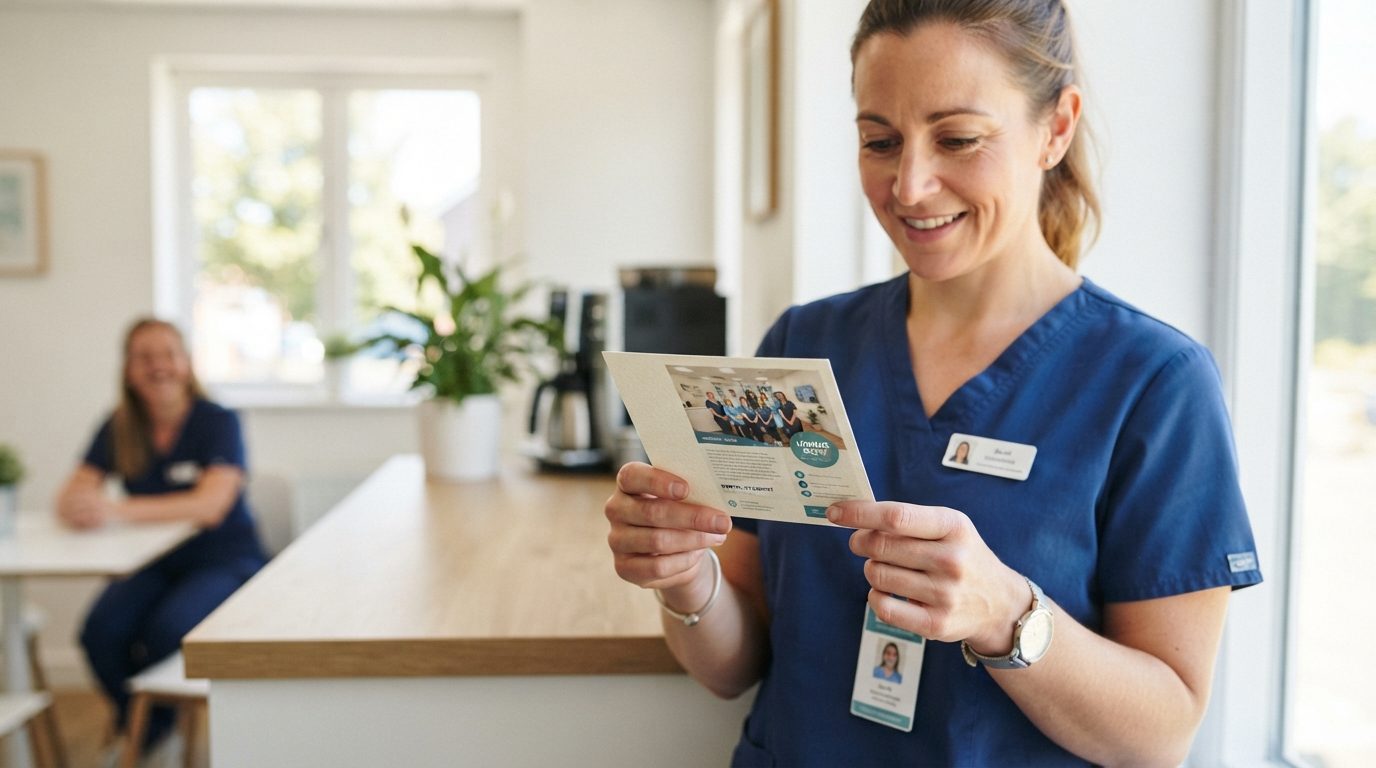
A single ZIP Code can work when a dental hygienist role depends on a very local commute. A wider metro audience may be the better choice when the qualified pool is small or your practice offers a strong reason for candidates to travel.
- Choose one ZIP Code when the practice is highly location dependent and likely candidates are concentrated nearby.
- Consider a wider metro audience when the local pool is limited, the search is difficult, or the opportunity can justify a longer commute.
- Geographic scope affects audience quality, message relevance, and how you review campaign activity. It is not only a mailing volume decision.
- Keep your employer brand and core call to action consistent, then adjust language for commute and local relevance.
- RecruitCard can plan a targeted audience by specialty and geography, then manage creative, printing, delivery, and response tracking.
Who this guidance is for
This guidance is for dental practices, dental service organizations, and healthcare recruiting teams hiring dental hygienists. It also applies to recruitment marketing agencies planning a targeted mail campaign for a hygienist search.
The decision is straightforward in principle but important in practice: determine whether a narrow local audience is sufficient, or whether the campaign should reach hygienists across the connected communities of a larger metro area.
Why geographic scope matters in a hygienist search
Geographic scope determines how closely the audience matches the commute while influencing how many qualified hygienists your campaign can reach. A hygienist may consider commute, schedule, compensation, team environment, practice setting, location, and longer term fit before deciding to learn more.
A tight geographic slice is a campaign focused on one ZIP Code or a small set of nearby ZIP Codes. A metro audience is a broader campaign that covers multiple communities linked by work, housing, and commuting patterns.
The goal is not simply to mail more people. The goal is to reach a licensed or qualified audience with a message that makes the role feel relevant. A card sent close to the practice can emphasize convenience. A card sent farther out needs to explain why the role is worth considering despite the commute.
When one ZIP Code may be the better choice
One ZIP Code may be appropriate when the role is strongly tied to a convenient local commute and the nearby audience is large enough to support the search. This approach can make sense when your practice wants to reach candidates who live very close to the office.
A tight audience may be a fit when parking, transit access, school pickup, or a predictable commute is central to the value of the opportunity. It can also be useful when your practice has a location story that may lose relevance across a wider area.
A local message example
A suburban dental practice might emphasize a short commute, stable schedule, and familiar community setting. Those details can be meaningful to a hygienist who lives nearby and wants an opportunity that fits daily routines.
The risk of going too narrow
A very narrow audience can limit reach when the local qualified pool is small or when many nearby hygienists are already established in positions they prefer. A ZIP Code can be geographically convenient without containing enough of the right audience for a difficult search.
When an entire metro area may be the better choice
A metro wide audience may be more practical when the local qualified pool is limited or the role has enough appeal to attract candidates from surrounding communities. This is often worth considering when a role remains open despite ordinary recruiting efforts.
A broader geographic scope can suit a difficult schedule, a specialized practice, multiple locations, or a market where hygienists have many options. It can also support an ongoing pipeline effort rather than a search tied only to one immediate opening.
Give candidates a reason to consider the commute
Distance alone does not make a wider campaign ineffective. The message needs to make a credible case for the opportunity. Depending on the practice, that may mean schedule fit, leadership, clinical setting, professional growth, team environment, or a distinct employer brand.
A metro message example
A specialty dental practice can reach hygienists throughout the metro area with a message centered on the clinical environment and the reason the role is worth considering. The message should be specific to hygienists, not a general healthcare hiring statement.
The risk of going too broad
A broader audience requires precise creative. If a recipient lives farther from the practice, a generic card may not provide enough reason to scan or visit the landing page. Keep the opportunity clear and acknowledge the location in a useful way.
A practical framework for choosing the audience
Choose the geographic scope by evaluating the role, likely qualified pool, commute, employer offer, and campaign objective together. Use the following questions to decide whether a focused ZIP Code audience or a metro audience better fits the search.
Start with the role and practice location
List the exact practice location, onsite requirements, schedule, and clinical setting. Identify whether the hygienist must work at one site or whether the opportunity includes multiple practice locations.
Assess how local the opportunity really is
Ask whether candidates need to live nearby or whether the position is realistic for hygienists across the metro area. Consider the everyday realities of the commute, not only the distance on a map.
Consider the strength of the employer offer
Identify what could justify a longer commute. Examples include predictable scheduling, a particular clinical focus, team culture, advancement opportunities, or practical location convenience. This exercise also helps determine what the card should lead with.
Match scope to the recruiting objective
For one urgent opening, begin with the most relevant reachable audience. For ongoing hiring, a broader audience may support pipeline building and awareness over time.
Plan a measurable test when the choice is uncertain
You can use separate geographic segments with the same core brand and call to action. This makes it possible to review QR scan and landing page activity by audience area while keeping the campaign organized. It is a practical way to learn which geographic scope best fits your role without treating mailing size as the only measure of relevance.
How to keep the message personal across a wider market
A broader audience can still receive a personal message when the creative uses the recipient's actual first name, a hygienist specific message, credible employer branding, and one clear action. Personal relevance comes from the content of the card, not only from the size of the mailing area.
Personalize the recipient
Plan for the recipient's actual first name to appear on the card. A personal greeting helps the outreach feel more deliberate than a general employment advertisement.
Speak to hygienists specifically
Avoid general healthcare hiring language. Address the clinical role, practice setting, schedule, and the reason a dental hygienist may want to consider the opportunity.
Make the employer recognizable
Use the practice or organization brand so recipients understand who is hiring and why the opportunity is credible. Consistent branding also helps the card and landing page feel connected.
Give one clear next step
Use one QR code and a short URL that lead to a focused landing page. Several competing actions can make it harder for a candidate to know what to do next.
Adjust local relevance without rebuilding the brand
Keep the visual identity and core call to action consistent across audience areas. Then tailor references to the practice location, commute, opening, or local hiring need where that context can make the message more useful.
What the campaign should include beyond the mailing list
A geographic decision is only one part of the campaign because the audience, card, delivery, landing page, and response tracking need to work together. A targeted direct mail campaign is more than handing over a generic mailing list.
- Audience matching: Define the audience by license type, specialty, and geography.
- Card creative: Include a personalized name, a hygienist specific message, recognizable employer branding, and one clear action.
- Campaign delivery: Coordinate printing, postage, and delivery.
- Digital destination: Send candidates to a focused landing page that matches the card and role.
- Response review: Use QR scans and landing page traffic to review campaign activity.
RecruitCard manages these components as an end to end direct mail recruiting campaign. The campaign can support a focused local search, a broader metro search, or a nationwide rollout when appropriate to the role and audience.
Common mistakes when choosing a mailing area
The most common mistake is choosing geographic reach without considering whether the message and opportunity are relevant to the people receiving it. Avoid these planning errors before the campaign moves into creative and delivery.
- Mailing only one ZIP Code because it feels efficient, even though the local qualified pool is too limited.
- Mailing an entire metro area with a generic hiring message that gives distant recipients no reason to respond.
- Assuming a larger audience automatically solves a difficult search.
- Ignoring commute questions and failing to explain why a hygienist should consider the practice.
- Sending candidates to a landing page that does not clearly match the card or the role.
- Treating direct mail as a replacement for every recruiting channel instead of a way to reach passive candidates who may not be actively looking on job boards.
Planning a hygienist campaign?
Bring the practice location, role details, and preferred audience area to a planning call. RecruitCard can help you evaluate a focused ZIP Code audience or a wider metro audience, then manage targeting, creative, printing, delivery, and response tracking.
Frequently asked questions
The right geographic scope depends on the role's commute, the size of the qualified pool, and the strength of the employer offer. These questions address common decisions that follow from that choice.
Is one ZIP Code enough for a dental hygienist search?
It can be when the practice is highly local and the nearby audience is sufficient. A wider area may be more appropriate when the search is difficult or the local pool is limited.
Should a hard to fill hygienist role use a metro wide audience?
A broader audience is worth considering when the role has remained open, the qualified pool is small, or the employer can attract candidates from surrounding communities with a compelling opportunity.
Does a wider audience make the message less personal?
Not necessarily. Personalization comes from the recipient's actual first name, role specific content, relevant employer branding, and a clear next step. The geographic scope can be broad while the message remains specific.
Can different ZIP Code groups use the same card?
Yes. The core brand and call to action can remain consistent while the message or landing page context is adjusted for local relevance.
How can we tell whether the audience area is working?
Use QR scans and landing page traffic to review campaign activity. Do not judge the audience only by mailing size or assumptions about response.
Sources
- United States Postal Service: ZIP Code Lookup and address resources
- U.S. Bureau of Labor Statistics: Occupational Outlook Handbook, Dental Hygienists
- U.S. Census Bureau: Metropolitan and Micropolitan Statistical Areas
Enjoyed this? There's more from RecruitCard.
Book a 15-minute call →