Should You Target Certified Respiratory Therapists by County or Commute Time?

Commute time targeting reaches more certified respiratory therapists than county borders. County lines often cut off candidates who live close enough to commute but fall into another county.
- County borders are administrative lines, not drive patterns.
- A therapist a few miles from your facility can still sit in the next county.
- Commute radius mapping includes licensed people whose drive actually works.
- Night shift, rural, and multi site hiring lose the most when you stop at the county line.
Why County Borders Fall Short
County lines are fixed administrative boundaries, so they do not match where people live and how they drive to work.
A certified respiratory therapist may live a short drive from your hospital, clinic, or home care office and still sit in the next county. If you filter only by home county, that person never enters the pool. License records typically list the home county, not the drive distance to your site.
The mismatch is largest in rural and suburban markets, where people routinely cross county lines for hospital, outpatient, and long term care jobs. You end up talking to a smaller licensed pool than the one that can actually get to the unit.
How Commute Radius Mapping Works
You set a drive time limit from your site, then include licensed addresses that fall inside that radius.
Mapping starts at the facility, not at the county seat. Licensed professionals whose home address is within a workable drive are included even when they live in another county. People who live in your county but cannot reasonably make the drive can be left out.
The list is then a set of reachable candidates. It is built from license type, specialty, and geography matching rather than a generic demographic cut. Shift length, parking, and night coverage still matter, so you choose a radius that matches how your therapists actually get to work.
When Commute Targeting Matters Most
Night shift and rural respiratory roles need every reachable licensed person, and county only filters shrink that pool too much.
High turnover units also benefit from a commute based list because you can keep talking to nearby therapists instead of waiting for the next person who happens to search. Multi site systems can set a separate radius for each campus so you do not overlap markets or include addresses that cannot serve a given location.
This is most useful when the requisition has stayed open through normal channels, the local licensed pool is already employed, or you are hiring continuously for the same care setting.
One Way to Reach These Candidates
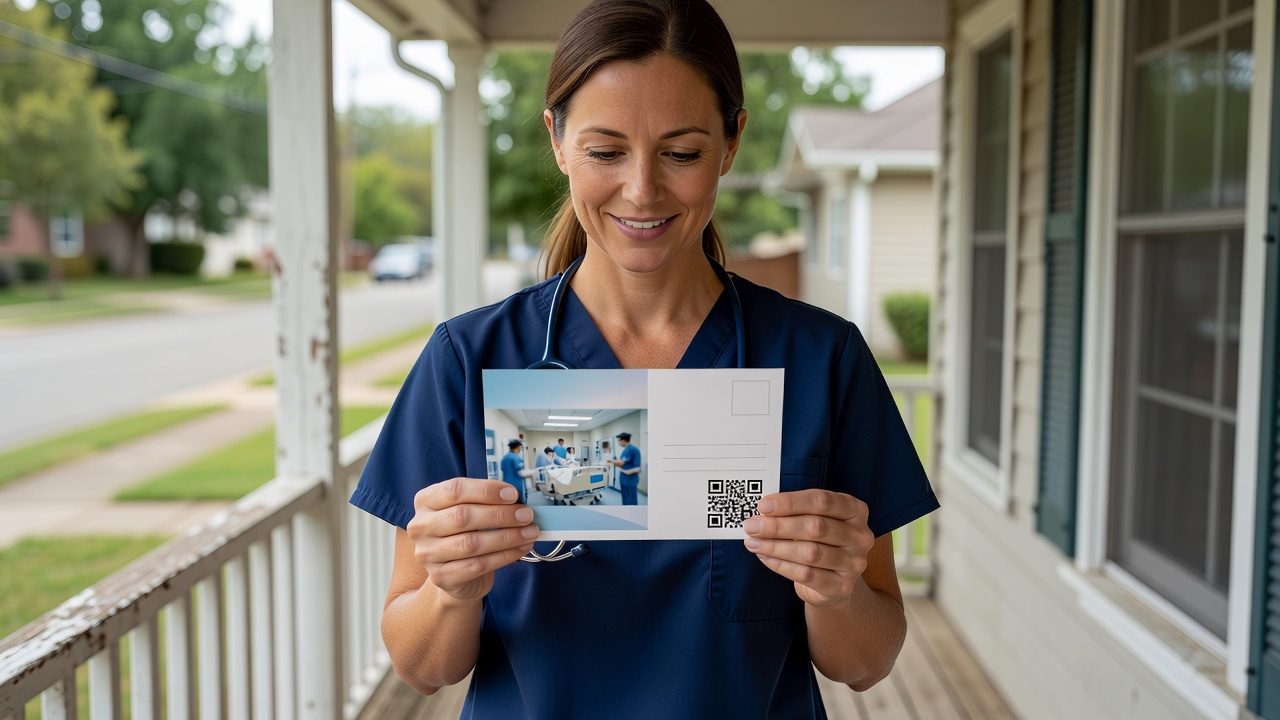
A postcard sent to licensed respiratory therapists inside the commute radius places your opening in front of people who already live nearby.
The piece uses the recipient's first name, a specialty specific message about the role and shift, your employer branding, and one clear action such as a QR code plus a short URL. Response is measured through QR scans and landing page traffic.
If you have a hard to fill respiratory opening, Book a 15 minute call to review a commute based audience for that site.
FAQ
How do I know the list includes only licensed therapists?
The audience is built from license, specialty, and geography matching, not a generic purchased list.
Can one campaign cover more than one location?
Yes. Separate radii can be combined into a single nationwide or multi market rollout.
What happens after someone responds?
They land on a tracked page where you capture interest and next steps.
Does this replace job boards?
It reaches people who are not actively searching, so it adds a channel rather than replacing digital efforts.
Sources
Enjoyed this? There's more from RecruitCard.
Book a 15-minute call →