The First 30 Seconds of a Physician Recruitment Card
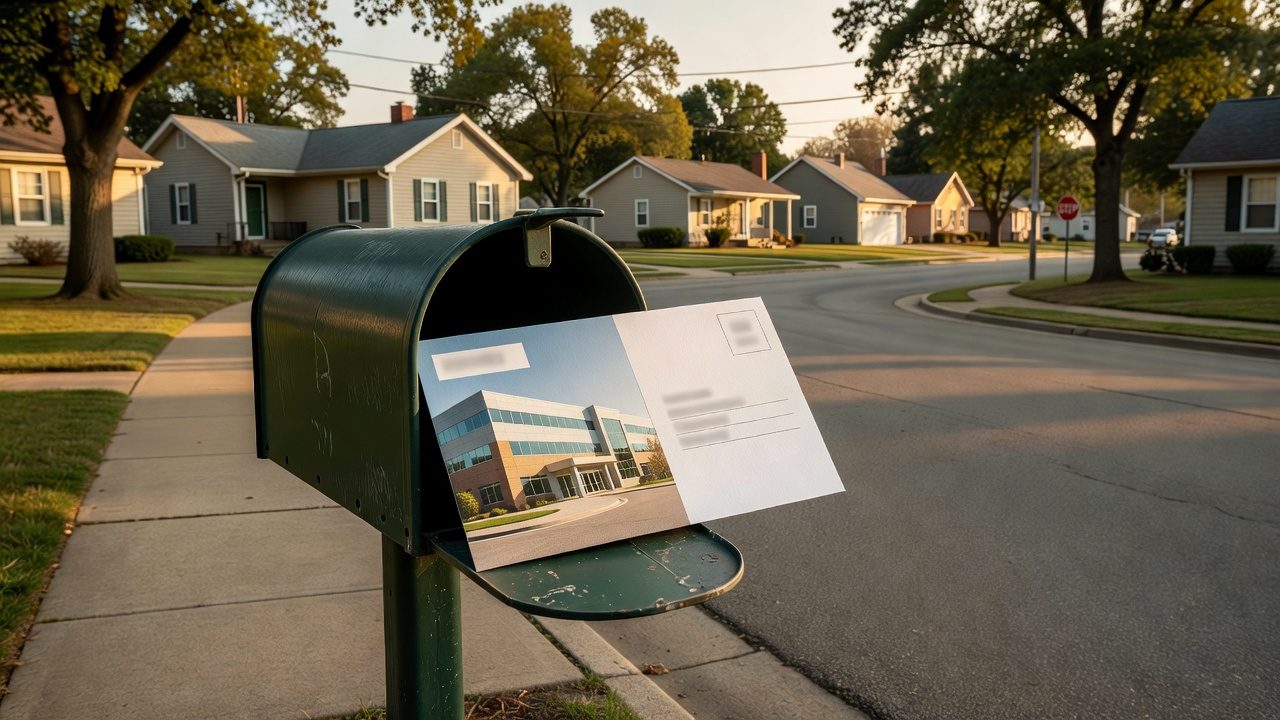
For physician recruitment, the first 30 seconds determine whether a recipient understands the opportunity and chooses to learn more. This guide is for health systems, medical groups, and physician recruitment teams that need a focused direct mail card for a specific specialty, location, or role. The card should lead with a relevant message, credible employer branding, the recipient's first name, and one clear next step.
Why the First 30 Seconds Matter in Physician Recruitment
A physician who is actively searching may encounter your role through a job board, search engine, or professional network. Many physicians you want to reach may already be employed and not looking at those channels. A direct mail card introduces an opportunity outside that active-search environment.
The card is an interruption to routine mail, not a replacement for the full physician recruitment process. Its job is to make an opportunity understandable fast enough that the recipient sees a reason to take the next step.
In those first moments, the recipient should be able to answer three questions:
- Why am I receiving this? The message is relevant to my specialty and location.
- What is the opportunity? There is a specific role, practice, service line, facility, or conversation being presented.
- What should I do next? I can scan a QR code or use a short URL to learn more.
Who Should Receive a Physician Recruitment Card
The audience should be defined around the hiring objective. That generally means matching physicians by license type, specialty, and geography, then aligning the message to the opportunity being promoted.
For example, a campaign might focus on physicians in a hard-to-fill specialty, introduce a new facility to physicians in a relevant area, support a multi-location practice, or broaden awareness for a role that needs reach beyond one local market.
This is different from a generic household mailing. A broad demographic audience does not communicate the same relevance as an audience matched to physician specialty and geography. The goal is not to put the same message in front of everyone. It is to present a defined opportunity to a relevant professional audience.
Depending on your objective, a campaign can support one market, multiple locations, or a nationwide rollout.
The Four Parts of a Physician Recruitment Card
A useful recruitment card has four core parts. Each helps the recipient understand that the opportunity is intended for them and makes the next interaction simple.
Personalized name
Use the recipient's actual first name. Personalization helps establish that the card was designed for a defined audience rather than sent as a generic mass message.
Specialty-specific message
Lead with the clinical area, practice setting, schedule, leadership opportunity, or other detail that makes the opportunity relevant. A physician should not have to guess whether the card concerns their field.
Credible employer branding
Show who is hiring. Your employer identity, visual brand, and concise organization context should give the physician enough information to recognize the opportunity as legitimate.
One clear action
Give the recipient one primary action, such as learning about a role or speaking with the recruitment team. A QR code and short URL can lead to a landing page built for that action.
A card should not make recipients sort through competing headlines, several job types, or multiple calls to action. Focus supports fast understanding.
What the Recipient Should Understand First
State the role or opportunity in plain language before leading with broad employer messaging. The first message should connect the opportunity to the physician's specialty or professional interests without assuming that they are actively seeking a move.
Location also needs to be clear, especially when geography is central to the role. A physician considering an opportunity needs to know whether it concerns a particular community, service area, facility, or broader practice footprint.
The front of the card should create enough interest to continue. The landing page can then provide the supporting detail.
Planning example
Consider a hospital recruiting for a physician role connected to a specific service line. The card could identify the specialty, name the hospital or practice, state the service area, and invite the physician to view practice details. It does not need to contain every qualification, benefit, or aspect of the job description. Those details belong on the landing page or in a follow-up conversation.
How to Write the Opening Message
Start with relevance, not a generic statement such as “We are hiring physicians.” Make the specialty, organization, or specific opportunity visible early.
Keep the copy tied to one recruiting objective. That objective might be a defined opening, a recruiting event, a new facility, a service-line launch, or awareness for future opportunities. A focused message is easier for a recipient to process and easier for your team to support after a response.
Use a direct, low-pressure invitation. For example, invite recipients to learn more about the practice or connect with the recruitment team. Do not promise compensation, schedule flexibility, relocation support, or other employment details unless your organization has approved those claims for the campaign.
Designing the Card for Fast Understanding
Design should support the sequence in which a physician needs information. A clear visual hierarchy commonly includes:
- The recipient's first name.
- A specialty-specific headline.
- The employer identity.
- Concise supporting copy.
- One clear call to action.
Use readable type and enough spacing so that the message can be understood without close study. Place the QR code where it is easy to find, and pair it with a brief written instruction and short URL for recipients who prefer to type an address.
The card should align with your employer brand, but the recruiting message must remain prominent. Do not treat the postcard as a miniature job description. Its purpose is to earn the next interaction.
What Happens After the QR Code Scan
The QR code should lead to a landing page that continues the same message introduced on the card. If the card presents a specialty-specific physician opportunity, the landing page should immediately confirm that specialty, employer, and location.
A focused landing page can provide:
- Role and practice context.
- Facility, service-line, or organization information.
- Location details.
- A simple way to express interest or contact the recruitment team.
A focused form or contact option is generally more useful than requiring the physician to search through a broader careers site. The transition from mail piece to landing page should feel continuous and easy to act on.
QR scans and landing-page traffic provide measurable indicators of campaign engagement. Those measures show campaign activity. By themselves, they do not establish a hire, return on investment, or final recruiting outcome.
Common Physician Recruitment Use Cases
- Promoting a specific hard-to-fill physician opening.
- Introducing a new facility, service line, or practice location to relevant physicians.
- Inviting physicians to a recruiting event, open house, or informal conversation.
- Building awareness for future opportunities before a vacancy becomes urgent.
- Supporting outreach across multiple locations or a nationwide audience when the need extends beyond one local market.
These uses have a common requirement: the recipient needs a clear reason to care about the message now, even if they are not actively searching for a new role.
When a Physician Recruitment Card Is a Good Fit
A direct mail recruitment card is a good fit when you have a defined specialty and geographic focus, plus an opportunity that can be communicated clearly on one card. It can be particularly useful when the qualified physician pool includes people who are already employed and unlikely to be browsing job boards.
It also fits teams that want a managed process covering audience targeting, creative, printing, postage, delivery, and response tracking. The campaign can work alongside your existing physician recruitment channels. It does not need to replace every other recruiting activity.
How RecruitCard Supports the Campaign
RecruitCard manages the direct mail recruitment campaign from audience matching through response measurement. The process is not a generic mailing-list handoff.
For licensed healthcare recruitment, RecruitCard matches the audience by license type, specialty, and geography. The card can feature your employer brand, the recipient's actual first name, a specialty-specific message, and one clear action. RecruitCard also manages printing, postage, delivery, QR-code tracking, and landing-page traffic measurement.
RecruitCard can support single-market and nationwide campaigns. Recruitment marketing agencies can also use a white-label option when they want to offer this channel without managing the print, postage, and tracking operation themselves.
Make the First Message Easy to Act On
The first 30 seconds are about relevance and clarity, not presenting every detail about the position. Start with the right physician audience, a specific specialty or opportunity message, credible employer branding, and one next step.
If you are planning outreach for a particular physician specialty, location, or broader pipeline goal, Book a 15-minute call.
Frequently Asked Questions
Can a card target a specific physician specialty?
Yes. The campaign audience can be matched by license type, specialty, and geography rather than using a broad demographic audience.
Can the card promote more than one location?
Yes. A campaign can support a single market, multiple locations, or a nationwide rollout, depending on the recruiting objective.
Does the card need to include the full job description?
No. The card should communicate the opportunity clearly and direct interested physicians to a focused landing page with additional details.
How is physician response measured?
QR scans and landing-page traffic provide measurable indicators of engagement. The campaign can also direct interested recipients to a contact or interest form.
Does RecruitCard handle design and mailing?
Yes. RecruitCard's managed service includes audience targeting, card design, printing, postage, delivery, and response tracking.
Enjoyed this? There's more from RecruitCard.
Book a 15-minute call →