The Hiring Event Follow-Up Problem: What to Do After the Booth Comes Down
After a hiring event, do not rely only on the people who visited your booth. Follow up with attendees while the conversation is fresh, then use a targeted direct mail campaign to reach qualified licensed professionals who did not attend and to keep the opportunity visible after the event. This article is for hospital and health-system HR teams, talent-acquisition leaders, and recruitment marketing agencies promoting hiring events for hard-to-fill healthcare roles.
Why hiring event follow-up often falls short
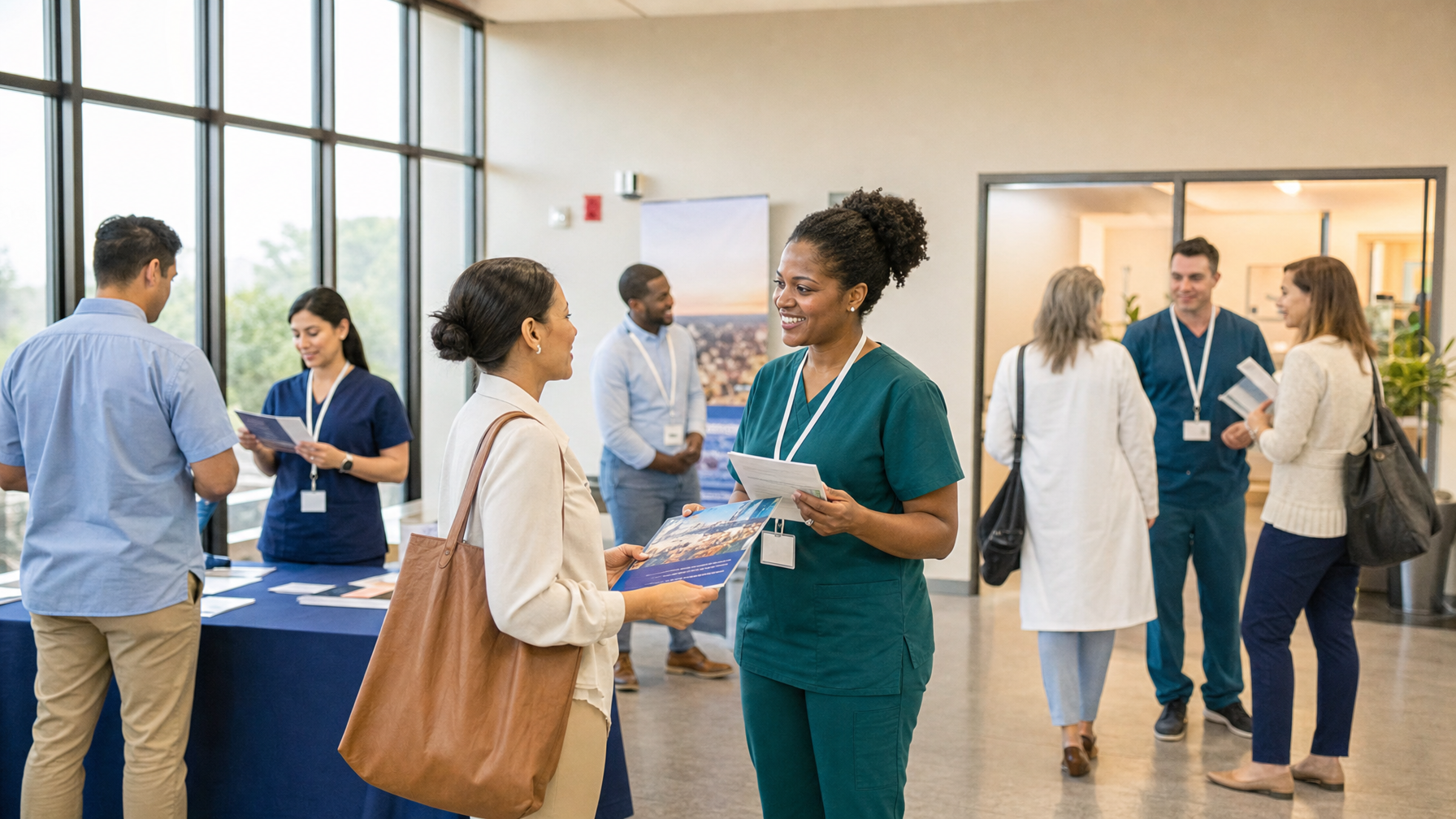
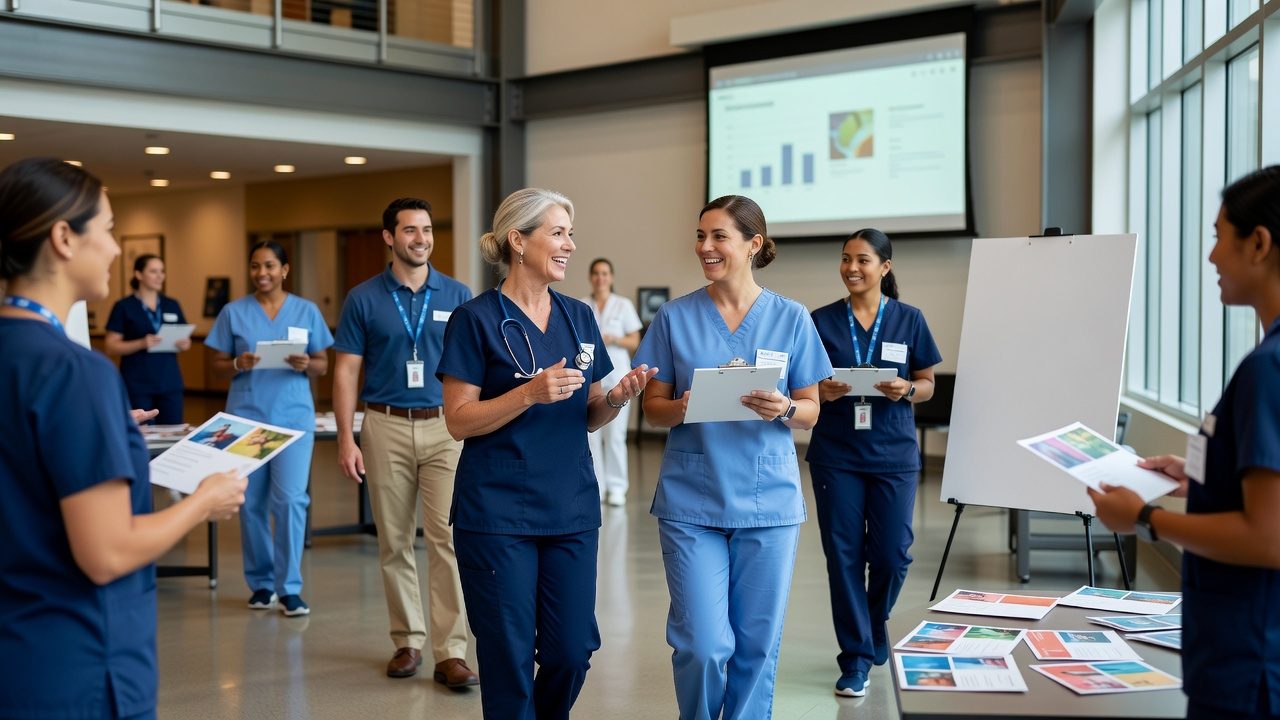
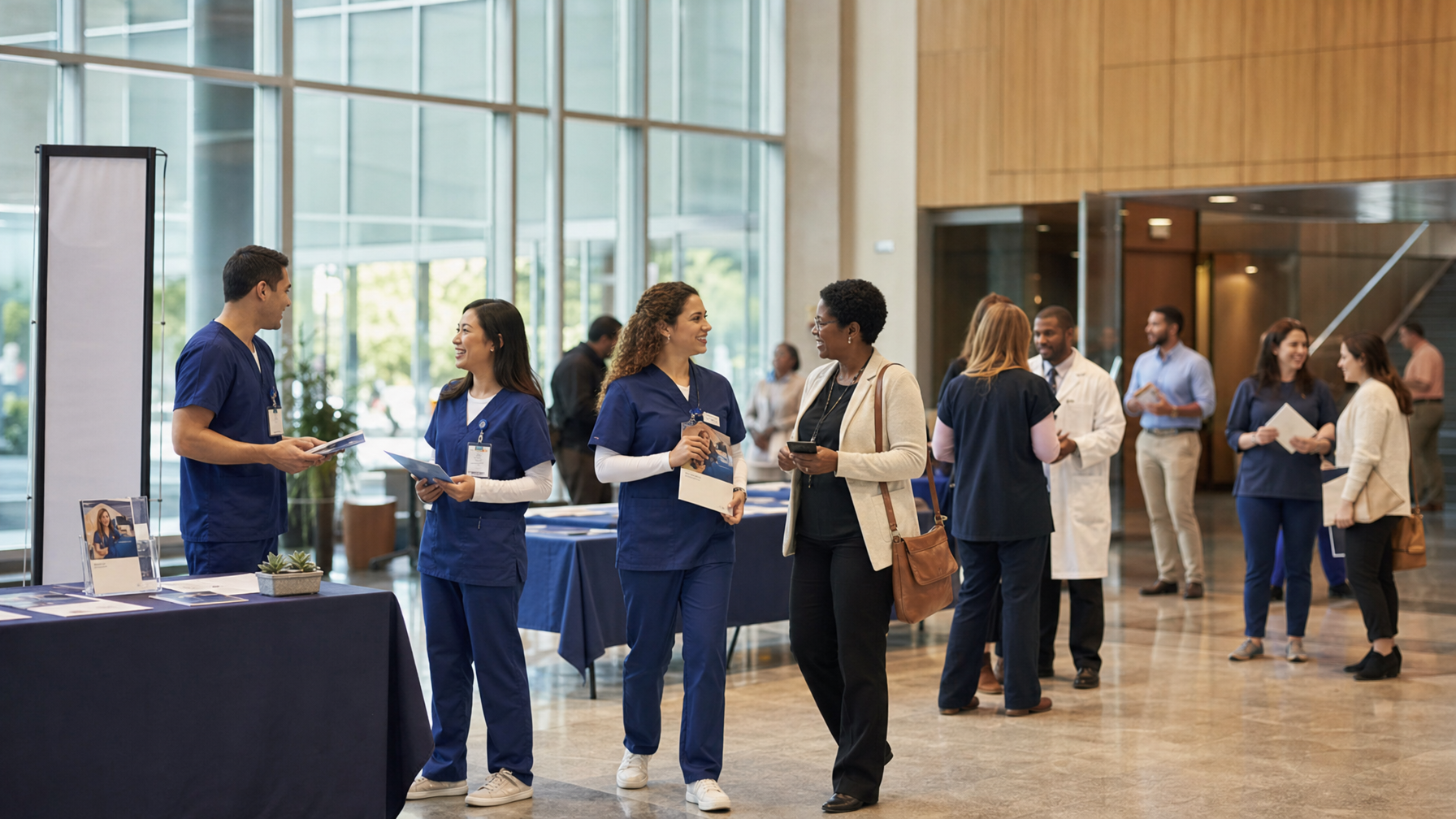
Hiring events can create useful conversations, but a busy booth is not the same as hiring progress. Conversations and collected contact information do not automatically become completed applications, interviews, or hires.
Many teams collect names and contact details, then send a general thank-you message without a structured path for what happens next. Others have no clear owner for attendee follow-up or no process for routing an interested candidate to the appropriate recruiter.
There is also an audience gap. Qualified licensed professionals may be employed, unavailable on the event date, or simply unaware the event was happening. If they are not actively looking, they may not see a job board post or digital invitation in the first place.
Think of follow-up as a campaign that continues before, during, and after the event. The goal is not only to thank people for stopping by. It is to give attendees a specific next step and create additional ways for qualified people who missed the event to learn about your roles.
Start with the people who attended
Your first follow-up should begin with the information collected at the event. When that information is available, organize it by role interest, specialty, location, shift preference, and the next action discussed.
For example, an RN interested in an ICU night-shift opening should not receive the same broad message as someone who asked about outpatient roles. The follow-up should reflect the event conversation and the opportunity that prompted the discussion.
Give each person one clear next step
Choose one action that fits the event and the person's level of interest. That action might be:
- Visiting a role-specific landing page
- Starting an application
- Scheduling a conversation with a recruiter
- Registering for a future hiring session or open house
A generic employer message can dilute the purpose of the follow-up. Be clear about the roles discussed, the location or unit, and what the recipient should do next.
Assign ownership and create a handoff
Decide who owns the follow-up process before the event begins. That person or team should know how interested people will be routed, when additional contact is needed, and how to identify candidates who have not taken the intended next step.
This creates a bridge between event activity and the recruiting process. Without that bridge, promising conversations can remain only conversations.
Reach qualified people who missed the event
An event-only strategy reaches only the people who knew about it, could attend, and chose to stop at your booth. That leaves out many passive, already-employed licensed professionals who may be open to the right role but are not actively searching.
Targeted direct mail can extend the event after it ends. Rather than treating the audience as a generic demographic list, RecruitCard campaigns are built around license type, specialty, and geography.
For example, a health system could promote an ICU hiring event to relevant nursing professionals in the surrounding area. A healthcare employer could extend awareness of an open house to a defined local audience whose background matches the roles being discussed.
The same approach can support one location, multiple locations, or a nationwide rollout. The appropriate geography depends on the roles, the locations involved, and whether you are inviting people to an in-person event, a virtual conversation, or an ongoing recruiting path.
Build the follow-up message around one action
A post-event mail piece should make the next step easy to understand. RecruitCard plans each card around four core elements:
- The recipient's actual first name
- A message specific to the relevant specialty or role
- Credible employer branding
- One clear action
That action can connect directly to the event. It might invite the recipient to a future session, remind them about open roles discussed at the event, or direct them to a landing page that explains event-related opportunities.
Keep the call to action focused
A QR code and short URL can direct recipients to a campaign landing page. The landing page should continue the message on the card and make the next action obvious, whether that is learning about an event, exploring a specialty, registering for a session, or beginning an application.
Do not treat the card as a replacement for personal recruiter conversations. Its role is to create another path back to your employer after the event and to reach qualified people who were absent.
Use the event to support ongoing pipeline building
Direct mail recruiting is not limited to a single open requisition. A hiring event can be one touchpoint in a broader effort to keep your employer, specialty, or facility visible to the people you may need in the future.
This approach can support recurring hiring events, open houses, apprenticeship awareness, new-facility announcements, and future hiring needs. It can also help introduce candidates to opportunities they cannot easily search for because they do not yet know the program, event, or facility exists.
For high-volume local roles such as CNA, HHA, and caregiver positions, an event and its follow-up can be part of an ongoing recruiting program instead of a one-time promotion. Consistent, relevant outreach can help create familiarity before the next vacancy opens.
Measure what happens after the booth closes
A follow-up campaign should give you engagement signals to review, not just a stack of printed materials sent into the market. QR scans and landing-page traffic show whether recipients engaged with the campaign message.
Connect the landing page to a clear action, such as viewing event information, exploring a role, registering for a future session, or starting an application.
Review event and campaign activity together
Consider questions such as:
- Which message generated visits to the landing page?
- Which specialty page received attention?
- Did the event invitation or the role-specific message create more engagement?
- Which follow-up path needs improvement before the next event?
There is an important measurement boundary. QR scans and landing-page traffic show campaign engagement. Your applicant tracking system and recruiting records are needed to evaluate later actions such as applications, interviews, and hires.
What a managed post-event campaign includes
RecruitCard manages direct mail recruiting campaigns from audience targeting through response tracking. The process includes targeting by license type, specialty, and geography, card design, printing, postage, delivery, and QR-code and landing-page response tracking.
This is not a generic mailing list handoff. The card can include the recipient's actual first name, your employer branding, a specialty-specific message, and one clear action tied to the hiring event or follow-up opportunity.
RecruitCard's deepest expertise is licensed healthcare hiring, including hard-to-fill roles and units such as ICU, ED, OR, L&D, oncology, case management, and night shift. The same model can also support other licensed or certified hiring needs.
Recruitment marketing agencies can use a white-label option when they want to offer this channel without building an in-house print, postage, and response-tracking operation.
A simple follow-up plan for your next hiring event
- Before the event: Define the roles, specialties, locations, event action, landing page, and follow-up owner.
- At the event: Capture relevant interest, such as role, unit, location, and shift preference. Set expectations for the next step.
- Immediately after the event: Send attendee follow-up and route interested people to the appropriate recruiting contact or page.
- After the initial follow-up: Extend the message to qualified people who did not attend through license, specialty, and geography targeting.
- Review the activity: Compare attendee actions with QR scans and landing-page traffic. Use what you learn to decide whether the campaign should continue for the next event or hiring cycle.
If you are planning an event for a hard-to-fill healthcare role, Book a 15-minute call to discuss a hiring event follow-up campaign.
FAQ
Should we follow up with attendees and mail people who did not attend?
Yes. Attendees need a timely next step, while a targeted mail campaign can extend the event's reach to qualified professionals who were unavailable, unaware, or not actively looking.
Can the follow-up promote a hiring event instead of one job?
Yes. The campaign can support hiring events, open houses, apprenticeship awareness, and broader employer or facility awareness, as well as individual requisitions.
Can we target a specialty such as ICU or OR?
Yes. RecruitCard's audience approach is based on license type, specialty, and geography. The campaign brief should identify the specific unit, role, location, and action.
How do we know whether the follow-up generated interest?
QR scans and landing-page traffic provide measurable engagement signals. Your recruiting systems are needed to evaluate later actions such as applications, interviews, or hires.
Do we have to manage the design, printing, and mailing ourselves?
No. RecruitCard manages the campaign end to end, including targeting, creative, printing, postage, delivery, and response tracking. Agencies can also ask about the white-label offering.
Enjoyed this? There's more from RecruitCard.
Book a 15-minute call →