Using Direct Mail to Promote Behavioral Health Hiring Events and Open Houses

Direct mail can help behavioral health employers promote hiring events and open houses to licensed and qualified professionals who may not be actively searching online. It is designed for behavioral health HR and talent-acquisition teams, as well as recruitment marketing agencies, that need to attract counselors, social workers, psychiatric nurses, and related professionals.
Why Behavioral Health Hiring Events Need More Than a Job Posting
An event or open house has a different purpose than a single job posting. You are not only asking someone to apply. You are creating awareness, building interest, and encouraging attendance around a defined date or hiring opportunity.
Many qualified behavioral health professionals are already employed. They may not be browsing job boards, searching for a new role, or clicking paid search ads. That makes it harder to put an event invitation in front of the people you would most like to meet.
Direct mail is a complementary channel, not a replacement for your careers page, recruiter outreach, event follow-up, or other recruiting activity. A personalized invitation can reach an audience at home while your digital channels provide the event details and registration path.
This approach can be especially useful when an event supports hard-to-fill roles, several related openings, a new facility or program, or an ongoing candidate pipeline.
Who This Approach Is For
This approach is for behavioral health employers with a defined hiring need, including hospitals, health systems, behavioral health organizations, outpatient programs, residential programs, and other care organizations.
It can support hiring for roles such as:
- Counselors and behavioral health clinicians
- Social workers
- Psychiatric nurses
- Related licensed or specialty-aligned behavioral health professionals
It is also relevant to recruitment marketing agencies that want to offer a managed direct-mail recruiting channel under their own brand. RecruitCard offers a white-label option for agencies.
A strong fit usually includes three elements:
- A specific hiring event, open house, recruiting session, or awareness initiative
- A defined geographic area
- A license type, specialty, or professional audience you need to reach
How Direct Mail Supports a Behavioral Health Hiring Event
The core use case is straightforward: send a personalized invitation to a precisely selected audience before the event.
RecruitCard structures the audience around license type, specialty or trade, and geography rather than a generic demographic audience. That distinction matters when you need to promote a psychiatric nursing event, a counselor recruiting session, or an open house for several behavioral health roles.
The same campaign model can support more than one type of initiative:
- An open house for multiple behavioral health openings
- A focused recruiting event for a particular specialty or care setting
- A recruiting session for a new program or facility
- Awareness for an apprenticeship, training, or career-development opportunity
- A longer-term pipeline for future behavioral health vacancies
Campaigns can be planned for one market or for a broader nationwide rollout, depending on your hiring objective.
What the Mail Piece Should Say
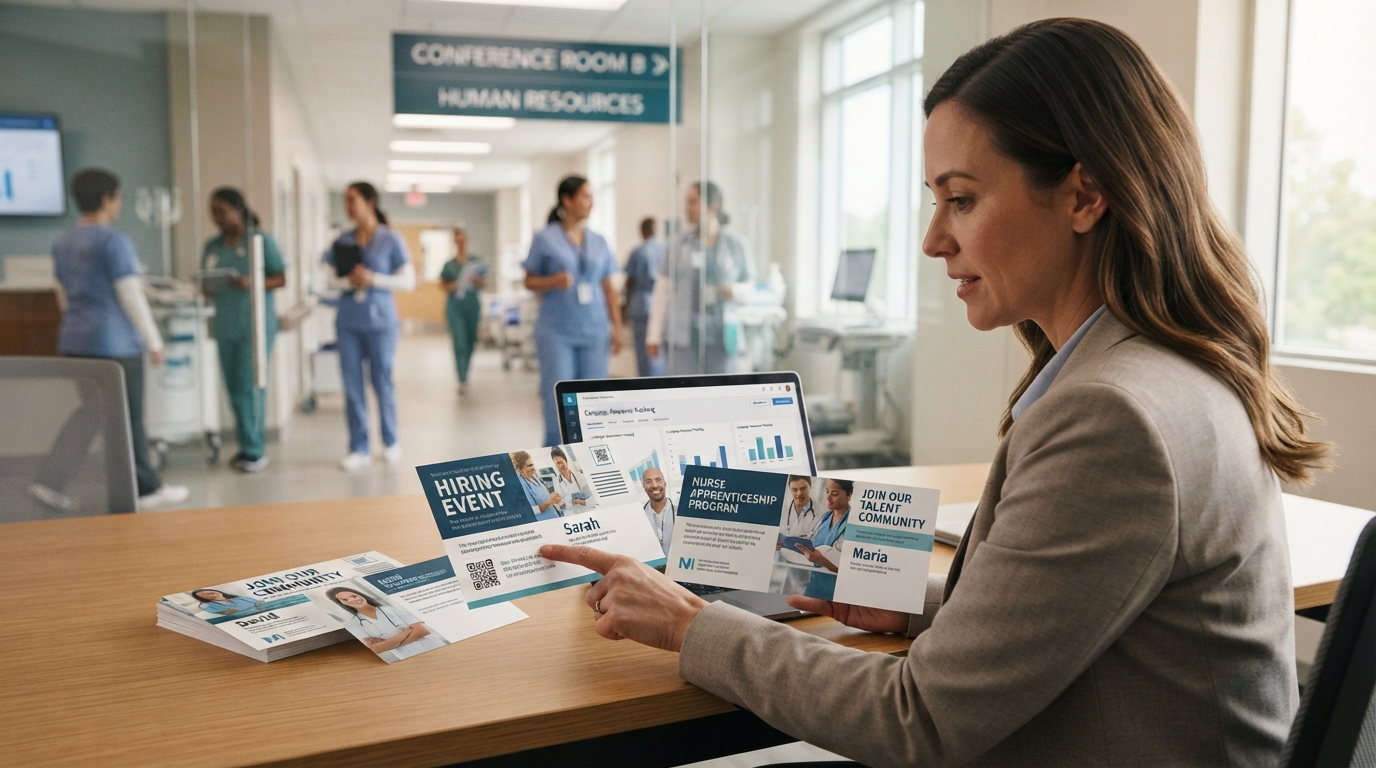
A useful event invitation card has four core components:
- The recipient’s actual first name
- A specialty-specific message
- Credible employer branding
- One clear action
Lead with the value of the event. State what it is, who should attend, which roles are available, and why the opportunity may be relevant. An invitation should give the recipient a reason to learn more before it asks for a commitment.
For behavioral health recruiting, the message might focus on the clinical setting, population served, role type, schedule, growth opportunity, or the opportunity to meet the hiring team. For example, a psychiatric nursing event can speak directly to psychiatric nursing opportunities and the care setting involved, rather than using a broad message for every healthcare professional.
Your logo and employer brand can be part of the card design. Branding helps recipients understand who is inviting them, but it should be paired with clear, practical event information.
Avoid cramming several unrelated calls to action onto one card. Direct the recipient to one event-registration or information page.
Build the Call to Action Around Registration
Use one prominent QR code and a short URL as the response path. The QR code should lead to a landing page built for the event or recruiting initiative.
That page should include:
- Event date and format
- Location or virtual-access information
- Available roles or areas of hiring
- Who the event is intended for
- Registration instructions
- A clear next step
Make it easy for a recipient to register interest even if they cannot attend on the scheduled date. A fallback contact or alternate action can give someone a way to ask questions or explore the opportunity before committing to an event.
Keep the landing page current, and coordinate its contents with the person responsible for the event. A timely card cannot overcome outdated event details or an unclear registration process.
A Practical Campaign Workflow
- Define the hiring objective. Establish the event format, date, location, roles, and intended audience.
- Identify the audience. Define the relevant license type, specialty or trade, and geographic area.
- Write the message. Create a specialty-specific invitation that explains why the event is relevant to the behavioral health professional receiving it.
- Design the card. Include the employer brand, personalized first name, key event details, and one clear QR-code action.
- Print and deliver. Prepare the mail pieces, apply postage, and deliver them.
- Monitor interest. Review QR scans and landing-page traffic while the campaign is running.
- Follow up. Contact registrants, attendees, and people who expressed interest but did not attend, using your established recruiting process.
RecruitCard manages targeting, creative, printing, postage, delivery, and response tracking as an end-to-end direct-mail recruiting service.
How to Measure Interest and Event Response
Direct mail does not need to be an unmeasurable awareness tactic. QR scans and landing-page traffic provide trackable indicators of campaign interest.
Depending on how your event and recruiting systems are set up, you can distinguish several steps in the path from invitation to event:
- QR scans
- Landing-page visits
- Registrations
- Inquiries
- Attendance
QR scans and page traffic show engagement with the invitation. Registration and attendance are separate steps that your event process may be able to connect to the campaign.
Review the activity by audience, message, geography, and event. That can help you make future outreach more focused. Results will vary by hiring objective, audience, event details, message, and follow-up process, so event attendance, hires, and financial outcomes should not be assumed or guaranteed.
Event Promotion Examples for Behavioral Health Employers
The following are illustrative uses of the model, not examples of specific campaigns or outcomes.
Hiring open house
Invite relevant professionals to meet recruiters and hiring managers for several behavioral health roles. The landing page can organize opportunities by role, setting, or location.
Psychiatric nursing recruitment event
Focus the card on psychiatric nursing opportunities, the care setting, and the particular shift or role type being recruited. This is more relevant than a broad healthcare message.
Counselor or social-work recruiting session
Promote a focused session for candidates with the professional background aligned to the available work. Explain what attendees can learn and what the next step will be.
New-program or facility awareness
Introduce a new program, service, or facility opportunity that candidates may not discover through a standard job search. Use the landing page to provide the context that will not fit on a card.
Ongoing pipeline campaign
Use an event as an initial point of contact, then continue building a pipeline for future behavioral health vacancies. The audience strategy can support more than one event or one requisition.
Common Mistakes to Avoid
- Mailing a generic audience. Match the audience to the behavioral health role, specialty, and event rather than treating the campaign as a broad awareness mailing.
- Treating the card as a replacement for a landing page. The card creates interest; the landing page should answer practical questions and provide the registration path.
- Using competing calls to action. Give recipients one main action, such as scanning the QR code to register or learn more.
- Making the message only about the employer. Explain why the event is relevant to the recipient’s professional background and interests.
- Skipping follow-up planning. Decide how recruiters will handle registrants, attendees, inquiries, and people who show interest but cannot attend.
- Viewing a one-time event as the only use case. The same audience strategy can support an ongoing pipeline for future openings.
- Promising outcomes. Do not promise a specific attendance level, response, hiring result, or financial outcome that a campaign cannot guarantee.
When Direct Mail Is a Good Fit
Direct mail is worth considering when:
- You already have a defined behavioral health hiring event or open house planned.
- You need to reach licensed, credentialed, or specialty-aligned professionals in a specific geography.
- The relevant audience is small, competitive, or likely to include passive candidates.
- The event covers multiple related behavioral health roles or supports a new program or location.
- You want managed execution rather than receiving a mailing list and coordinating creative, print, postage, delivery, and tracking internally.
It is particularly relevant when normal recruiting channels are not putting your opportunity in front of the people you need to reach.
Frequently Asked Questions
Can behavioral health employers promote an open house instead of a single job?
Yes. A campaign can promote an event, hiring initiative, awareness effort, or ongoing pipeline, not only one open role.
Can the audience be narrowed to a specific behavioral health specialty?
Yes. Targeting is structured around license type, specialty or trade, and geography.
Can the card include our logo and employer branding?
Yes. Employer branding is part of the card design.
How are responses measured?
QR scans and landing-page traffic provide trackable signals of interest.
What happens after someone scans?
The QR code can lead to an event or recruiting landing page with details and a clear next step, such as registration, an inquiry, or a request for more information.
Can this work for one market or a broader rollout?
Yes. The model supports single-market and nationwide campaigns.
Do you handle printing and delivery?
Yes. RecruitCard’s managed service includes targeting, creative, printing, postage, delivery, and response tracking.
Can agencies offer this under their own brand?
Yes. A white-label option is available for recruitment marketing agencies.
Conclusion: Turn Event Awareness Into a Trackable Recruiting Path
Targeted, personalized direct mail can extend behavioral health hiring-event promotion beyond active online job seekers. The practical foundation is precise audience matching, event messaging that speaks to the recipient’s specialty, clear employer branding, one QR-code action, and response tracking.
If you are planning a behavioral health hiring event, open house, or pipeline initiative, RecruitCard can help you evaluate whether a managed direct-mail campaign fits the audience and objective. Book a 15-minute call.
Enjoyed this? There's more from RecruitCard.
Book a 15-minute call →