What Internal Data Should HR Gather Before Setting Mail Campaign Parameters?

Before setting direct mail campaign parameters, HR teams must gather exact license credentials, geographic radius data based on actual employee commute patterns, shift details, and core employer differentiators. Collecting these internal metrics upfront ensures your recruitment mailers target fully qualified candidates without wasting resources on ineligible profiles.
- License Verification: Confirm exact active state licenses, degree requirements, and clinical unit certifications required for the role.
- Commute Mapping: Review current staff ZIP codes to establish realistic drive times and physical boundaries.
- Shift Specifics: Detail exact shift hours, night rotations, weekend coverage, and on-call expectations.
- Employer Value Offer: Identify concrete compensation details, shift differentials, and key workplace advantages.
- Response Destinations: Set up dedicated landing pages, QR codes, and internal intake workflows before mailing.
1. Audit Specific License and Specialty Credentials
Gathering exact license credentials and specialty requirements ensures your recruitment mailer reaches candidates who meet all clinical qualifications. Talent acquisition teams must outline the precise professional licenses needed before building an audience.
Identifying Mandatory License Types and Specialty Certifications
Start by distinguishing mandatory state licenses from secondary preferences. A position for a Registered Nurse in an intensive care unit requires an active RN license along with specific clinical certifications such as Advanced Cardiovascular Life Support. List every required credential explicitly, including specialty unit experience in areas like the Emergency Department, Operating Room, or Labor and Delivery. Separating essential qualifications from optional preferences keeps your mail campaign audience tight and relevant.
2. Calculate Realistic Geographic Commute Radii
Calculating geographic commute parameters requires analyzing current employee location data to set realistic drive time boundaries. Mailing to clinicians who live beyond reasonable travel limits leads to low response rates.
Analyzing Local Commute Patterns and Drive Times
Review the ZIP codes of your existing clinical staff to uncover actual commute habits for your facility. Physical distance in miles does not always reflect travel time. Local traffic corridors, rivers, bridges, and regional transit patterns heavily influence how far a candidate will travel for work. Define geographic boundaries using specific ZIP codes, counties, or a drive time radius of 15 to 30 minutes around your site to ensure your message reaches candidates who can realistically accept the position.
3. Define Shift Schedules and Call Requirements
Defining complete shift schedules upfront enables recruitment mailers to target passive healthcare professionals who want specific work hours. Many employed clinicians consider moving only if another facility offers a schedule that fits their lifestyle.
Structuring Shift Messaging for Passive Candidates
Document the exact shift hours, weekend rotations, holiday expectations, and mandatory on-call requirements. If the position is a permanent night shift or a rotating schedule, state that clearly in your internal campaign brief. Transparent schedule information allows you to frame your message directly around what passive job seekers are looking for, which prevents candidate drop-off during initial intake conversations.
4. Pinpoint Distinct Employer Brand Differentiators
Pinpointing clear employer differentiators provides passive candidates with compelling reasons to evaluate your open position. A postcard must offer a strong reason for an employed professional to take action.
Selecting Unique Offers and a Single Call to Action
Gather specific offer details including competitive pay rates, sign-on bonuses, tuition reimbursement, and shift differentials. Highlight clinical workplace benefits such as low nurse-to-patient ratios, modern equipment, or professional development pathways. Combine these strengths into a concise message on the postcard, paired with one clear call to action, such as scanning a QR code to view shift details.
5. Establish Campaign Measurement and Destination Parameters
Establishing campaign measurement parameters ensures every response from your targeted direct mail outreach can be tracked and handled promptly. Setting up digital tracking mechanisms before postcards arrive in mailboxes allows you to capture interest immediately.
Setting Up Response Tracking and Intake Protocols
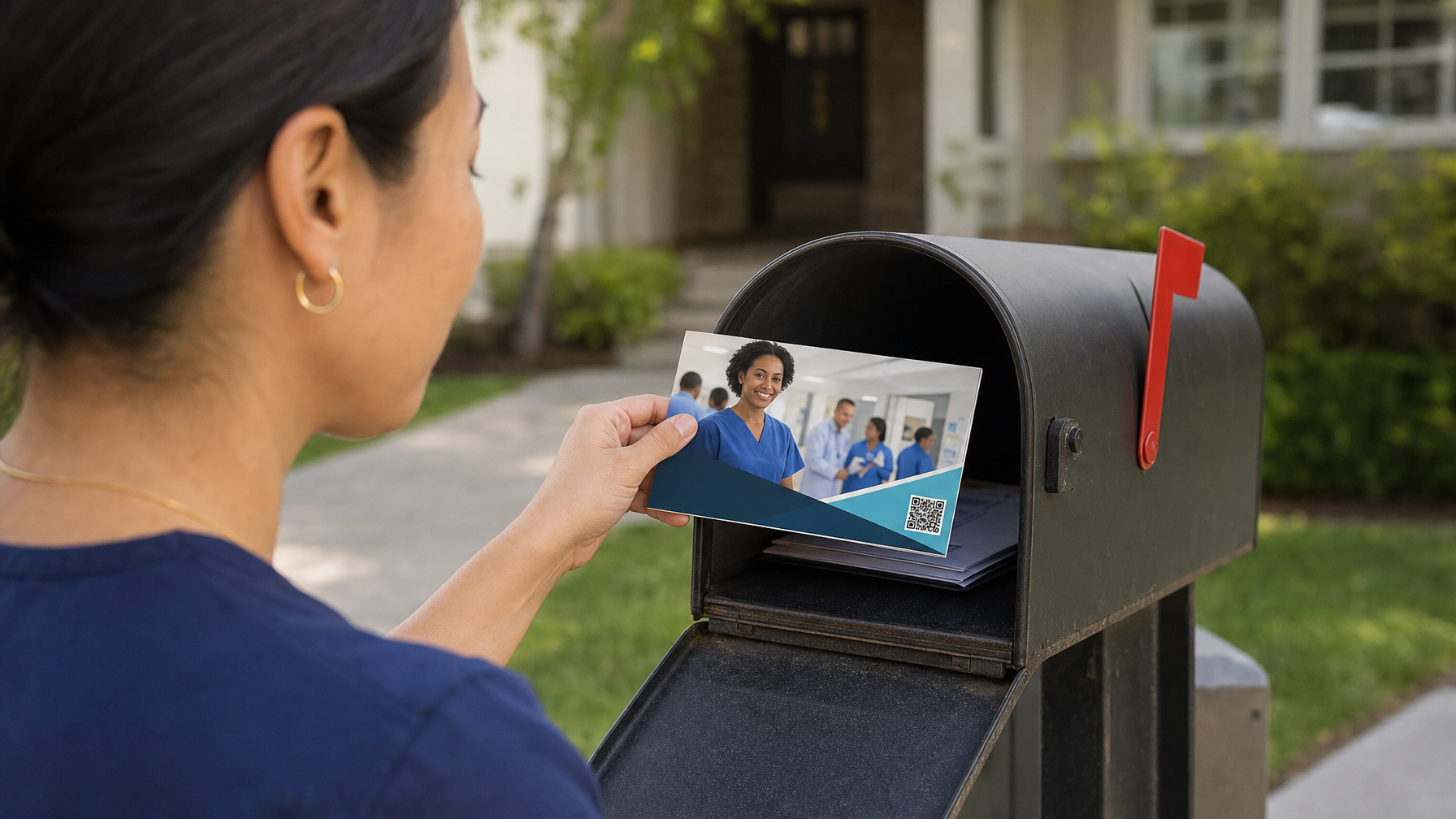
Create a dedicated web page for the campaign that matches the messaging on the postcard. Generate a unique QR code and short web address that point directly to this page so candidates can scan and respond in seconds. Assign specific recruitment team members to monitor incoming responses and follow up quickly with candidates who express interest.
Book a 15-minute call with RecruitCard.
Sources
Enjoyed this? There's more from RecruitCard.
Book a 15-minute call →