Why a QR Code Alone Does Not Make a Recruiting Campaign Trackable
A QR code does not make a recruiting campaign trackable by itself. It becomes useful when it connects to a dedicated landing page, a campaign-specific response path, and a reporting process that separates scans and visits from broader recruiting activity. This is for healthcare HR and talent-acquisition teams, recruitment marketing agencies, and employers using direct mail to reach licensed or certified candidates.
Why a QR Code Alone Is Not Enough
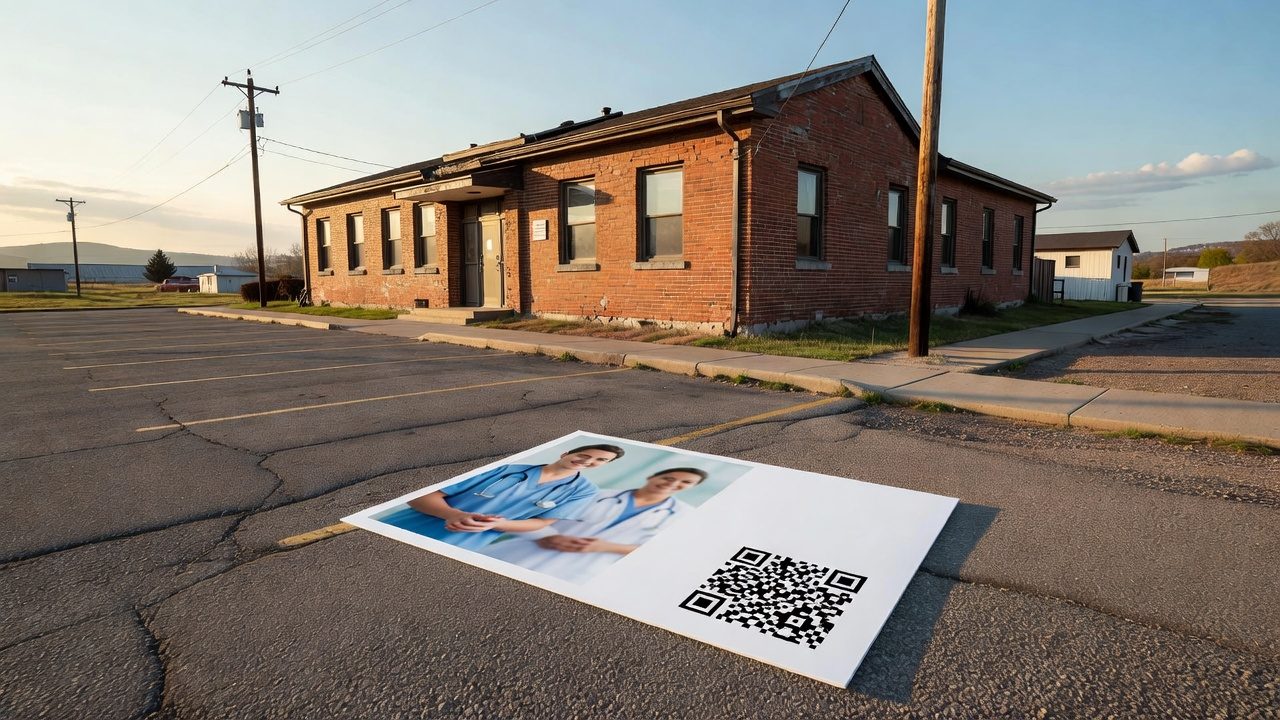
A QR code is an access mechanism. It gives a recipient a quick way to open a destination on their phone. By itself, it does not explain what happened after the scan.
A code may be scannable, but that is different from having a measurable campaign. If the code sends every recipient to a general homepage or an undifferentiated careers page, it can be difficult to connect resulting activity to one mail campaign, audience, role, or location.
Consider a postcard for ICU night-shift nurses. The recipient should not have to search through a broad careers site to find the relevant opportunity. A focused destination can continue the card's message, present the ICU night-shift role, and give the recipient one clear next step. It also creates a clearer basis for reviewing campaign activity.
What Makes a Direct Mail Recruiting Campaign Trackable
A basic tracking system has three connected parts:
- A campaign-specific QR code.
- A dedicated landing page or response path.
- Reporting on activity associated with that campaign.
The mail piece should also include a short URL. Some recipients will prefer to type a web address rather than scan a code. A campaign-specific short URL gives them a second response option and helps capture activity beyond QR scans.
These indicators describe different actions:
- QR scan activity shows that someone used the code on the mail piece.
- Landing-page traffic shows visits to the campaign destination, including visits that may come through the QR code or short URL.
- Downstream candidate actions may include a form submission, application, event registration, or call, depending on the response path.
Tracking can show campaign activity. It does not, by itself, establish a hire, response rate, cost per hire, or return on investment.
The Four Parts of a Measurable Recruiting Mail Piece
A direct mail piece works best when the recipient can immediately understand what the opportunity is, who is offering it, and what to do next. RecruitCard plans cards around four components.
Personalized Recipient Name
Using the recipient's actual first name makes the message direct and relevant. Personalization does not replace qualification or screening. It helps the intended recipient recognize that the piece is addressed to them rather than being a generic advertisement.
Specialty-Specific Message
The copy should identify the opportunity being promoted. For example, it may refer to ICU nursing, operating room staffing, a rural physical therapy opening, a dental hygiene opportunity, or a hiring event for caregivers. Specificity helps the recipient decide whether the response path is worth their attention.
Credible Employer Branding
The employer name, visual identity, and role context should make clear who is behind the outreach. The landing page should carry that same context forward so the recipient knows where the QR code or short URL will lead.
One Clear Action
Give recipients one primary action, such as scanning the QR code or entering the short URL to learn more or apply. Multiple competing calls to action can create confusion for the recipient and make activity harder to interpret.
These components support measurement because they create a coherent path from the mailed card to the campaign destination.
What QR Scans and Landing-Page Traffic Can Tell You
QR scan activity can indicate engagement with the mailed piece. Landing-page traffic provides a broader view of activity at the campaign destination, including people who use the short URL instead of the QR code.
When a campaign is structured by location, specialty, unit, or mail drop, campaign-specific reporting can help you compare activity across those segments. For example, a health system may need separate response paths for an ICU opening and an emergency department opening, or for different markets.
The limitation matters. Scans and visits show engagement. They do not guarantee applications, interviews, hires, or financial outcomes.
Before launch, agree on the actions that matter for the objective. Depending on the campaign, those may include:
- Landing-page visits.
- Form submissions.
- Completed applications.
- Hiring-event registrations.
- Calls or other defined contact actions.
Why the Landing Page Matters as Much as the QR Code
The landing page should continue the promise made on the card and focus on one recruiting objective. A candidate who scans a postcard about an ICU night-shift opening should arrive at a page that addresses that opportunity. The same principle applies to a rural physical therapy role, a hiring event, or an apprenticeship awareness campaign.
A useful campaign page may include:
- Role or program details.
- Employer branding.
- Relevant location information.
- A clear next step.
- A response form or application path, where appropriate.
Sending every audience to the same broad careers page weakens the candidate experience. It also makes it harder to understand whether the campaign message and destination worked together.
How to Interpret Campaign Activity Responsibly
Separate delivery from engagement. A mailed piece reaching an audience does not mean every recipient scanned it, visited the page, or applied.
Also separate engagement from conversion. A QR scan or page visit does not confirm that a candidate completed the next step. Qualification, interview progression, and hiring still depend on your normal recruiting process.
Use campaign activity to identify interest and guide follow-up. Continue to use your applicant tracking system and other recruiting tools alongside campaign reporting, because candidates may interact through more than one channel.
Common Tracking Mistakes in Recruiting Direct Mail
- Using a QR code that points to a general homepage with no campaign identifier.
- Including several competing actions that make the response path unclear.
- Failing to tailor the landing page to the license type, specialty, geography, or opportunity.
- Reviewing QR scans while ignoring short-URL visits and landing-page traffic.
- Treating a scan as a completed application or hire.
- Launching without assigning someone to review reporting and follow up on responses.
What an End-to-End Managed Campaign Includes
Tracking works best when it is planned during audience selection and card creation, not added after printing. RecruitCard manages the connected campaign components: audience targeting by license type, specialty, and geography; card design; personalized recipient names; employer branding; printing; postage; delivery; and QR-code and landing-page response tracking.
This is more than handing over a mailing list. The campaign includes the card, the response path, and the reporting structure needed to understand activity.
The model can support a single hard-to-fill requisition, continuous hiring for high-volume roles, hiring events, apprenticeship awareness, long-term pipeline building, local campaigns, and nationwide rollouts. Recruitment marketing agencies can also offer the channel through a white-label arrangement without building an internal print, postage, and tracking operation.
A Practical Measurement Plan Before Launch
- Define the audience. Identify the license type, specialty or trade, and geography.
- Define the objective. Determine whether the campaign supports a specific role, event, awareness effort, or long-term pipeline.
- Create the destination. Build a dedicated landing page or response path with one clear next action.
- Choose the indicators to review. Consider QR scans, short-URL visits, landing-page traffic, form submissions, applications, event registrations, or calls, as applicable.
- Assign ownership. Decide who will monitor activity and who will follow up with interested candidates.
- Review results in context. Compare activity by campaign objective and audience context. Avoid treating unlike roles, geographies, specialties, and calls to action as directly comparable.
When This Approach Is a Good Fit
A trackable direct mail campaign may be a fit when:
- A specific requisition remains open despite normal recruiting channels.
- The qualified local pool is small, specialized, or likely to include already-employed professionals.
- You need to reach candidates for difficult shifts, niche specialties, rural locations, or licensed roles.
- You are promoting something candidates may not actively search for, such as a hiring event, apprenticeship, or new facility.
- You want to build a candidate pipeline before the next vacancy opens.
- You are a recruitment marketing agency that wants to offer a managed direct mail channel under your own brand.
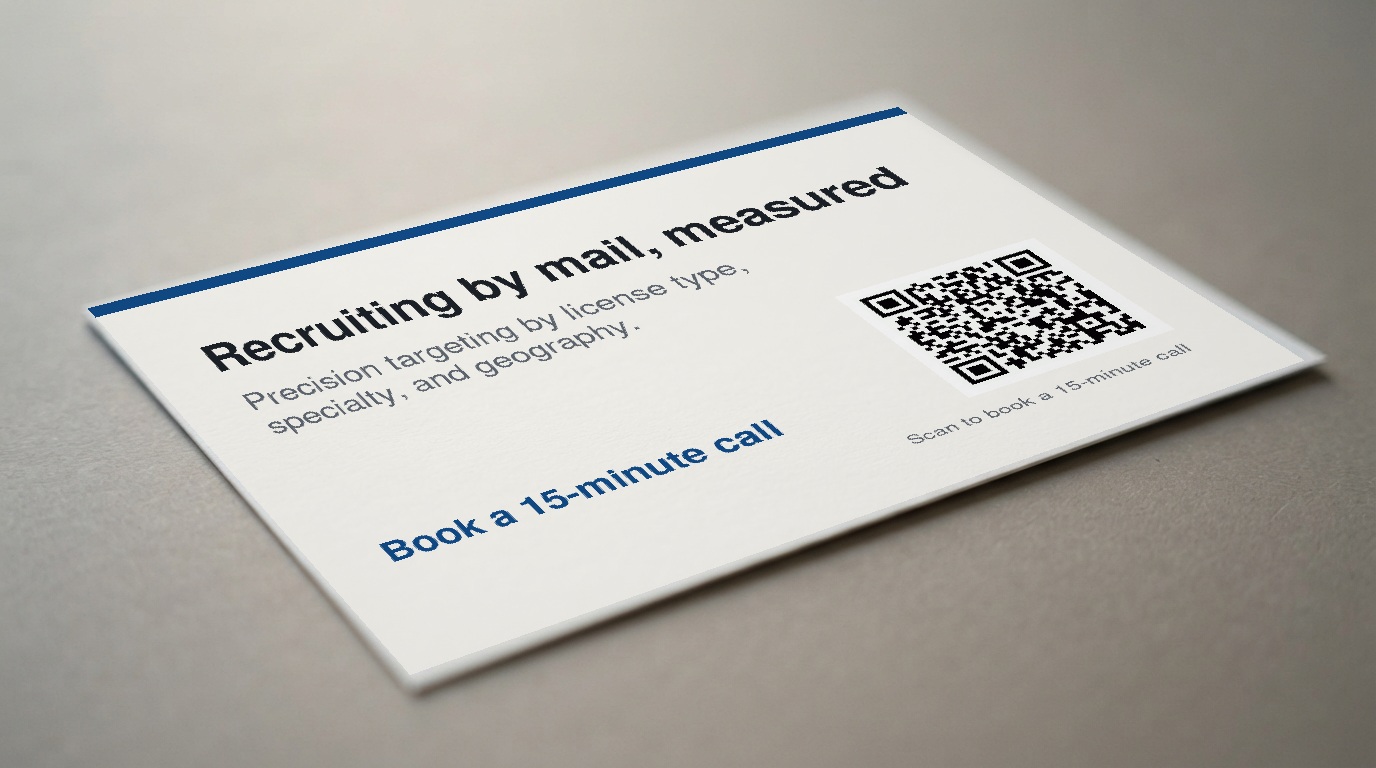
If you are considering a campaign for a hard-to-fill role or a broader recruiting objective, book a 15-minute call.
Frequently Asked Questions
Does every QR scan identify a qualified candidate?
No. A scan indicates activity from the mail piece. It does not establish licensure, fit, application completion, or a hiring outcome. Qualification still requires your normal recruiting process.
Can a campaign be measured if someone types the URL instead of scanning?
Yes. When the card includes a campaign-specific short URL and landing-page traffic is included in reporting, the campaign can account for that response path.
Should the QR code link to our main careers page?
It can, but a dedicated landing page usually gives candidates a clearer experience and makes campaign activity easier to interpret. The page should match the opportunity promoted on the card.
Can RecruitCard track more than one location or specialty?
The campaign model can support single-market and nationwide rollouts, with audience targeting by license type, specialty, and geography. The tracking structure should be planned around the campaign objectives and segments.
What should we do after someone scans?
Send the recipient to a focused landing page with one clear next step, then route and follow up on responses through your recruiting process. To discuss a trackable campaign, book a 15-minute call.
Enjoyed this? There's more from RecruitCard.
Book a 15-minute call →