Why an Apprenticeship or Training Program Cannot Depend on Job-Search Behavior Alone

Apprenticeship and training programs should not rely only on job boards or paid search because many qualified prospects are not actively looking for a job. This workflow is for employers, workforce program leaders, and recruitment marketing agencies that need to introduce an opportunity, reach passive candidates, and measure interest through a targeted direct mail campaign.
1. Define the program and the audience you need to reach
Start by writing a plain-language program brief before discussing channels or creative. Define the location, trade or specialty, eligibility requirements, schedule, start date, and the next step for an interested prospect.
Be clear about the purpose of the outreach. You may be promoting:
- An apprenticeship
- An employer-sponsored training program
- A new facility or service line
- An information session, open house, or hiring event
- An ongoing talent pipeline for future cohorts or recurring roles
Then define the audience by the qualifications relevant to the opportunity: trade, license or certification area, specialty, and geography. This is different from making broad assumptions based on demographics.
For a healthcare program, identify the workforce segment involved. That might be nursing, allied health, behavioral health, pharmacy, or patient-care roles. For an engineering or skilled-trade program, name the relevant trade or certification area and the locations the program can serve.
A specific brief produces a more useful campaign. “Learn about a training opportunity” is too broad. “Explore a night-shift pathway for locally eligible nursing professionals” gives the audience and message a clearer starting point.
2. Identify why job-search channels will miss part of the audience
Separate active job seekers from the wider group of people who may be qualified but are not searching today. That group can include people who are employed, underemployed, considering a change, or unaware that your program exists.
Job boards and paid search primarily depend on a person searching for a job title, employer, training opportunity, or related term while your message is available. That works for people in an active search. It does not reliably introduce an unfamiliar opportunity to people who are not looking.
Consider the barriers that may stop a suitable prospect from searching:
- They do not know the program exists.
- They do not recognize your internal program name.
- They are uncertain whether they meet the eligibility requirements.
- They do not yet see how the training connects to their current background.
- They are employed and have no reason to browse job listings.
Use this step to decide whether your campaign needs to introduce an opportunity, rather than merely advertise an opening. An apprenticeship or new training pathway often requires explanation before it can generate a meaningful response.
3. Build a precise audience for the program
Match the audience to the opportunity. Plan around the relevant license type, trade, specialty, and geographic location. RecruitCard’s approach is precision targeting, not a generic list or a broad mass mailing.
Decide the scope of the campaign:
- One market around a program location
- Several locations with separate local messages
- A nationwide rollout where the program can support it
For a healthcare apprenticeship or training program, prioritize the relevant licensed or specialty audience instead of mailing every healthcare worker in an area. A program intended for a particular clinical pathway should speak to the workforce segment most likely to find that pathway relevant.
For an engineering or skilled-trade program, identify the trade or certification area that aligns with the work and the locations the program can serve.
Document exclusions before creative work begins. Note locations outside the program’s reach, requirements prospects must meet, and any practical limits on who can participate. This keeps the campaign aligned with the actual opportunity and avoids inviting interest from people the program cannot serve.
4. Turn the unfamiliar opportunity into one clear message
Lead with what the program enables the recipient to do. Do not lead with internal terminology that means little to someone encountering the opportunity for the first time.
Your message should answer four basic questions:
- Who is this for? Identify the relevant specialty, trade, or professional background.
- What is the opportunity? Explain the apprenticeship, training pathway, event, or program in plain language.
- Why should the recipient consider it? Connect the opportunity to their likely professional interests.
- What should they do next? Give one action, such as scanning a QR code to learn more or register interest.
Address the practical points a card can introduce: location, specialty or trade, eligibility, and the next information step. Keep the message specific to the audience. An ICU-related healthcare pathway and an industrial trade apprenticeship require different language because the recipient’s experience and questions are different.
Use one call to action. Multiple competing actions can make an unfamiliar opportunity harder to understand.
5. Design the mail piece around the recipient
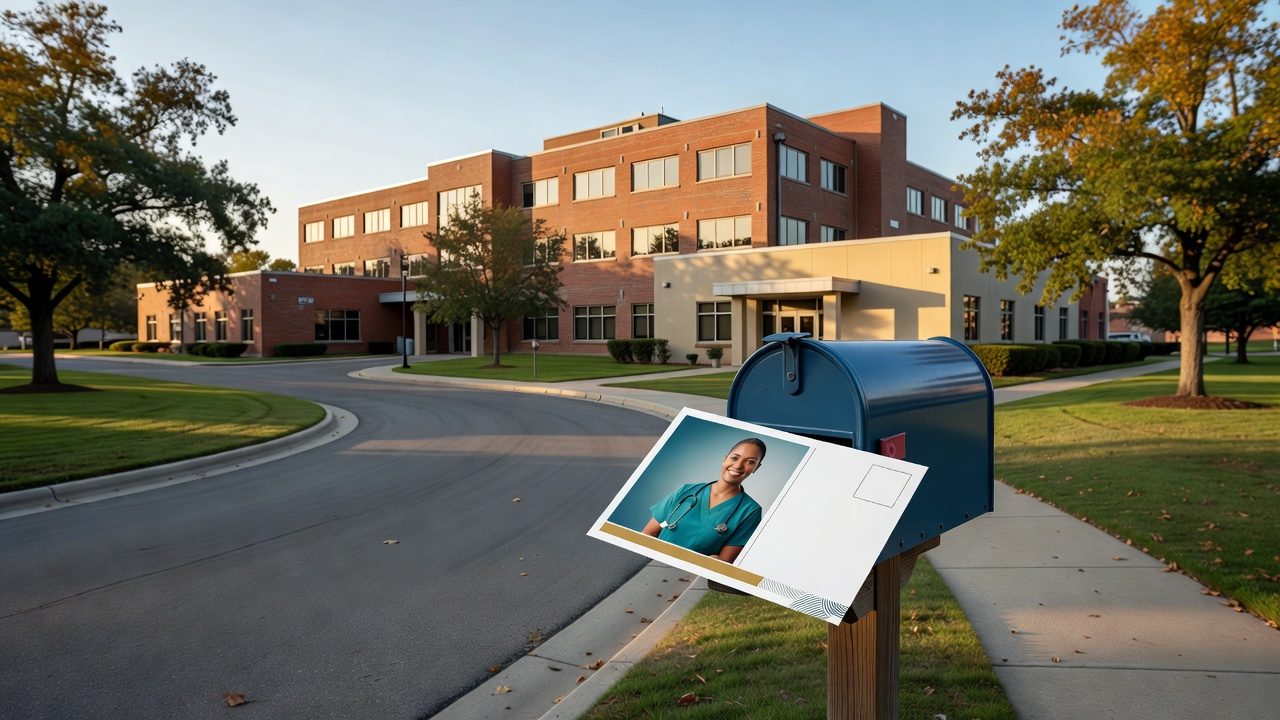
A direct mail piece should feel relevant before the recipient has decided to look for a program. RecruitCard’s card structure centers on four elements:
- A personalized greeting using the recipient’s actual first name
- A specialty-specific or trade-specific message
- Credible employer or program branding
- One clear action supported by a QR code and short URL
Personalization helps distinguish the card from a generic employment announcement. The specialty or trade message should connect the opportunity to the recipient’s background or likely interests without assuming they are actively job hunting.
Branding matters because recipients need to understand who is presenting the opportunity. Use recognizable employer or program identity, along with clear language about what happens after the scan.
Before approving the design, ask a practical question: would this make sense to someone who was not searching for an apprenticeship or training program? If the answer is no, simplify the message and clarify the next step.
6. Send prospects to a focused landing page
The card should lead to a landing page that continues the same message. Do not send recipients to a general careers homepage and expect them to find an unfamiliar program on their own.
Use the landing page to explain:
- What the program is
- Who it is intended for
- Eligibility requirements
- Location and schedule details
- The next step to request information, register, or apply through your process
Write for people who are still deciding whether the opportunity is relevant. They may need context before they are ready to take a formal application step.
The page can also collect the response information your team needs to act on, subject to your organization’s own process and requirements. Before delivery, test the QR code and short URL to confirm that both lead to the intended page.
7. Manage printing, postage, and delivery as one campaign
Treat audience targeting, creative, printing, postage, delivery, and response tracking as connected parts of one campaign. A mailing-list handoff alone does not address the full path from recipient to response.
Before production, confirm the approved:
- Audience and geographic scope
- Program message and eligibility language
- Employer or program branding
- Personalization fields
- QR code, short URL, and landing page
- Tracking plan and follow-up owner
Plan for the recruiting need in front of you. A local training intake may call for a focused market campaign. A program with multiple participating locations may need a broader rollout with location-specific versions.
If you are a recruitment marketing agency, decide whether to present the campaign under your own brand through a white-label delivery model. That decision should be made before finalizing creative and the recipient experience.
8. Track interest beyond completed applications
Do not judge an awareness campaign only by completed applications. Someone who has never heard of a program may first scan, read, request information, or register for an event before making a larger commitment.
QR scans and landing-page traffic provide measurable signals of engagement with the mail piece. When campaign structure allows, review activity by audience, location, specialty, trade, or message.
Interpret these signals appropriately. A scan or page visit indicates interest. It is not a guaranteed enrollment, hire, or program completion.
Set a follow-up process before the campaign reaches mailboxes. Assign responsibility for people who request information, register for an event, or take the next tracked action. Fast, clear follow-up helps preserve the value of the interest the campaign creates.
9. Extend the campaign beyond one program announcement
The same model can support more than a single apprenticeship announcement. You can use targeted mail to promote an information session, hiring event, open house, new facility, or newly available training pathway.
Consider an ongoing pipeline effort when your organization expects recurring hiring needs or repeated program cohorts. A long-term approach gives you a way to build awareness before the next vacancy or intake period opens.
Refresh the message when the program changes. A new location, cohort, specialty, schedule, or eligibility path may require a different audience definition and a revised landing page.
Review whether the campaign is creating engagement from people who were not responding through conventional job-search channels. Use that learning to shape later outreach, rather than assuming one message or one channel fits every program.
10. Decide whether this workflow fits your hiring or training goal
Targeted direct mail is a useful fit when an opportunity is difficult to search for, the qualified audience is narrow, or the program must reach people who are not actively job hunting. It is particularly relevant to licensed healthcare hiring and can also support engineering or skilled-trade employers reaching licensed or certified candidates.
It does not need to replace every recruiting channel. It gives you a way to reach a different part of the potential audience at home, with a clear path to learn more.
RecruitCard manages the audience planning, personalized card design, printing, postage, delivery, and QR-code and landing-page tracking as one direct mail recruiting campaign. If you need help planning the audience, card, landing page, delivery, and tracking, book a 15-minute call.
Enjoyed this? There's more from RecruitCard.
Book a 15-minute call →