Why Rural Healthcare Recruiting Often Requires Reaching Beyond Active Searchers

Rural healthcare recruiting often requires more than job boards and paid search because the qualified professionals you need may already be employed, difficult to reach digitally, or outside the immediate local applicant pool. This article is for rural hospitals, health systems, clinics, long-term care providers, and recruitment teams trying to fill hard-to-staff healthcare roles. It explains how targeted direct mail can add a way to reach licensed candidates by specialty and geography, including people who are not actively searching.
Why Rural Healthcare Roles Are Hard to Fill Through Active Search Alone
An active job seeker is currently looking for a role: browsing job boards, running searches, setting alerts, or responding to employment ads. A passive candidate may be employed and not looking at all, but could consider a relevant opportunity if it reaches them at the right time.
For rural employers, the pool of qualified local professionals can be narrow before a search begins. The need may also be highly specific: an ICU nurse for a night shift, an emergency clinician, a labor and delivery professional, a physical therapist, an imaging specialist, a behavioral health practitioner, or a long-term care team member. Those professionals may already be working elsewhere and may not be browsing job postings.
Relocation can add another layer. A candidate outside the immediate market may be open to learning about the role, but will not necessarily search for a rural opening on their own. At the same time, multiple employers may be trying to reach the same licensed professionals.
This is not always a lack-of-qualified-people problem. It can be a reach problem: the people who could be qualified may not be seeing your posting or may not be inclined to respond to an ad while they are not actively looking.
Why Job Boards and Paid Search Miss Some Rural Candidates
Job boards and search advertising are useful recruiting channels, but they primarily connect with people who are already searching, browsing employment content, or willing to click an employment ad. An already-employed licensed professional may not encounter your opportunity during normal online activity.
Digital competition can also be crowded when several employers seek the same specialty in the same general geography. That matters when your opening is narrow, the local pool is limited, or the role has remained open despite normal recruiting activity.
Direct mail is not a replacement for every digital channel. It is an additional channel that can put a relevant opportunity in front of qualified people who may not respond to active-search channels. In a rural setting, that added reach can be worth considering when a role will not close through the usual mix of postings and ads.
What Reaching Beyond Active Searchers Means
Reaching beyond active searchers does not mean sending a generic message to a broad population. The goal is to put a relevant opportunity in front of professionals whose license type, specialty, and geography align with the hiring need.
For example, a campaign might be planned to reach:
- RNs near a rural hospital service area.
- Physical therapists relevant to a difficult outpatient rehabilitation opening.
- Nursing professionals in a broader geography for a night-shift position.
- Licensed professionals outside the immediate market who may consider learning more about a rural opportunity.
Geography can be defined around the role. It may focus on a local market, extend beyond the immediate area, or support a nationwide rollout when that fits the hiring need. A campaign can make an opportunity visible to potential relocators without assuming they will relocate or accept the role.
This differs from buying a generic mailing list. A targeted recruiting campaign is planned around the specific licensed audience and the job or hiring objective, rather than a broad demographic audience.
How Targeted Direct Mail Fits Rural Healthcare Recruiting
RecruitCard offers a managed direct mail recruiting model for employers and recruitment marketing agencies that need another way to reach passive licensed healthcare candidates. Its deepest expertise is in licensed healthcare hiring.
The audience is planned by matching license type, specialty, and geographic location to your hiring need. RecruitCard then manages the campaign process:
- Audience targeting.
- Card design using your employer brand.
- Printing and postage.
- Delivery.
- QR-code and landing-page response tracking.
The same model can support one rural requisition, several facilities or locations, or a broader nationwide rollout. RecruitCard also applies this model to engineering and skilled-trade recruiting, though its deepest stated focus is licensed healthcare.
The Anatomy of a Rural Healthcare Recruiting Card
A recruiting card works best when it is clear about who it is for and what the recipient should do next. RecruitCard campaigns center on four components:
- The recipient's actual first name.
- A specialty-specific message.
- Credible employer branding.
- One clear action.
For a rural campaign, personalization helps establish relevance. The recipient should be able to see quickly that the message concerns their profession or specialty and why your organization is contacting them.
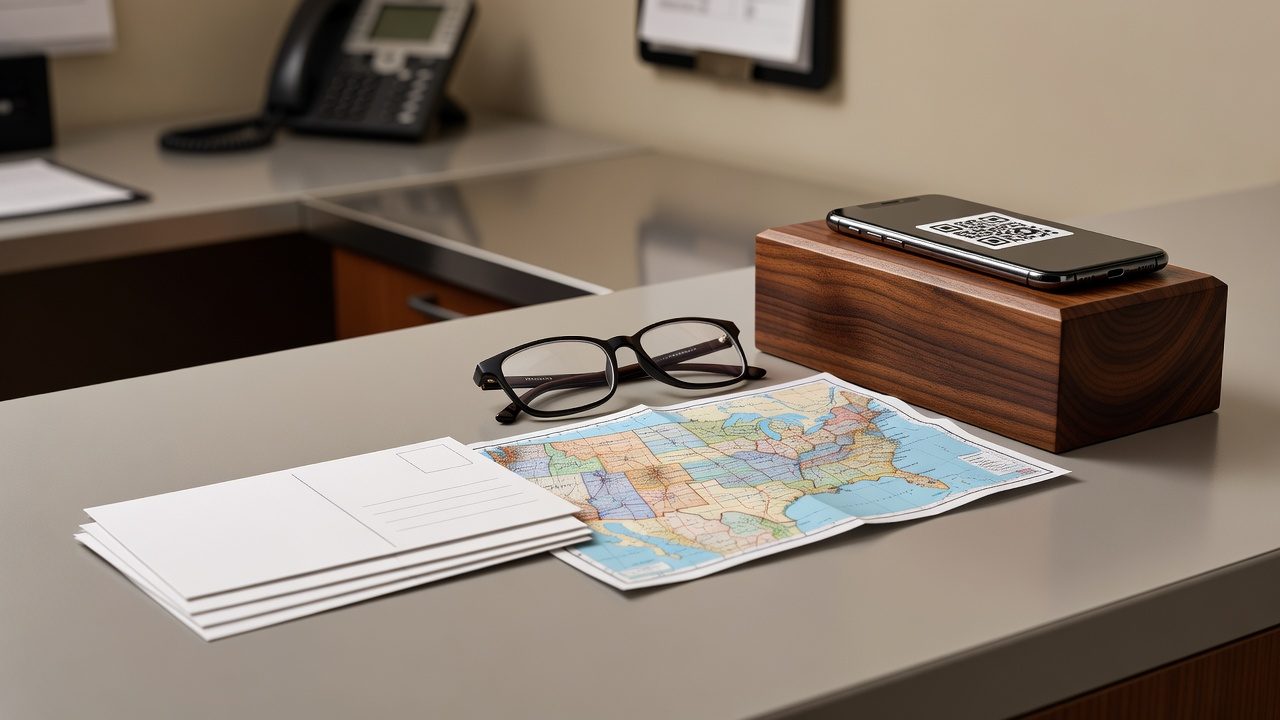
Focus the card on one role or hiring objective rather than trying to list every open position. For example, the action might invite the recipient to scan a QR code to learn about a rural ICU role, explore a relocation-related opportunity, register for a hiring event, or join a future talent pipeline.
The card can carry your logo and employer brand. A short URL can appear alongside the QR code so recipients have another way to reach the campaign page.
Choosing the Right Rural Recruiting Use Case
Hard-to-fill requisitions
Use a targeted campaign when a specific unit, specialty, shift, or rural location is not receiving enough qualified attention through normal channels. This may include ICU, emergency, labor and delivery, imaging, rehabilitation, behavioral health, or night-shift needs.
High-volume local hiring
For recurring needs such as CNAs, HHAs, and caregivers, direct mail can support ongoing local awareness instead of treating each opening as an isolated event.
Hiring events and open houses
A campaign can invite relevant candidates to learn about your facility, community, team, and available roles at a hiring event or open house.
Apprenticeship or training awareness
Some opportunities cannot be found through a standard job search because potential candidates do not know they exist. A focused card can introduce an apprenticeship or training opportunity and direct recipients to a clear next step.
Long-term pipeline building
You can also reach potential candidates before the next vacancy opens. This supports awareness and future pipeline development rather than relying only on outreach after a position becomes urgent.
Multiple locations
A campaign can be planned for a local market, several locations, or a broader rollout. The audience definition and campaign scope should follow the needs of the roles you are trying to fill.
How to Measure Response From a Rural Mail Campaign
Mail recruiting does not have to rely only on anecdotal feedback. QR-code scans and landing-page traffic provide measurable activity tied to the campaign.
The landing page should match the card's message and give candidates an obvious next step. Depending on the campaign setup, practical indicators can include:
- QR scans.
- Landing-page visits.
- Completed interest forms.
- Hiring-event registrations.
- Applications.
Tracking reports the activity produced by the campaign. It does not guarantee hires or prove that every eventual applicant saw the card. It does, however, provide a clearer connection between the mailed piece and candidate actions than simply sending mail without a tracked path.
What the Landing Page Should Do After a Candidate Scans
After scanning, a candidate should arrive at a page that immediately explains the opportunity. State the role, specialty, location, shift, and employer clearly.
Make the rural opportunity concrete. Avoid vague language that forces a candidate to search through a general careers site to understand what is being offered. Include useful details about the facility, team, role expectations, scheduling, and relocation support only when your organization can substantiate those details.
Give the page one primary next step, such as expressing interest, viewing the role, or registering for an event. The page should work well for someone arriving directly from a postcard.
When Rural Direct Mail Is a Good Fit
Targeted direct mail may fit your recruiting plan when:
- A specific rural requisition has remained open and normal channels are not producing enough qualified attention.
- The role requires a particular license or specialty and the local pool is small.
- You need to reach already-employed professionals who may consider the right rural opportunity.
- You need recurring awareness for high-turnover roles, events, apprenticeships, or future pipeline development.
- You are a recruitment marketing agency that wants to add direct mail without operating the targeting, printing, postage, and response-tracking workflow in-house.
Direct mail should complement a broader recruiting plan. Digital channels, referrals, community relationships, and other outreach can remain useful alongside it.
Questions to Resolve Before Launching a Campaign
Clear campaign decisions make it easier to build a focused message and response path. Before launch, define:
- The exact role, license type, specialty, shift, facility, and geography.
- Whether the campaign supports one requisition, multiple locations, an event, an apprenticeship, or an ongoing pipeline.
- The employer brand assets and the one action you want recipients to take.
- The landing-page content and how QR scans and page traffic will be reviewed.
- Whether the intended audience is local, broader than the immediate market, or nationwide.
- For agencies, whether the campaign will be delivered under the agency's brand through a white-label arrangement.
How RecruitCard Supports Rural Healthcare Recruiting
RecruitCard plans recruiting audiences by license type, specialty, and geography rather than using a generic demographic audience. The service is managed end to end: targeting, creative, printing, postage, delivery, and response tracking are part of the campaign process.
Each card can use the recipient's first name, a specialty-specific message, your employer branding, and one direct action through a QR code and short URL. RecruitCard supports both single-market and nationwide campaigns, and agencies can explore white-label delivery.
If you are evaluating another way to reach licensed healthcare professionals for a rural hiring need, Book a 15-minute call.
Frequently Asked Questions
Can direct mail reach rural healthcare candidates who are not actively job hunting?
It is designed to reach a targeted audience beyond people actively searching online, including licensed professionals matched by specialty and geography. It is an additional recruiting channel, not a guaranteed hiring solution.
Can you target a specific specialty instead of mailing to all healthcare workers?
Yes. Campaign audiences are planned around license type, specialty, and geography, so the message can focus on needs such as ICU nursing, physical therapy, imaging, behavioral health, or long-term care.
Can a rural campaign reach candidates outside the immediate area?
Campaign geography can be defined around the hiring need and may include a broader market or a nationwide rollout. A campaign should not promise that a recipient will relocate, but it can make the opportunity visible to people who may consider it.
How do we know whether candidates responded?
RecruitCard can use QR-code scans and landing-page traffic to measure activity tied to the campaign. The landing page and follow-up process should be set up to capture the next action that matters to your organization.
Can this support a hiring event or long-term pipeline, not just one open role?
Yes. The same targeted model can promote hiring events, apprenticeship or training opportunities, recurring high-volume hiring, and awareness before a future vacancy opens.
Enjoyed this? There's more from RecruitCard.
Book a 15-minute call →