Why Rural Healthcare Roles Need Awareness Before They Need Applications

Rural healthcare roles often need awareness before they need applications because qualified professionals may not know the role, facility, or community exists. This article is for hospital and health system HR and talent acquisition teams, rural clinics, long term care employers, and recruitment marketing agencies that need to reach licensed candidates beyond the people actively searching online.
Why rural healthcare hiring starts with awareness
A rural opening can be posted on common hiring channels and still remain largely invisible to the people an employer most wants to reach. A qualified nurse, physical therapist, imaging professional, or behavioral health clinician may be employed, focused on current responsibilities, and not browsing job listings. They may also have no reason to search for an employer or community they do not yet know.
That is why awareness comes before an application for many rural roles. Awareness means introducing the opportunity, the employer, the location, the specialty, and a reason to take a next step. It gives a potential candidate enough context to decide whether the role is worth learning about.
This matters most when the local qualified pool is small or when the work requires a specific license, specialty, schedule, or service line. Rural nursing roles, physical therapy positions, behavioral health openings, imaging roles, and other specialized jobs can require more than a visible posting. They may require an introduction to people who are not currently looking.
Geographic reach is not the same as geographic targeting
Geographic reach describes how broadly a message can be sent. An employer may choose to reach people in a defined area or across the United States.
Geographic targeting is more specific. It means shaping an audience around the relevant license type, specialty, and location criteria for the hiring need. For a rural campaign, the goal is not simply to contact everyone who lives nearby. The goal is to introduce the opportunity to a qualified specialty audience that may be relevant to the role.
For example, an employer with an ICU nursing need should begin with the nursing specialty and geographic focus that match the requisition, rather than with a broad local household audience. A physical therapy role, imaging opening, or behavioral health position should likewise be planned around the people qualified for that work.
The audience can be shaped for one rural market, multiple locations, or a nationwide rollout, depending on the hiring need. This is different from buying a generic mailing list. The recruiting message and audience should connect to a real role, specialty, and geographic objective.
Why job boards and paid search may miss the right rural candidates
Job boards and paid search are useful recruiting channels, but they primarily compete for the attention of people who are already searching, applying, or responding to recruiting activity. That creates a structural limitation for rural hiring: many licensed professionals who could be relevant are already employed and not actively looking for their next role.
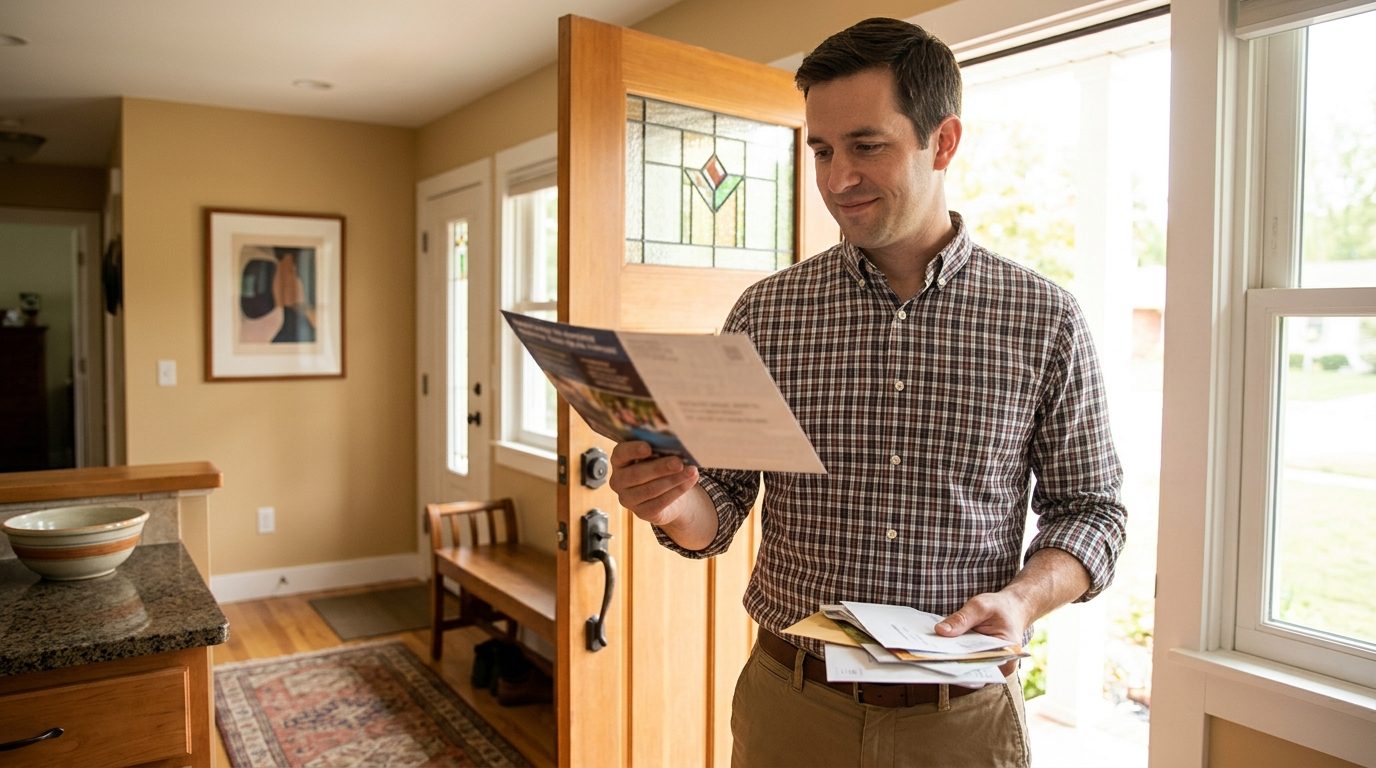
A searchable posting waits for someone to look for it. A physical mail piece can introduce a specific opportunity directly to a carefully defined audience at home. It can put the employer, role, location, and next step in front of someone before that person begins a job search.
This does not mean direct mail replaces digital recruiting in every situation. A landing page, application process, and digital follow up can all remain important. Direct mail can serve a different purpose by creating awareness among passive licensed candidates who may not encounter the role through a search.
What a rural healthcare mail piece needs to communicate
A useful recruiting card should make the opportunity understandable quickly. RecruitCard plans cards around four components:
- The recipient's actual first name: A personal opening that recognizes the card is meant for an individual, not a general household audience.
- A specialty specific message: A message tied to the role, unit, service line, or qualification the employer needs.
- Credible employer branding: Clear identification of the employer and a presentation consistent with its brand.
- One clear action: A QR code and short URL that lead to the relevant next step.
The message should introduce the rural opportunity before it asks for a response. Depending on the campaign, the employer may choose to highlight the role, unit or service line, location, schedule, community context, hiring event, or a simple way to learn more.
Keep the action focused. Several competing instructions can create hesitation. One primary call to action, supported by a QR code and short URL, gives the recipient a clear path. The card should lead to a relevant landing page, not leave the recipient to search for the opportunity on a large careers site.
How to introduce a rural opportunity without overselling it
Plain language is especially important when reaching a passive candidate. State what the role is, where it is located, who the employer is, and why the opportunity may be worth considering. Do not ask the first message to answer every question or force an immediate application.
A candidate may want to understand relocation possibilities, commuting considerations, schedule, specialty fit, and the local work environment. Your landing page can provide practical context on those topics without making promises the employer cannot support.
A simple message framework can work well:
- Use a personalized opening with the recipient's first name.
- Identify the specialty specific opportunity.
- Provide brief context about the employer and rural location.
- Invite the recipient to scan the QR code to learn more or express interest.
The purpose of that first introduction is to earn attention and a next step. An application may follow, but awareness comes first.
Rural awareness campaigns can support more than one hiring goal
A direct mail campaign can support an individual hard to fill requisition, but it does not have to be limited to one opening. The same model can introduce a hiring event, open house, apprenticeship, training program, or other opportunity candidates may not know to search for.
An employer can also build recognition before a vacancy becomes urgent. This can be useful when a rural facility anticipates ongoing hiring needs or wants qualified people to recognize its name and opportunities over time.
High volume roles can benefit from continuing awareness when an employer needs a steady flow of qualified local candidates. The objective should be clear from the start. An immediate response campaign focuses on a defined role or event and a timely next action. A longer term awareness campaign focuses on familiarity and future interest.
How RecruitCard manages a rural direct mail campaign
RecruitCard manages the campaign process from audience planning through response tracking. The service includes targeting by license type, specialty, and geography; card design; employer branding and personalization; printing; postage; delivery; and QR code and landing page response tracking.
RecruitCard's deepest expertise is licensed healthcare hiring. The service is designed for precision rather than a mass mailing or a mailing list handoff. The intent is to build a campaign around the role and audience you need to reach.
Recruitment marketing agencies can also use the white label option when they want to offer direct mail without building an in house print, postage, and tracking operation.
How to measure awareness and response
A QR code can record scans, and landing page traffic can show whether the mail piece generated interest. These are engagement signals. They do not, by themselves, prove a hire or replace your recruiting and applicant tracking data.
The landing page should match the purpose of the card. A campaign for a rural emergency department role should lead to information about that opportunity. A hiring event campaign should lead to event details and registration or interest options. A pipeline campaign should provide a relevant way to stay connected.
As you plan future outreach, review response patterns by campaign audience, specialty, geography, and call to action. That context can help you refine the message and landing page for the next campaign.
When rural direct mail is a strong fit
Rural direct mail may be a strong fit when you have a specific need that is not closing through normal channels and the qualified audience is likely to be employed or difficult to reach through active search behavior.
- A rural requisition has remained open despite standard recruiting activity.
- The local pool of qualified licensed professionals is small.
- The role requires a particular license, specialty, unit background, or schedule.
- You need to reach passive candidates who are not actively searching.
- You need awareness before a hiring event, open house, program launch, or future vacancy.
- You need to support one rural market or multiple locations with a defined campaign structure.
Direct mail is not a guaranteed solution. It is a channel for placing a relevant opportunity in front of a defined audience and giving that audience a clear way to respond.
Plan the next step for a rural awareness campaign
Start with the role or program that needs awareness. Define the required license or specialty, the geographic focus, and the action you want a candidate to take. Then identify the employer brand elements and practical role information that should appear on the card and landing page.
For a rural opportunity, clarity is more valuable than a broad message. A candidate should be able to see what the opportunity is, where it is, why it may be relevant, and where to learn more.
If you want to discuss the audience and campaign structure for a rural hiring need, Book a 15-minute call.
Frequently asked questions
Can a rural campaign reach candidates outside the immediate area?
Yes. A campaign can be planned around a defined specialty and geographic audience, including candidates who may consider relocating for the right opportunity. The audience and message should reflect the role's actual hiring need.
Is this the same as mailing a generic healthcare list?
No. The positioning is precision targeting by license type, specialty, and geography. The goal is to put a relevant rural opportunity in front of a carefully defined audience rather than sending a broad message to a general demographic.
Can the campaign promote a hiring event instead of one job?
Yes. The same direct mail model can introduce a hiring event, open house, apprenticeship, training program, or other opportunity that candidates may not know to search for.
How do we know whether the mail piece generated interest?
Campaign response can be measured through QR scans and landing page traffic. Those signals show engagement and can be reviewed alongside the employer's application and recruiting data.
Does RecruitCard handle design and printing?
Yes. RecruitCard's managed service includes audience targeting, card design, printing, postage, delivery, and QR code and landing page response tracking.
Enjoyed this? There's more from RecruitCard.
Book a 15-minute call →