How to Recruit Infection Prevention Nurses

A strong infection prevention nurse recruiting strategy starts with a precise audience, a role-specific message, and a clear path to respond. This guide is for hospital and health-system HR and talent-acquisition teams trying to fill infection prevention roles that are not closing through standard job postings and digital ads.
The practical answer is to recruit with specialty-specific targeting, personalized outreach, credible employer branding, and measurable response tracking. A managed direct mail campaign can add a channel for reaching licensed professionals who may already be employed and are not actively searching when your posting goes live.
Why Infection Prevention Nurse Recruiting Requires a Focused Approach
Infection prevention is not a generic RN opening. The work can involve prevention programs, surveillance, education, compliance-related responsibilities, and collaboration across clinical and operational teams. The exact scope, reporting relationships, and qualifications depend on your organization and the role description.
That specificity matters in recruiting. A broad message such as “RNs wanted” may not tell a nurse with relevant infection prevention experience—or an interest in moving into this work—why they should consider your opportunity. It can also make it harder to distinguish the role from other nursing openings competing for attention.
A focused campaign begins by defining whom you need to reach, then communicating what the role actually involves, where it is located, and what the next step should be. Direct mail is one way to put that message in front of a defined audience at home rather than relying solely on job-search activity.
What Makes Infection Prevention Nurse Recruiting Different
An infection prevention nurse role calls for a message that reflects the specialty. Your materials should describe the opportunity in terms a relevant candidate can quickly assess.
Depending on the role, that may include approved details about:
- The prevention program or facility setting
- Surveillance, education, or compliance-related responsibilities
- Collaboration with nursing leadership, clinicians, quality teams, or operational stakeholders
- The patient population, care environment, or facilities involved
- The experience and qualifications stated in your actual job description
Do not use a recruiting card to imply responsibilities, credentials, schedules, advancement options, or benefits that the position does not offer. The final message should match your approved role description and hiring process.
Start With a Precise Candidate Definition
Before writing creative, define the audience. RecruitCard campaigns are built around license type, specialty, and geography rather than a broad demographic audience or a generic mass mailing.
For an infection prevention campaign, your planning may identify a nursing license type, relevant professional background or specialty profile, and the geographic area your hospital or health system intends to reach. The definition should be specific enough to support the role, while reflecting what your organization can accurately communicate.
Candidate-definition planning checklist
- Target geography: The area served by one facility, several locations, or a broader recruitment effort
- Facility or unit: The hospital, campus, service line, or program connected to the role
- Role title: The approved title candidates will see in the application process
- Experience expectations: Relevant nursing, infection prevention, clinical, or leadership background described in the job requirements
- Schedule information: Any approved shift, on-call, hybrid, or schedule details
- Relocation considerations: Whether the location and any approved support details should be stated clearly
- Application destination: Where a candidate should go after scanning the QR code
Editorial note: Before using public licensing information in campaign planning or content, verify what information is publicly available and applicable in the relevant state or states. Licensing records and available fields can vary. Do not assume every state exposes the same license or specialty details.
Why Job Boards and Paid Search May Miss the Right Candidate
Job boards and paid search can be useful recruiting channels. They are designed largely around active job-search behavior: someone searches, sees an opening, clicks, and decides whether to apply.
But some of the nurses you most want to reach may already be employed and not searching for a new infection prevention role at the moment your listing appears. That creates a structural limitation for channels that depend on the candidate visiting a job board or entering a related search.
A targeted direct mail campaign is an additional channel. It places a role-specific message before a defined audience without requiring that person to be actively browsing job listings. This can be especially relevant when the local candidate pool is specialized and your usual channels are not closing the requisition.
Build the Message Around the Infection Prevention Role
Lead with the specific opportunity. A nurse should be able to understand quickly that the message concerns infection prevention, who is hiring, and why it may be worth a closer look.
Use only approved, accurate information to explain the role and facility context. Depending on what your organization can support, the message may address:
- The infection prevention opportunity and its setting
- The type of team or program the nurse would join
- The facility, health system, or location
- Relevant schedule or reporting-structure information
- An advancement path, relocation information, or hiring event details, when applicable and approved
Keep the next step simple. One clear action is more useful than several competing instructions. For example, the card can direct the recipient to scan a QR code to review the role, express interest, register for an event, or begin an application.
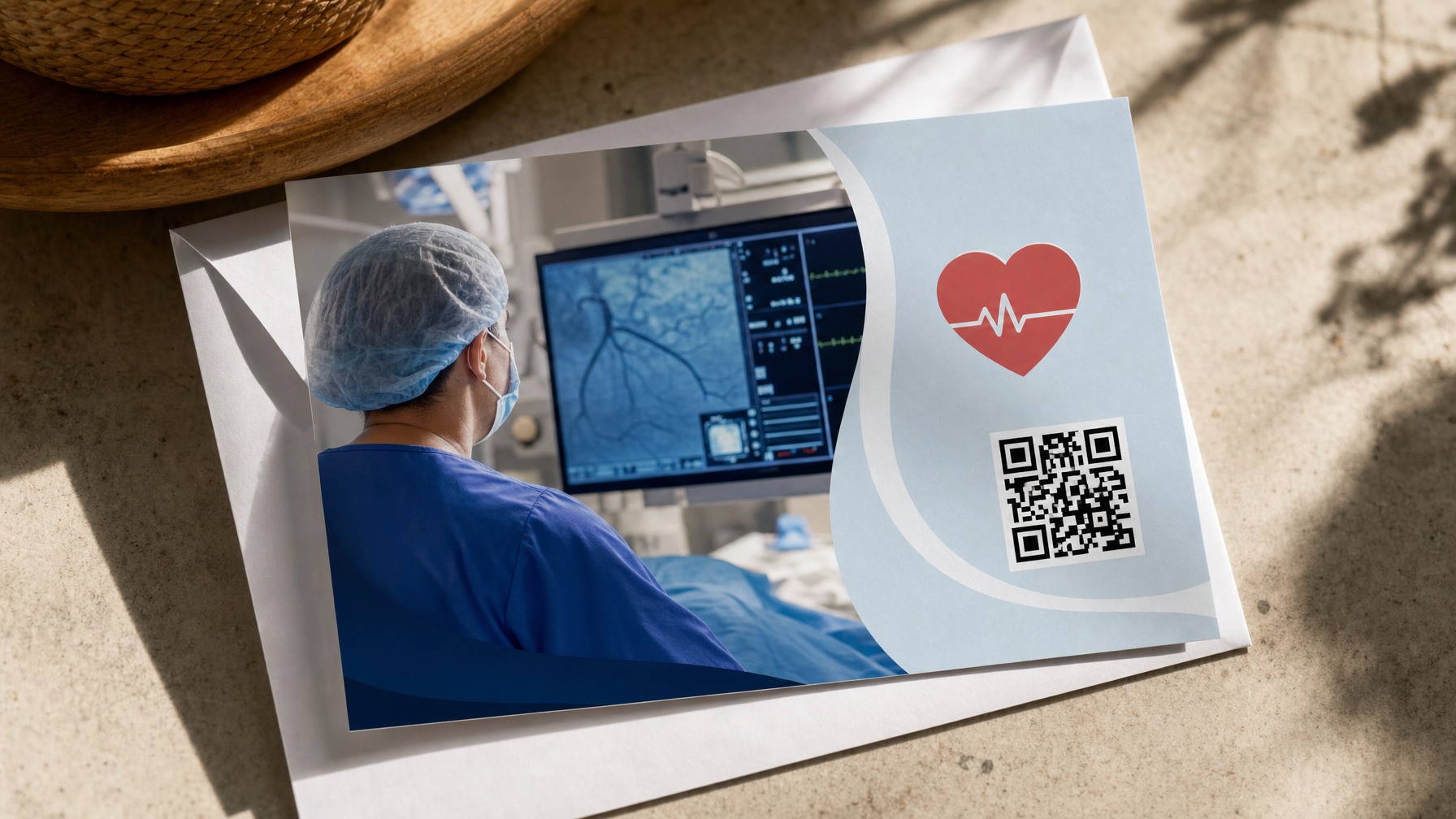
The Anatomy of an Infection Prevention Nurse Recruitment Card
A RecruitCard mail piece has four essential components.
Personalized recipient name
Using the recipient’s actual first name makes the card feel intended for an individual, not sent as an anonymous broad mailing.
Specialty-specific message
The card should name infection prevention nursing and the actual opportunity being promoted. This gives the recipient immediate context and avoids a generic nursing-recruitment message.
Credible employer branding
Show who is hiring. Include your organization name and approved brand elements, along with accurate facility, program, team, or role context that helps the opportunity feel concrete.
One clear action
A QR code and short URL can lead to a campaign landing page or application path. The destination should make the next step obvious and work well on a mobile device.
Before production, review the card for legibility, clarity, mobile usability, and alignment with your employer brand. A candidate should not need to guess what position is being promoted or what to do next.
How Targeting Works for This Campaign
RecruitCard plans audiences through three core dimensions:
- License type: The relevant nursing license category for the role
- Specialty: The professional or clinical profile most relevant to the opportunity
- Geography: The market, service area, locations, or broader area you intend to cover
For example, a hospital might define an audience around nurses with a relevant specialty profile in the area it serves, then use messaging that clearly identifies the infection prevention opportunity and facility context.
The same campaign model can support one location, multiple facilities, or a nationwide rollout. If you are recruiting beyond the immediate market, make the role location and any approved relocation details clear. The message can invite consideration from a broader audience, but it should not assume candidates will relocate or apply.
Use Cases Beyond One Open Infection Prevention Role
A specialty-focused campaign does not have to be limited to a single requisition. The audience definition, card message, and landing-page action should change based on the objective.
Hard-to-fill requisitions
Use a focused campaign when an infection prevention role remains open despite normal recruiting activity and you need an additional way to reach a defined audience.
Hiring events and open houses
Invite qualified professionals to meet the team, learn about the organization, or explore current and future opportunities. The QR destination can support event details or registration.
Facility or program awareness
Introduce a new program, facility, or opportunity that candidates may not discover through ordinary job-search behavior alone.
Long-term candidate pipeline
Build familiarity with your organization and specialty opportunities before the next vacancy opens. A pipeline campaign needs a different call to action than an immediate application campaign, such as opting in to hear about future roles or learning more about the team.
How RecruitCard Handles the Campaign From Start to Finish
RecruitCard provides a managed direct mail recruiting campaign rather than handing over a generic mailing list for your team to operate alone.
- Audience targeting by license type, specialty, and geography
- Card creative featuring your employer brand, a personalized recipient name, a specialty-specific message, and one clear action
- Printing, postage, and delivery management
- QR-code and landing-page response tracking as part of the campaign workflow
RecruitCard’s deepest stated expertise is licensed healthcare hiring. The campaign can be planned for a single market or a broader U.S. rollout, depending on your hiring objective.
How to Measure an Infection Prevention Nurse Direct Mail Campaign
Direct mail recruiting does not have to be unmeasured. QR scans and landing-page traffic provide campaign engagement signals that you can review alongside other recruiting activity.
The campaign landing page should connect to the intended next step, such as reviewing the opportunity, expressing interest, registering for an event, or applying. Campaign-specific tracking can help you evaluate that traffic separately from other sources where appropriate.
Measurement has limits. A scan or landing-page visit shows engagement; it does not guarantee an application, interview, hire, or a particular response rate. Review campaign engagement alongside applications, recruiter follow-up, and the quality of conversations generated by the campaign.
Questions to Ask Before Launching
- Which infection prevention role or roles are the current priority?
- What license, specialty, experience, and geographic criteria should define the audience?
- What accurate information would make the opportunity credible to an already-employed nurse?
- Where should a QR scan lead, and what should the visitor do next?
- Can your organization provide approved branding, role details, and contact information for the card and landing page?
- Should the campaign support one requisition, a hiring event, multiple facilities, or an ongoing pipeline?
When a Targeted Direct Mail Campaign May Be a Fit
A managed direct mail campaign may be worth considering when:
- A specific infection prevention requisition has remained open despite normal recruiting activity
- The qualified audience is specialized and may include already-employed nurses
- You need to reach beyond people actively searching online
- Your team wants one partner to manage targeting, creative, production, delivery, and response tracking
- You are a recruitment marketing agency seeking to offer the channel under your own brand through a white-label arrangement
What to Expect From a Consultation
A consultation can begin with the role, target geography, audience definition, and campaign objective. You can discuss the card message, employer branding, QR destination, and landing-page experience, then determine whether the effort is intended for one market, multiple locations, a hiring event, or a longer-term pipeline.
The planning conversation also identifies the approved role and brand information needed to prepare a campaign. It is a chance to define the work clearly without making assumptions about cost, timing, or hiring outcomes.
Schedule a consultation about recruiting infection prevention nurses.
Conclusion
Specialty-specific targeting and messaging can give infection prevention nurse recruiting a channel beyond active job-search traffic. The core card components are simple: a personalized name, an infection-prevention-specific message, credible employer branding, and one clear action.
If your team is trying to reach a defined audience for a difficult role, hiring event, or longer-term pipeline, RecruitCard can help you discuss the role and campaign objective.
Enjoyed this? There's more from RecruitCard.
Book a 15-minute call →