Should You Target Local or Regional Imaging Techs for Specialized Shifts?

Target local imaging techs first when the specialized shift requires immediate availability and a short commute. Expand to a regional audience only after you confirm the local licensed pool cannot meet the need.
- Start with license type, imaging specialty, and a tight local geography so candidates can actually cover nights or weekends.
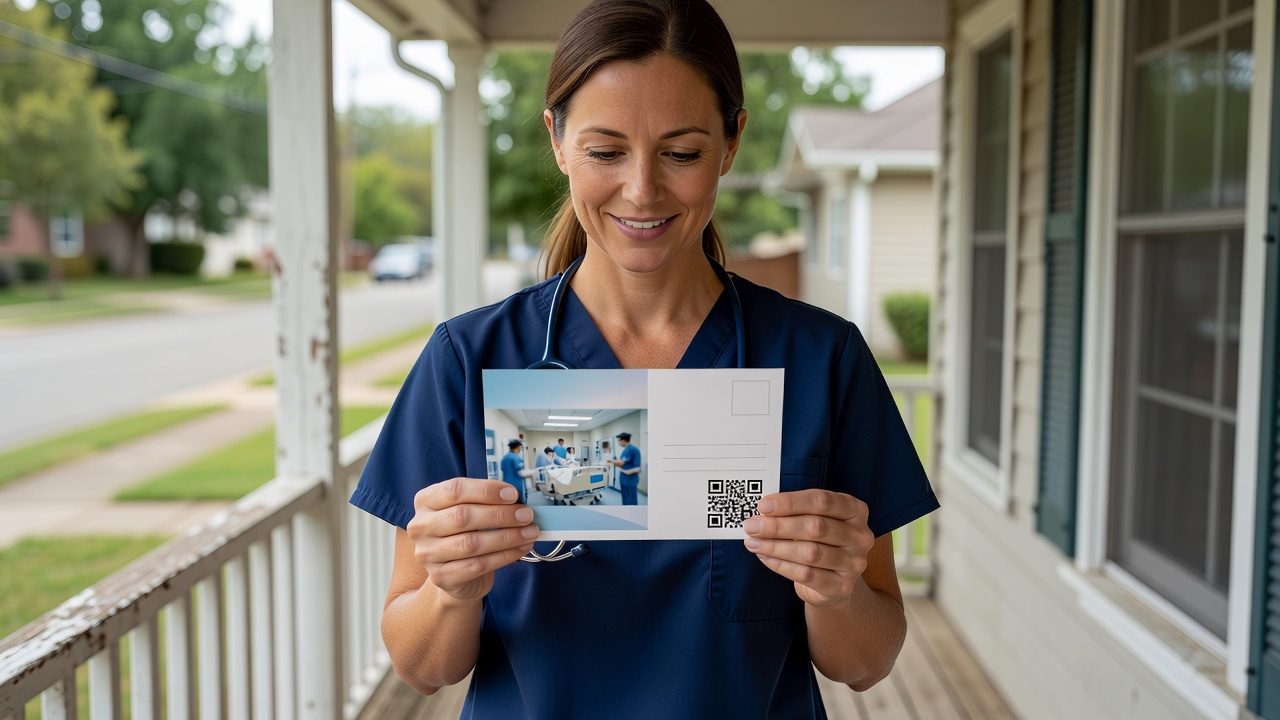
- Keep the mailer personal: first name, a specialty-specific message, your employer brand, and one clear action (QR code plus short URL).
- Use regional reach only when the local pool is too small, not as a default volume play.
- Measure both scopes the same way: QR scans and landing page traffic.
Define the Shift Constraints First
Specialized shifts such as nights or weekends shrink who can respond quickly, so you should define those constraints before you choose local or regional targeting.
Why nights and weekends change the pool
A candidate who holds the right license may still decline if the commute after a night shift is long. Local targeting matches people who already live close enough to cover the shift without added travel time. That matters for imaging roles where call, weekend coverage, or overnight staffing cannot wait on relocation.
When regional expansion is justified
Regional expansion makes sense only when local license holders in that specialty are too few to fill the role. Confirm that first. A wider geography can include people who might relocate or accept a longer drive for the right schedule, but it should follow a local test, not replace it.
Compare Audience Size and Precision
A local radius keeps the mailing focused on candidates already positioned for the facility, while a regional list adds volume at the cost of some shift fit.
Local radius
Local targeting is precision, not a mass mailing. You match license type, imaging specialty, and geography so the card reaches people who can realistically work the specialized shift. The card still uses the same four parts: personalized name, specialty-specific message, credible employer branding, and one clear action.
Regional reach
Regional reach increases how many licensed imaging techs see the offer. It also dilutes the focus on those most likely to accept that specific shift. Use it when the local pool is structurally too small, for example a rural site or a niche modality that few nearby techs practice.
Filters, not a generic list
License type, specialty, and geography filters support either approach. This is not the same as buying a generic demographic list. RecruitCard builds the audience from license, specialty, and geography matching and then runs the full campaign: targeting, creative, print, postage, delivery, and response tracking.
If a specialized imaging shift will not close through job boards, talk through local versus regional targeting on a short call. Book a 15-minute call
Measure Results the Same Way in Both Cases
QR code scans and landing page visits track response whether you mail a tight local radius or a regional set of license holders.
What the data tells you
That tracking shows whether the local pool responded adequately before you consider regional expansion. You are not guessing whether the mailer worked. You see traffic tied to the campaign.
Pipeline, not only one requisition
The same tracking supports ongoing pipeline building for future specialized shifts, hiring events, or a new site. One campaign can stay local, or the same model can cover multiple locations when you need a wider rollout.
Frequently Asked Questions
How do you know who holds the required license?
The audience is built from license, specialty, and geography matching. Targeting is by license type, trade or specialty, and location, not a purchased generic list.
Can one campaign cover both local and regional segments?
Yes. The model supports a single market or a nationwide rollout. You can start local for shift coverage, then expand geography if the licensed pool is too small.
Do you handle design and printing?
The full service includes targeting, creative, print, postage, delivery, and QR code and landing page response tracking. Your logo and employer brand can sit on the card with the recipient first name and one call to action.
What happens after someone scans the QR code?
They land on a page tied to the employer brand and the specific call to action, so you can see campaign traffic rather than guess.
Sources
Enjoyed this? There's more from RecruitCard.
Book a 15-minute call →