
The Licensed Candidate Visibility Gap: Why a Job Posting Cannot Reach Every Qualified Healthcare Professional
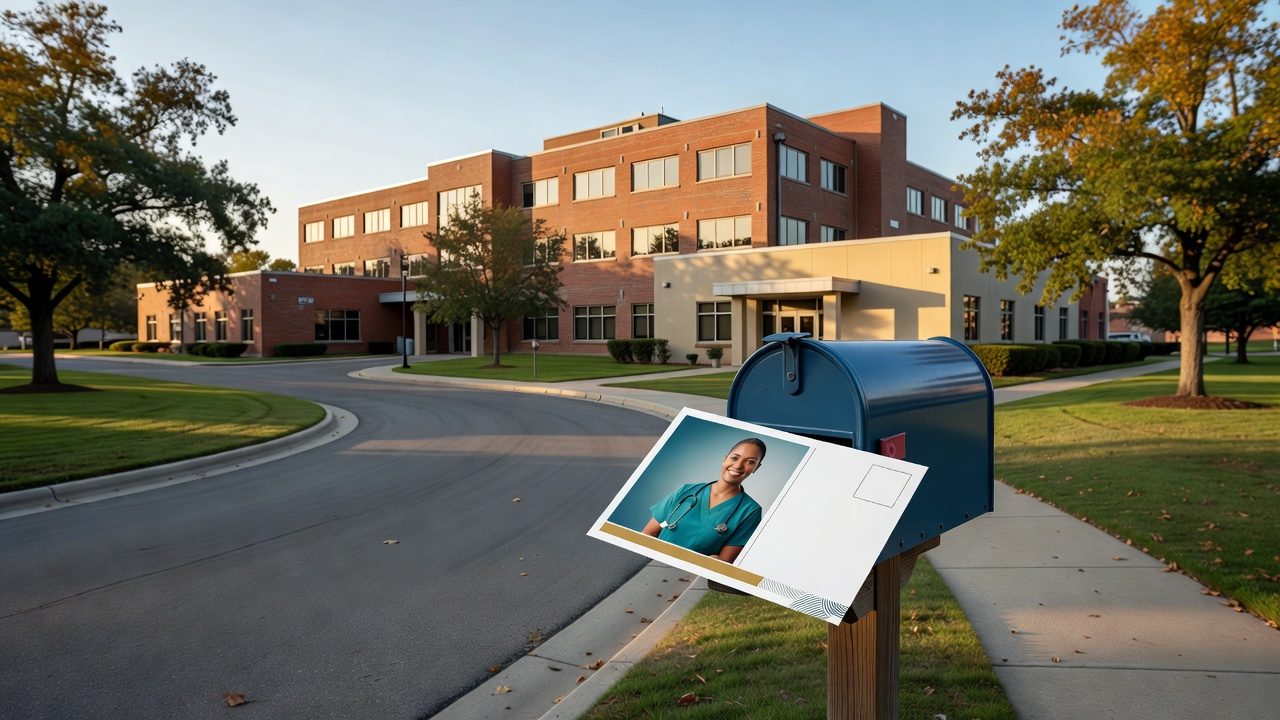
A job posting reaches licensed healthcare professionals who are already searching, but it cannot reach every qualified person—especially passive, already-employed candidates who are not browsing job boards. For hospital and health-system HR and talent-acquisition teams hiring for ICU, ED, OR, L&D, oncology, case management, and night-shift roles, precision-targeted direct mail can add a way to put a relevant opportunity in front of people who may never encounter the posting.
The Visibility Gap in Licensed Healthcare Hiring
The licensed candidate visibility gap is the difference between qualified professionals who exist in a hiring market and the smaller group who happen to see your role through active-search channels.
A licensed professional may be employed, reasonably satisfied in a current role, or simply too busy to search for a new position. That does not mean the person would never consider a well-matched opportunity. It means your posting is unlikely to reach that person unless they begin looking.
Job boards, career sites, and recruitment advertising are most visible to people who visit those channels, search for a role, notice your listing, and choose to act. The candidates you most want for a difficult requisition may be structurally outside that path because they are not actively looking.
Consider an experienced ICU nurse who is settled in a current position, a physical therapist practicing in a rural area, or a respiratory therapist who works nights. Each may be qualified for your need. Each may also be absent from job-board searches today. The opportunity can be relevant without being visible to them.
Why a Job Posting Cannot Reach Every Qualified Candidate
Active candidates and passive candidates are different audiences
An active candidate is searching for a job, reviewing openings, or otherwise taking steps toward a move. A passive candidate is not currently searching, even if they could be open to the right conversation or opportunity.
Job postings are built to serve active candidate intent. A person must:
- Search for or browse a relevant role.
- See your listing among other openings.
- Decide that the role is worth a click.
- Take the next step to learn more or apply.
That is useful when qualified people are looking. It is not a complete reach strategy when the local qualified pool is small, employed, and not initiating a search.
Digital ads also compete for limited attention
Paid search and digital recruitment ads can support a recruiting plan, but they generally depend on online behavior and compete with many other messages for attention. A qualified clinician who is not searching, browsing relevant content, or engaging with recruiting messages may not see them.
This is not a criticism of job boards or digital recruiting. They remain important tools for reaching active applicants. The issue is coverage: no posting can reach every qualified licensed professional when many are not in the active market.
The gap becomes more consequential for hard-to-fill requisitions, specialized units, rural locations, difficult schedules, and markets where multiple employers are pursuing the same limited group of professionals.
The Problem Is More Specific for Licensed and Specialized Roles
Broad labels can conceal the details that define a real hiring need. “RN” may describe a license, but it does not by itself communicate unit experience, setting, schedule, clinical focus, or location.
For example, your need may be for:
- An ICU nurse for a night-shift opening.
- An OR nurse with relevant operating-room experience.
- A labor and delivery or oncology professional.
- A case-management nurse.
- A physical therapist for a rural location.
- A dental hygienist.
- An allied-health professional in respiratory therapy, imaging, laboratory work, or another specialty.
In each case, the relevant audience can be narrower than a broad occupational category. Those professionals may already be employed, and generic reach may produce attention from people who do not match the actual requirement.
The strongest fit for a more focused outreach approach is often a specific requisition or specialty that has remained open despite normal recruiting channels. Specialty, shift, location, and local competition can make a role difficult even when the job description is clear.
Direct Mail Adds a Different Candidate-Reach Channel
Targeted direct mail puts an opportunity in front of a relevant person at home rather than waiting for that person to begin an online search. It is an additional reach channel for passive candidates who may not encounter your job posting or recruitment ad.
Recruiting direct mail is not the same as buying a generic mailing list. RecruitCard positions the audience around matching by license type, specialty or trade, and geography, rather than broad demographic targeting.
This approach can support several recruiting goals:
- A single hard-to-fill role, such as an ICU night-shift opening.
- Recurring local hiring for CNAs, HHAs, caregivers, and similar roles.
- A hiring event or open house.
- Awareness for an apprenticeship or training program.
- Long-term candidate-pipeline building before a vacancy opens.
Direct mail does not replace job boards. It complements them by creating awareness among qualified people who may not be actively searching.
What Precision Targeting Means in Practice
Precision targeting starts with three dimensions:
- License type: the relevant licensed professional category.
- Specialty or trade: the clinical specialty, role context, or trade connected to the opening.
- Geographic location: the market or markets connected to the hiring need.
For example, an employer can promote an ICU night-shift opportunity to a relevant licensed audience in the geography connected to that role. The message can then speak directly to the unit and schedule instead of reading like a broad, undifferentiated recruitment notice.
The audience is built through license, specialty, and geography matching. A campaign may support one market or a nationwide rollout. When an employer is open to a broader search, the card and landing page can also explain the opportunity in a way that speaks to candidates considering a move.
The Anatomy of a RecruitCard Mail Piece
A RecruitCard mail piece is designed around four components that make the message specific and easy to act on.
Personalized name
The recipient’s actual first name makes the card identifiable as an intended professional message rather than a generic mass mailing.
Specialty-specific message
The message connects the opportunity to the recipient’s license, specialty, unit, shift, or role context where appropriate. An ICU night-shift need should not read the same way as a broad RN announcement.
Credible employer branding
The card presents your healthcare organization, practice, or facility clearly and consistently with your employer brand. Candidates should be able to understand who is reaching out and what opportunity is being presented.
One clear action
The card directs the recipient to one primary next step through a QR code and short URL. Keeping the action focused helps avoid competing calls to action and the unfocused feel of a mass mailing.
How Direct Mail and Job Postings Can Work Together
Job postings remain a useful destination and application mechanism for active candidates. Direct mail can create awareness among qualified people who may not otherwise see that destination.
A coordinated workflow can look like this:
- Identify the role, specialty, shift, and hiring geography.
- Define the audience using license type, specialty or trade, and geography.
- Create a card with a message specific to the opportunity.
- Send recipients to a landing page or hiring action that matches the card.
- Review QR scans and landing-page traffic as engagement signals.
The landing page should carry the same message as the card and make the next step clear. Depending on your hiring process, that may mean learning more about the role, registering for an event, expressing interest, or beginning an application path.
How Campaign Response Can Be Measured
Mail-based recruiting does not have to be unmeasurable. QR scans and landing-page traffic provide visibility into engagement with the campaign.
It is important to distinguish engagement from hiring outcomes. A scan or landing-page visit indicates that a recipient responded to the mail piece. Applications, interviews, offers, and hires are later recruiting steps that should be evaluated separately.
A clear, campaign-specific landing-page experience helps put traffic in context. It also gives recipients a direct path from initial awareness to a relevant hiring action.
Use Cases Beyond One Open Requisition
Targeted direct mail can support more than a single vacancy.
Hard-to-fill requisitions
Use a focused message for roles that are not closing through normal channels, including ICU nights, OR positions, rural therapy needs, and other specialized openings.
High-volume local hiring
Maintain awareness for recurring needs such as CNA, HHA, caregiver, and similar local roles.
Hiring events and open houses
Invite a targeted licensed audience to meet your team, visit a facility, or learn about available opportunities.
Apprenticeship and training awareness
Introduce programs that potential candidates may not know exist and direct them to a page with the relevant details.
Long-term pipeline building
Stay visible to qualified professionals before the next vacancy opens, rather than beginning outreach only after a requisition becomes urgent.
Multi-location recruiting
Support a single-market campaign or a broader nationwide rollout while keeping the message connected to the locations and roles you need to fill.
When This Approach Is a Good Fit
Direct mail may be worth considering when:
- A specific license or specialty has a small qualified pool in your hiring geography.
- A requisition has been open for an extended period and normal channels are not generating enough qualified attention.
- The role is difficult because of specialty, shift, rural location, or competition for the same professionals.
- You need to hire continuously for recurring, high-volume roles.
- You want to reach passive candidates before they begin an active job search.
- You are a recruitment marketing agency looking to offer a managed, white-label direct-mail channel.
It is particularly relevant when the role will not close through the same channels that have already produced an insufficient shortlist.
What RecruitCard Handles
RecruitCard manages the campaign from audience targeting through response tracking. The service includes audience matching by license type, specialty or trade, and geography; card design; recipient first-name personalization; printing; postage; delivery; and QR-code and landing-page response tracking.
You supply or approve the employer brand and hiring message. The campaign is then built around one clear candidate action. RecruitCard’s deepest expertise is licensed healthcare hiring, including the specialized roles that hospital and health-system talent teams often find hardest to fill.
The same model can also extend to engineering and skilled-trade employers hiring licensed or certified candidates. Recruitment marketing agencies can use the managed service as a white-label offering.
If you have a specific role or audience in mind, Book a 15-minute call.
Frequently Asked Questions
Is direct mail recruiting just a generic mailing list?
No. The intended audience is matched by license type, specialty or trade, and geography rather than treated as a broad demographic list.
Can you target a specialty such as ICU or OR instead of only targeting “RN”?
The campaign model is designed around more precise license, specialty, and geographic criteria, so the message can be built around a specific hiring need.
How is this different from posting on a job board?
A job posting mainly reaches people who are already searching or browsing. Direct mail adds a channel for reaching qualified, passive professionals who may not see the posting.
How do we know whether the campaign generated interest?
QR scans and landing-page traffic provide measurable engagement signals. They should be evaluated separately from later application, interview, and hiring decisions.
Can this support hiring events or an ongoing pipeline, not just one vacancy?
Yes. The same model can be used for hiring events, apprenticeship awareness, recurring high-volume hiring, and long-term candidate-pipeline building.
Enjoyed this? There's more from RecruitCard.
Book a 15-minute call →