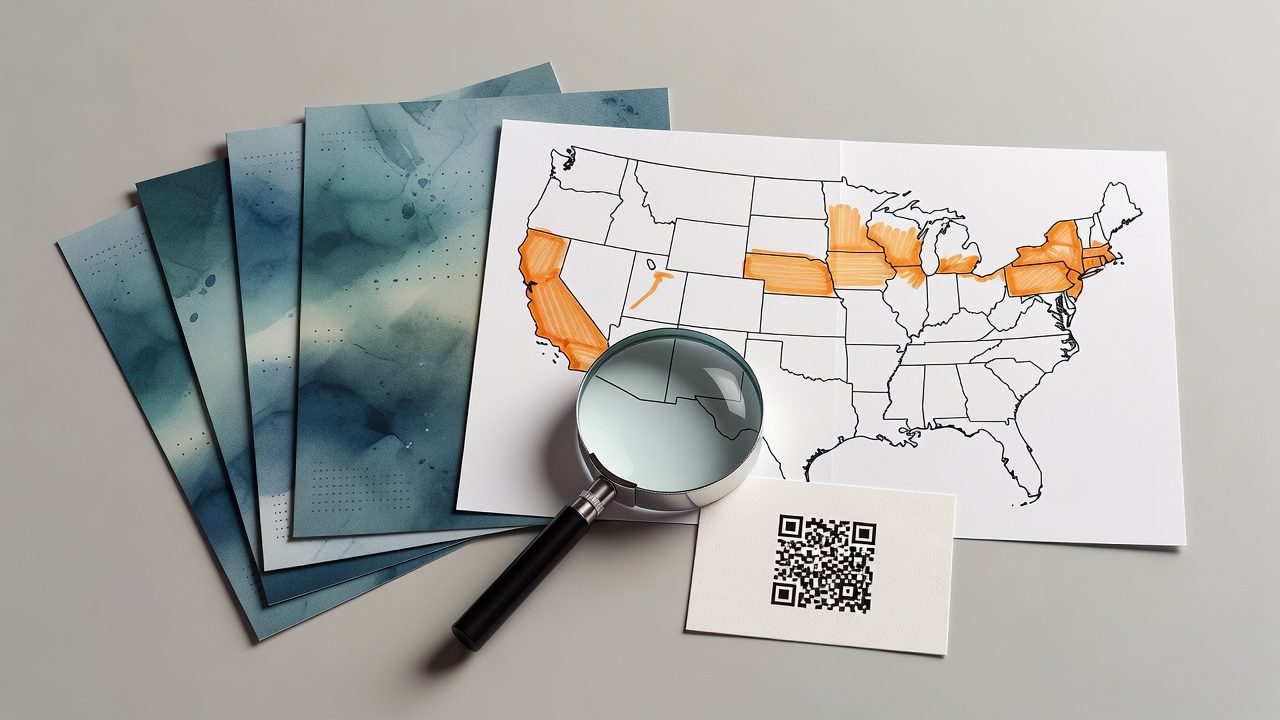
When a Small, Precise Mailing Audience Is Better Than a Large One
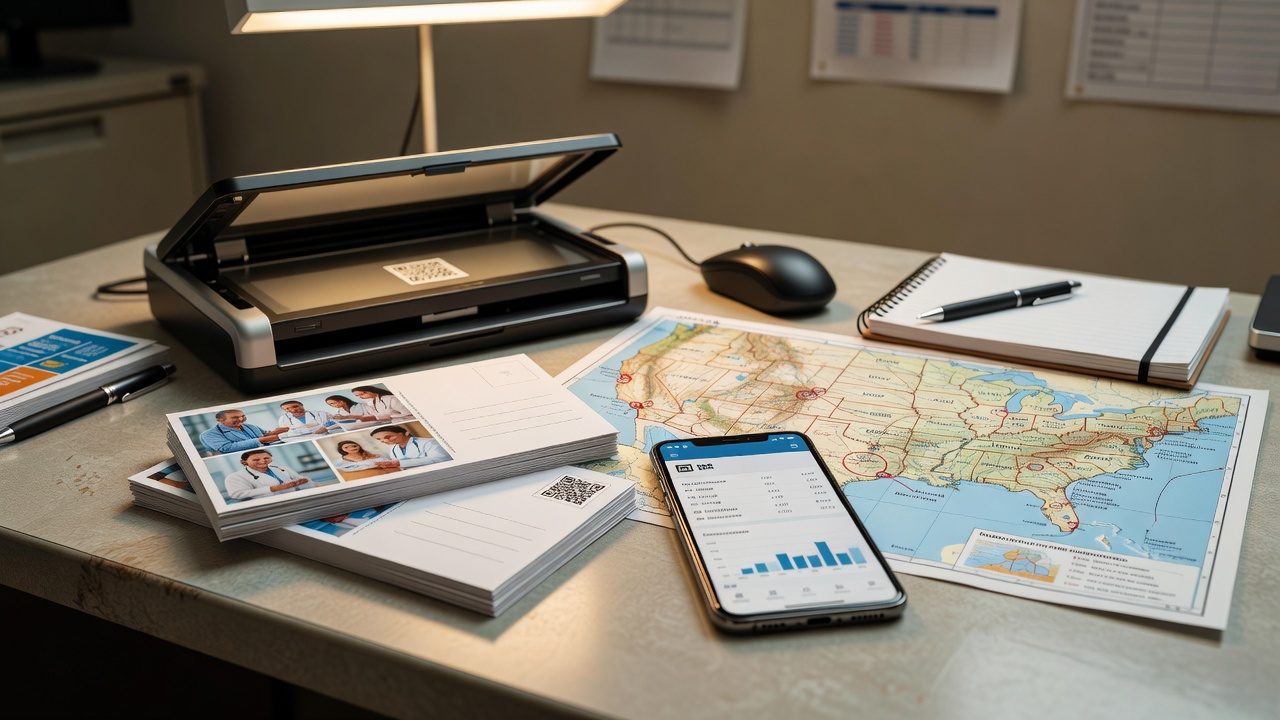
A small, precisely matched mailing audience is often better when you are hiring for a hard-to-fill licensed role, specialty, unit, or location. For hospital and health-system HR and talent-acquisition teams, and for agencies supporting healthcare recruitment, the objective is not to send the most mail. It is to reach qualified passive candidates with a message that fits their professional background and the opportunity.
Why audience quality matters more than audience size
A large audience can create the appearance of reach while including many people who do not fit the hiring need. They may lack the required license, work in a different specialty, live outside a practical geography, or have little reason to consider the opening.
A precise mailing audience is matched to the role by license type or trade, specialty, and geographic location. For example, an ICU night-shift opening needs a different audience and message than a rural physical therapy role or a dental hygienist search.
The goal is not broad demographic volume. The goal is to put a relevant opportunity in front of more of the right people, with less wasted attention. When a qualified local pool is small, relevance matters more than the raw number of mail pieces.
When a small mailing audience is the better choice
A smaller audience is often a practical choice when you have a specific requisition that has remained open despite normal recruiting channels. This is common when the qualified pool is limited, the role requires a niche specialty, or the work location narrows the realistic candidate pool.
Hard-to-fill specialties and units
Consider a narrowly defined audience when you are recruiting for roles such as:
- An RN for an ICU, emergency department, operating room, labor and delivery unit, oncology team, or case management function.
- A night-shift role where schedule requirements are central to the decision.
- A physical therapist for a rural rehabilitation setting.
- A dental hygienist in a defined local market.
- A licensed or certified professional for a location with limited candidate availability.
For operationally urgent or high-value roles, every qualified candidate may matter. A broad audience does not add value simply because it is larger if most recipients have no meaningful connection to the opening.
Ongoing local hiring and awareness needs
Small, relevant audiences are not limited to one open requisition. CNA, HHA, and caregiver hiring may require a continuous local pipeline. A focused campaign can also build awareness of a hiring event, apprenticeship, training program, or new facility before candidates begin searching for it.
In these cases, the campaign objective may be to introduce your organization and create a clear next step, rather than to rely only on people who happen to be actively applying at that moment.
Why job boards and digital audiences can miss passive candidates
Job boards and paid search are useful recruiting channels, but they primarily reach people who are actively looking, searching, or responding to digital recruitment signals. The licensed professional you most want to reach may be employed, busy, and not browsing job listings.
These are passive candidates: qualified people who are not currently conducting an active job search. They can be structurally difficult to reach through a posting or search ad because they may never enter the search that would display it.
A direct mail piece introduces a specific opportunity at home. It can give a candidate a reason to consider a role they were not seeking, such as an ICU night-shift position, a closer location, a new facility, or a career event. Direct mail is not a replacement for every recruiting channel. It is an additional channel for reaching people who may not be visible through job boards and paid search.
What precise targeting looks like in practice
Precise targeting begins with the hiring requirement, then defines the audience around three factors:
- License type or trade: The professional qualification relevant to the role.
- Specialty: The area of practice or work that makes the recipient more relevant to the opening.
- Geographic location: The market, markets, or broader area that fits the hiring plan.
For example, “RN” is a broad category. A more useful audience definition may focus on RNs aligned with ICU, OR, labor and delivery, oncology, case management, or a night-shift requirement. The message can then speak to a role that is more likely to be relevant to the recipient.
Geography can support a single-market campaign, several locations, or a nationwide rollout. Expanding geography does not require abandoning precision. Each part of the campaign can remain organized around the relevant license type, specialty, trade, and location.
This is different from buying a generic mailing list. A generic list starts with volume. A precisely planned recruiting audience starts with the actual hiring requirement.
What the card needs to do when the audience is small
When the audience is intentionally narrow, the mail piece should make its relevance clear quickly. RecruitCard plans cards around four core components:
- The recipient's actual first name
- A specialty-specific message
- Credible employer branding
- One clear action, supported by a QR code and short URL
Personalization is more than adding a name. The message should help the recipient understand why they are receiving it. A night-shift ICU candidate should see an opportunity framed around that work. A rural rehabilitation professional should see a message that speaks to the relevant role and location. A healthcare hiring-event card should make the date, purpose, and next step easy to understand.
Your employer logo and brand can be incorporated into the creative. The goal is a credible, focused introduction that feels like a recruiting message, not a collection of competing instructions.
Use one primary action
A card works best when it asks the recipient to do one thing. Depending on the campaign, that action might be to learn about a role, join a talent pipeline, register for an event, or explore an apprenticeship or training program. A QR code and short URL give recipients a direct path to the campaign landing page.
How to measure a small audience campaign
A targeted direct mail campaign does not need to be unmeasurable. QR scans and landing-page traffic provide visibility into whether recipients interacted with the card and visited the campaign destination.
The landing page should support one clear action that matches the card. For example, it may invite a recipient to learn about an opening, share interest in future opportunities, or register for a hiring event.
These measures show campaign activity and engagement with the destination. They can be reviewed alongside recruiter follow-up and applicant activity to understand how the campaign fits into your broader recruiting effort. Response tracking provides visibility, but it should not be treated as a promise of a particular response rate, hiring cost, or return on investment.
When a larger audience may still be appropriate
Smaller is not always better. Audience size should match the hiring objective, not a fixed rule. Broader reach may be appropriate for high-volume local hiring, continuous caregiver recruitment, a multi-location rollout, or nationwide awareness for a large organization.
The important distinction is between relevant scale and generic volume. A nationwide campaign can still be organized by license type, specialty, trade, and location. A larger campaign can remain precise when each audience segment is tied to a real hiring need.
How RecruitCard manages the campaign
RecruitCard provides a managed, end-to-end direct mail recruiting campaign. The work includes audience targeting, card design, recipient-first-name personalization, printing, postage, delivery, and QR-code and landing-page response tracking.
You do not receive only a mailing-list handoff. The campaign is managed from audience definition through delivery and measurement. RecruitCard supports single-market campaigns and nationwide rollouts, with its deepest expertise in licensed healthcare hiring.
For recruitment marketing agencies, RecruitCard also offers a white-label option. This lets agencies offer direct mail recruiting without building an in-house print, postage, delivery, and tracking operation.
How to decide whether your audience should be small and precise
Start with the hiring problem and the people you need to reach, not an arbitrary mailing volume. A focused audience is often worth considering when the role will not close through normal channels, the candidate pool is already employed, or the opportunity has a narrow specialty or location requirement.
Decision checklist
- Is the role hard to fill?
- Is the qualified pool limited?
- Is the audience defined by a specific license, trade, or specialty?
- Is geography important to the role?
- Are passive candidates central to the search?
- Would a clear message about a role, event, facility, or program give recipients a reason to engage?
The strongest fit is often a specific requisition that has stalled, a hard-to-reach specialty, or an ongoing local hiring need. If you want to discuss whether a precise direct mail audience fits your hiring objective, Book a 15-minute call.
Frequently asked questions
Is a small mailing audience better than a large generic list?
For a hard-to-fill role, a smaller audience matched by license type, specialty, and geography can be more relevant than a larger audience with little connection to the opening. The appropriate size depends on the hiring objective and available qualified pool.
Can you target a specific unit or specialty, such as ICU or OR?
Yes. A campaign can be planned around a specific license type, specialty, trade, and geographic location rather than only a broad professional category.
Can a precise audience include passive candidates?
Yes. This approach is designed to reach licensed or certified professionals who may be employed and not actively searching on job boards or through paid search.
Can a small audience support hiring events or pipeline building?
Yes. The same model can promote hiring events, apprenticeship awareness, new facilities, training programs, or a longer-term candidate pipeline, not only one open requisition.
Can campaigns run across multiple locations or nationwide?
Yes. RecruitCard supports single-market and nationwide rollouts while keeping the audience definition tied to the relevant license type, specialty, trade, and geography.
Enjoyed this? There's more from RecruitCard.
Book a 15-minute call →