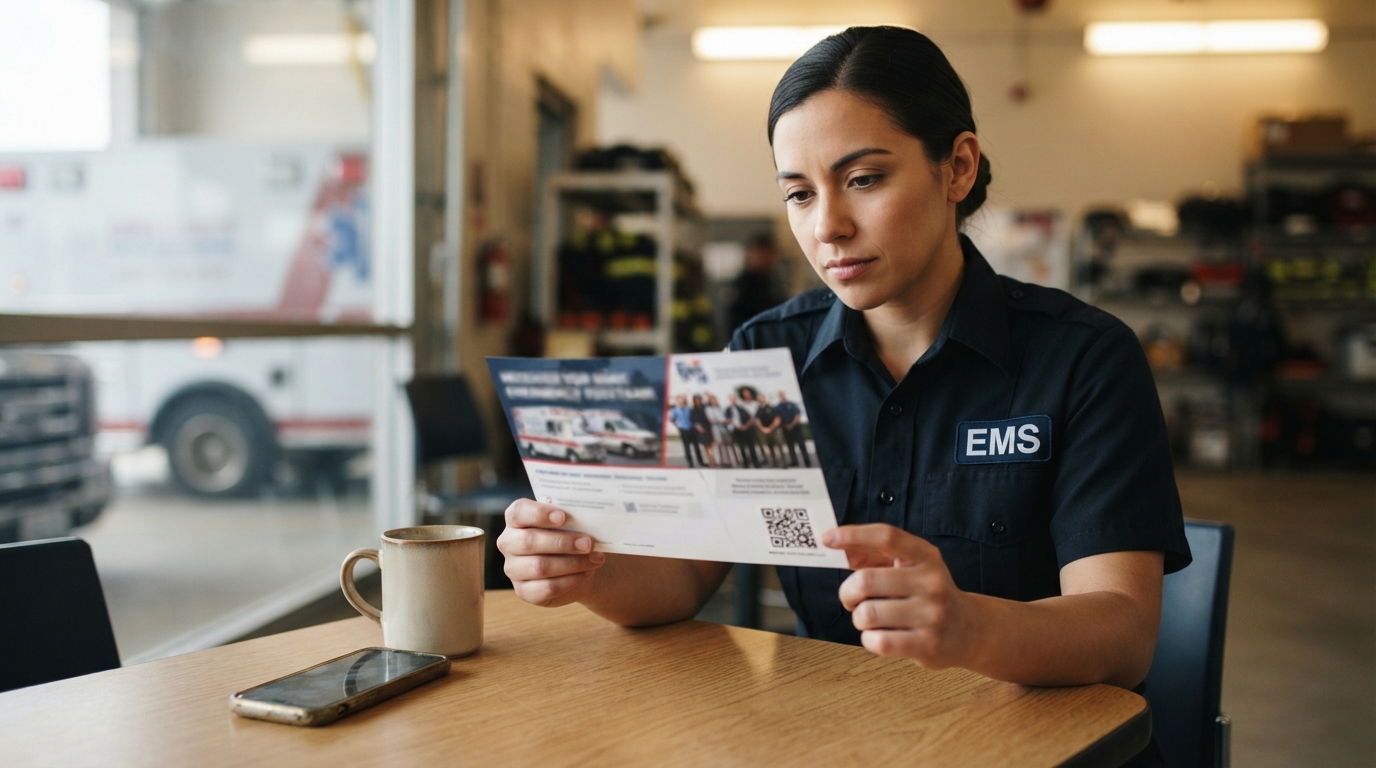
Recruiting EMTs and Paramedics for Rural Coverage Areas
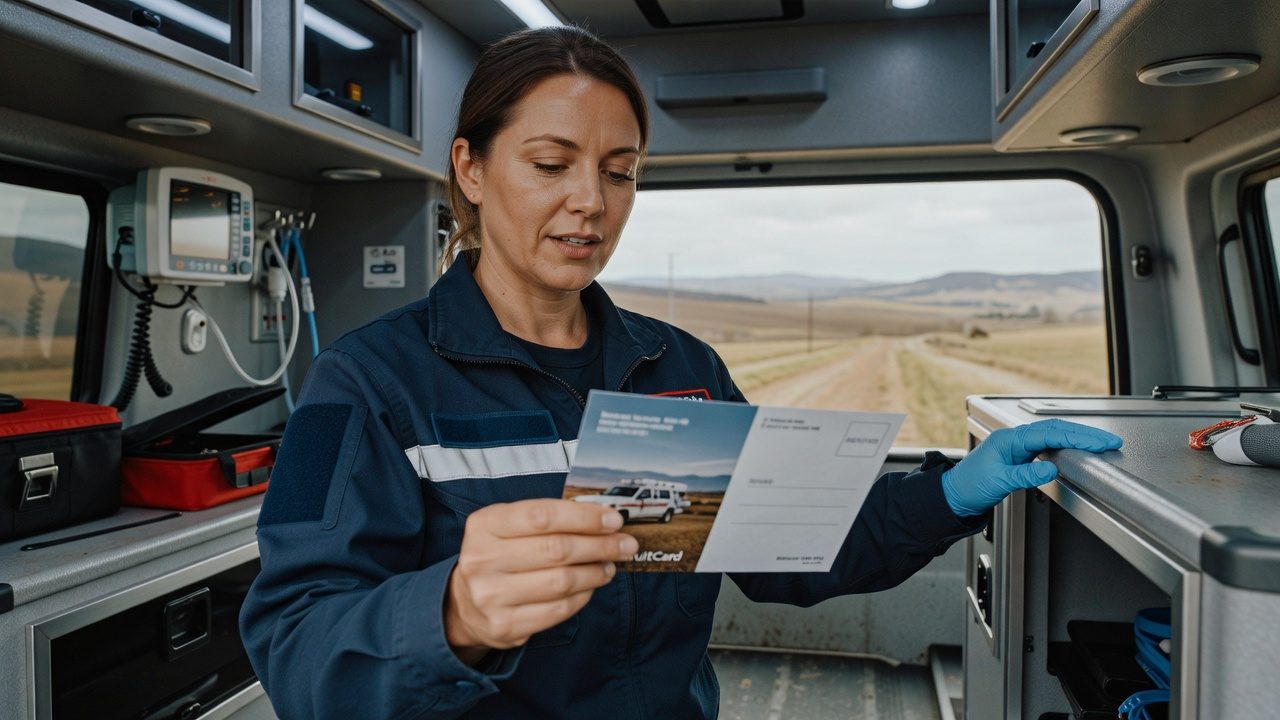
Rural EMT and paramedic recruiting is difficult because the qualified local pool may be small, many professionals are already employed, and job boards mainly reach people who are actively looking. A targeted direct mail campaign can help you reach EMTs and paramedics by credential or role and geography, using a personalized card, one clear action, and response tracking through QR scans and landing-page traffic.
Who This Article Is For
This guide is for hospital and health-system HR teams, EMS organizations, ambulance services, rural hospitals, fire departments, and recruitment marketing agencies working to fill rural EMT or paramedic roles.
It is particularly relevant when you need to support open shifts, difficult service areas, recurring vacancies, a hiring event, or a longer-term emergency medical services candidate pipeline. The approach is designed to add a direct outreach channel alongside your existing recruiting work.
Why Rural EMT and Paramedic Roles Are Hard to Fill
Rural coverage needs often come with a smaller nearby pool of qualified EMTs and paramedics. That challenge can become more pronounced for full-time, overnight, rotating, or specialized assignments.
Many qualified professionals are already working. They may be open to a conversation about the right opportunity without actively searching job boards, visiting career sites, or clicking paid recruitment ads.
Whether someone considers a rural role can also depend on practical details, including:
- Distance from home and commute expectations
- Shift pattern and coverage schedule
- The response environment and work setting
- How compensation and other approved role details are communicated
- Community fit and the realities of the service area
A job posting can explain an opening. It does not necessarily put that opening in front of the EMTs or paramedics you most want to contact.
Why Job Boards and Digital Ads Can Miss Passive EMS Candidates
Job boards and paid search are useful tools, but they generally depend on active search behavior. A paramedic who is settled in a current role and not searching may never see your posting.
Digital ads also appear in a crowded environment. Your message competes with other employers, notices, and content for limited attention. This is especially challenging when several organizations are trying to hire from the same qualified regional pool.
Direct mail adds another channel. A targeted card reaches selected EMT and paramedic audiences at home, rather than waiting for them to search for a position online.
This is not a replacement for every job board, referral program, or digital campaign. It can complement those efforts when a rural role is not closing through normal channels or when you need to introduce an opportunity to professionals who are not actively looking.
How Targeted Direct Mail Recruiting Works for Rural Coverage Areas
Effective EMS direct mail starts with the hiring need, not a broad demographic audience. The campaign is defined around the credential or role, the relevant specialty or experience context, and the geography you need to cover.
Start with a precise audience definition
For example, an employer may need to reach paramedics within an appropriate geography for a rural station, or EMTs near several service areas with recurring coverage needs. The audience is built from license type, specialty or role, and geography matching rather than a generic mass mailing.
Match the campaign to the recruiting goal
The same model can support different goals:
- One difficult rural EMT or paramedic vacancy
- Several locations with related staffing needs
- A hiring event or open house
- Ongoing outreach for recurring roles
- Long-term awareness and candidate pipeline development
Give a passive candidate enough context
A recipient should be able to quickly understand the role, service area, schedule or coverage context when available, employer, and next step. A passive candidate is deciding whether the opportunity merits attention, not necessarily ready to complete a long application immediately.
The Anatomy of an Effective EMT or Paramedic Recruitment Card
A recruitment card works best when it is focused. RecruitCard uses four core components to make the message relevant and easy to act on.
Personalized recipient name
Addressing the recipient by their actual first name makes the card more relevant than a generic message to a broad audience.
Specialty-specific message
The message should speak directly to the EMT or paramedic role and the rural coverage need. A card for paramedic coverage should not read like a general-purpose healthcare hiring ad.
Credible employer branding
Your logo, visual identity, location, and a concise explanation of the opportunity help establish who is hiring and why the recipient should consider learning more.
One clear action
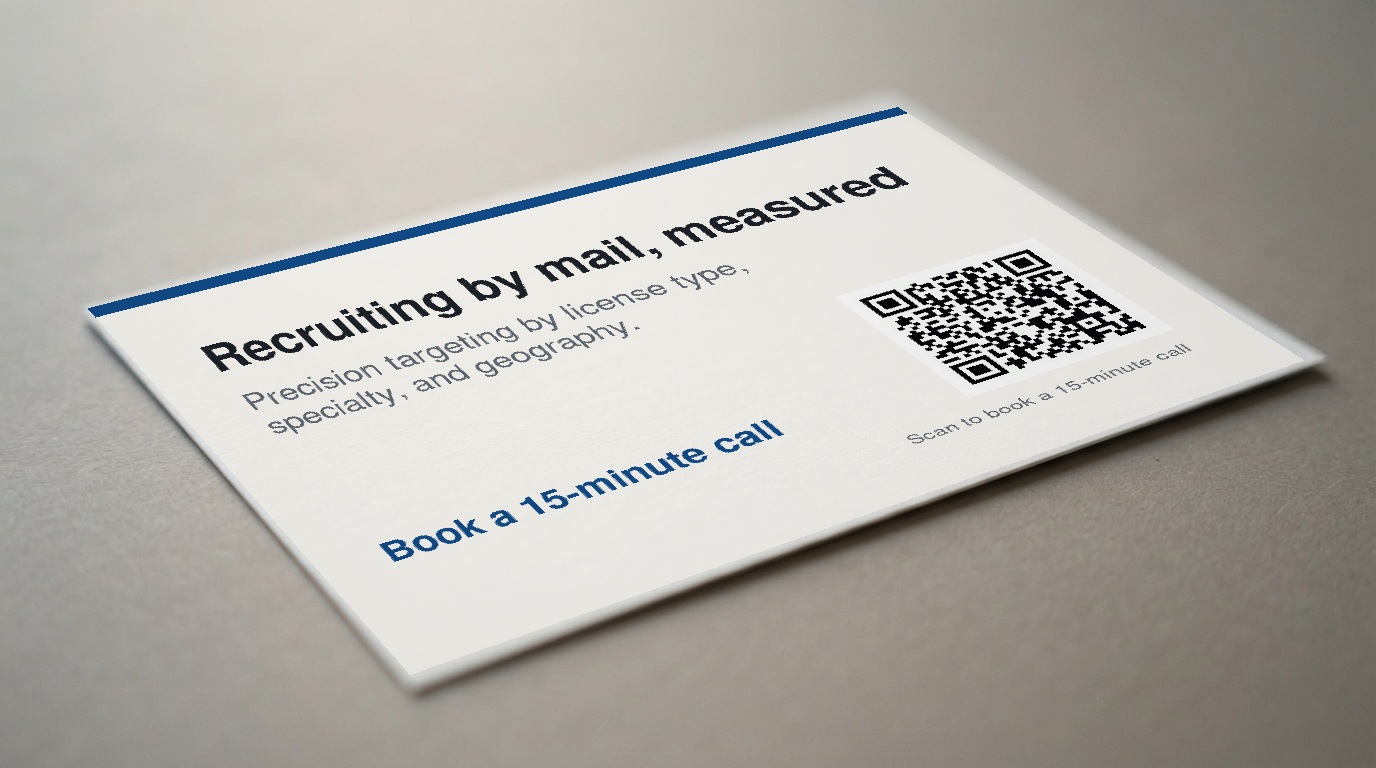
A QR code and short URL should lead to a focused landing page. Depending on your goal, that page might offer an application, interest form, event registration, or a request to start a conversation.
Avoid trying to fit multiple job descriptions, unrelated calls to action, and broad employer messaging on the same card. One audience and one primary action are easier for the recipient to understand and easier for your team to track.
Messaging Rural EMTs and Paramedics About the Opportunity
Lead with the specific role or coverage need. “We are hiring” is less useful than a clear message about the EMT or paramedic opportunity and the service area involved.
Explain the location and work setting plainly so recipients can assess geographic fit. When approved details are available, your message can also address factors EMS professionals may weigh, such as:
- Shift pattern or coverage structure
- Response environment
- Team structure
- The type of employment or conversation being offered
If relocation may be part of the opportunity, make the next step exploratory. Give candidates enough information to decide whether a conversation makes sense without assuming they are ready to apply immediately.
For a hiring event, the card can focus on meeting the team or learning about coverage opportunities rather than submitting an application. This is often useful when awareness and initial engagement are the immediate goals.
Use Cases Beyond One Open EMT or Paramedic Position
Hard-to-fill rural vacancies
When a particular role, shift, or service area has not closed through normal recruiting channels, direct mail can put a focused message in front of selected professionals who may not be searching.
Ongoing staffing needs
Organizations with continuous or high-turnover EMS hiring needs can use the campaign model to build awareness and develop a pipeline before the next vacancy becomes urgent.
Hiring events and open houses
A targeted card can invite qualified local candidates to an event, information session, or open house. The landing page can be built around registration or an interest form.
Training and apprenticeship awareness
If you offer a training pathway or apprenticeship that potential candidates may not know exists, mail can introduce the program and direct recipients to an information or registration page.
Multi-location outreach
The model can support several rural service areas or a nationwide rollout. Location-specific messaging can keep the opportunity relevant while maintaining a consistent employer brand.
How RecruitCard Supports the Campaign End to End
RecruitCard manages the campaign rather than simply handing over a mailing list. The service includes:
- Audience targeting by license type, specialty or trade, and geography
- Card design using your employer brand, the recipient’s first name, specialty-specific messaging, and one clear call to action
- Printing, postage, and delivery
- QR-code and landing-page response tracking
- Support for a single-market campaign, multiple locations, or a nationwide rollout
RecruitCard’s deepest stated expertise is licensed healthcare hiring. For recruitment marketing agencies, white-label support is also available for agencies that want to offer direct mail without building their own print, postage, and tracking operation.
How to Measure a Rural EMS Direct Mail Campaign
Direct mail recruiting does not have to be unmeasurable. QR scans and landing-page traffic provide trackable signals of engagement with the campaign.
Use a campaign-specific landing page with one primary action, such as:
- Starting an application
- Submitting an interest form
- Registering for a hiring event
- Requesting a conversation
This focused setup makes the response easier to interpret. Your recruiting team can then connect those tracked responses to its usual follow-up process and assess the quality of interest and applicants.
Tracking helps you understand campaign activity. It is not a promise of a specific hiring outcome.
When This Approach Is a Good Fit
Targeted direct mail may be a good fit when:
- You have a rural EMT or paramedic requisition that remains open despite normal recruiting efforts.
- The qualified local pool is small and likely includes already-employed professionals.
- You need to recruit for night shifts, rotating coverage, or a difficult-to-reach service area.
- You want to promote a hiring event, new facility, training pathway, or future opportunity.
- You want one managed campaign covering targeting, creative, print, postage, delivery, and response tracking.
What to Prepare Before Launching
A clear brief helps keep the audience, card, landing page, and follow-up plan aligned. Prepare the following before launch:
- The exact credential or role, such as EMT or paramedic, plus approved specialty or experience requirements
- The target geography and the locations, shifts, or coverage needs to address
- Your logo, brand guidelines, approved role details, and response destination
- The one action you want recipients to take
- A follow-up plan for landing-page submissions and candidates who express interest
Decide early who will respond to inquiries and how candidates will move from an initial scan or form submission into your standard recruiting process.
Discuss Your Rural EMS Hiring Need
If you are working to fill a difficult rural EMT or paramedic role, a short planning conversation can clarify the target geography, audience, message, and response action. Book a 15-minute call.
Frequently Asked Questions
Can you target EMTs and paramedics in a specific rural area?
Yes. The campaign model uses license type, specialty or role, and geography targeting rather than a generic demographic mailing. The exact audience definition should be reviewed against your hiring need.
Can this reach EMTs and paramedics who are not actively job hunting?
That is the intended use case. Direct mail provides an additional way to reach passive, already-employed professionals who may not encounter a job posting or paid search ad.
Can you promote a rural EMS hiring event instead of one job?
Yes. The same model can promote a hiring event, open house, training opportunity, apprenticeship awareness effort, or longer-term candidate pipeline.
How do we measure interest?
QR scans and landing-page traffic provide trackable campaign signals. The landing page can direct recipients to an application, interest form, event registration, or another approved next step.
Do you handle the mailing process?
Yes. RecruitCard’s managed service covers audience targeting, card design, printing, postage, delivery, and QR-code or landing-page response tracking.
Enjoyed this? There's more from RecruitCard.
Book a 15-minute call →